
In this guide
Reader-supported: SproutPicks may earn a commission from qualifying affiliate links. The manufacturer and editorial reference links in this review are not affiliate links. Full disclosure.
Created and fact-checked (America/Chicago). Source-based editorial review; not a hands-on test.
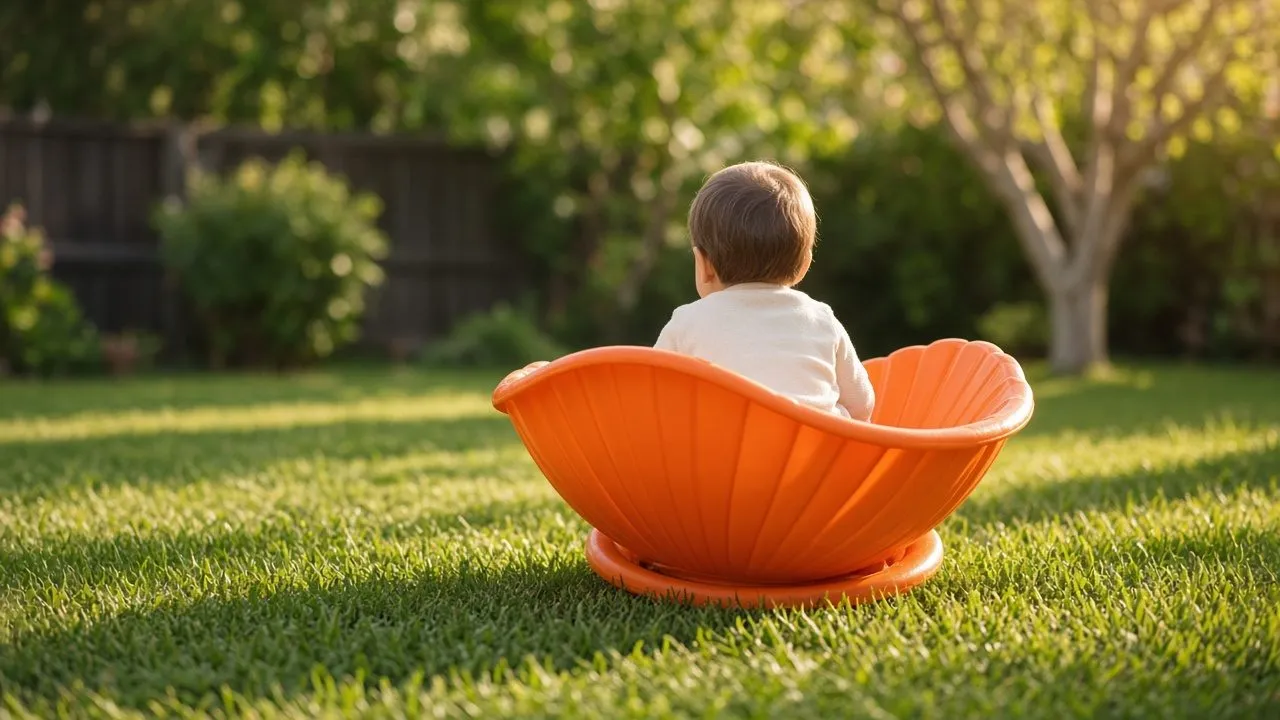
Bilibo is a curved plastic shell with no instructions: kids sit and spin in it, rock it, turn it into a helmet or a boat, or fill it with sand. A June 2008 dfork post described it as a seat, boat, shell, basin, bucket and spinning top, best for ages 2 to 7. [1]
Our source-based verdict: an unusual but well-loved open-ended toy for active indoor and outdoor play. Its value depends on a child who likes inventing games. We have not tested it ourselves.
At a glance
Bilibo Classic / Midi
- Main limit
- Simple shape; spinning needs space
A single-model review, not a ranked or scored roundup.
Design background
Moluk says Swiss designer Alex Hochstrasser conceived Bilibo in 2000 and launched it in 2001. [2] It lists awards including the Swiss Federal Design Award and the US Toy of the Year (TOTY), and museum collections such as the Museum für Gestaltung Zürich. [2]
Material and sizes
The shell is HD-PE plastic, which Moluk says is 100% recyclable. [2] The Classic is about 39 cm across and 685 g; the Midi is about 29 cm and 285 g, sized for toddlers. [2] Moluk says there is no weight limit for kids and suggests a maximum of 80 kg (180 lb). [2]
Play ideas and cautions
Spinning and rocking work best on a rug or grass with space around. Supervise toddlers if a Bilibo is used on steps or in water play.
Which size to buy
Moluk positions the lighter Midi as a toddler's first Bilibo and the Classic for preschoolers and older children who want more energetic rocking and spinning. [2] Siblings often share one, but two shells open up more games.
Pros and trade-offs
What looks useful on the evidence
Where expectations need restraint
- Some kids lose interest quickly.
- Spinning needs open space.
- Plastic, not wood.
- Single shape.
Who it suits—and who should skip it
Consider it if: you want a movement toy that works indoors and in the sandbox.
Look elsewhere if: your child prefers toys with a clear goal.
Alternatives and related reading
- Indoor climbing: Nugget review.
- Backyard gear: Best Outdoor Playsets and Climbers for Toddlers.
- Open-ended stacking: Rock-a-Stack review.
More on montessori and classic toys: start with our guide to open-ended toys, then Best Toy Storage and Organizers (2026) and How to Set Up a Toy Rotation.
Also useful: our holiday gift guide by age.
Part of our Sleep & Nursery section. Our main guide covers where a newborn should sleep.
Questions parents ask
What is it made of?
HD-PE plastic, per Moluk. [2]
Can an adult sit in it?
Moluk suggests a maximum of 80 kg (180 lb). [2]
Sources and research method
We compared dated launch or availability evidence with current manufacturer information checked on November 9, 2026. This is desk research, not a purchased-product test, a lab measurement or an owner survey. We have not verified current store stock, prices or reuse rights for product photography; official photos can be viewed through the manufacturer link.
- dfork: Bilibo, June 19, 2008.
- Moluk: Bilibo, checked November 9, 2026.
More in Sleep & Nursery
Unsafe Sleep Products to Avoid: Inclined Sleepers, Loungers, Bumpers and Weighted Sacks
Which baby sleep products are banned or unsafe: inclined sleepers, padded bumpers, loungers and weighted sacks, with CPSC rules, AAP…

Best Baby Swaddles (2026)
Six swaddles compared on fit, TOG, hip room and price, plus the AAP rule to stop at the first signs of rolling and why weighted swaddles…
Nanit vs Owlet: Which Smart Baby Monitor Is Right for You?
Nanit Pro vs Owlet Dream Sock compared: video vs pulse and oxygen readings, FDA status, subscriptions, ages and price, to choose a smart…