
In this guide
- Quick picks
- What real owners say: the big takeaways
- How we picked
- Comparison table
- Feature-by-feature comparison
- Montessori & Me Object Permanence Box
- Hape Pound & Tap Bench with Slide Out Xylophone
- Melissa & Doug Shape Sorting Cube
- Fat Brain Toys Dimpl Duo
- Melissa & Doug Primary Lacing Beads
- Our guides on montessori and classic toys
- FAQ
- Buying guide: choosing Montessori-style toys
- Setting up a Montessori-style play space
- Safety notes
- Related reviews
Reader-supported: we may earn a commission from links on this page. Full disclosure
Updated: November 2026 · Researched from manufacturer specs, safety standards and public buyer reviews.
Montessori toys are simple by design. They usually do one thing, use natural materials like wood, and let toddlers repeat a skill until they master it, like dropping a ball into a hole or fitting a shape into the right slot.
You don't need a whole Montessori shelf to get the benefits. A few well-chosen toys that match your child's stage go a long way. Below are five popular picks, roughly in order from youngest to oldest.
Safety note: Toys sold in the US must meet the ASTM F963 toy safety standard. Check the age label on every toy. Small beads and pieces are choking hazards for children under 3, so keep older-sibling toys out of reach.
Quick picks
Montessori & Me Object Permanence Box
- Age label
- Around 8–12 months
Hape Pound & Tap Bench with Slide Out Xylophone
- Age label
- 12 months–3 years
Melissa & Doug Shape Sorting Cube
- Age label
- 2+
Fat Brain Toys Dimpl Duo
- Age label
- 1+
Melissa & Doug Primary Lacing Beads
- Age label
- 3+

What real owners say: the big takeaways
We read Amazon reviews, parenting forum threads and Reddit discussions. These patterns kept coming up:
- Simple wins. Parents often say their toddler plays longer with a basic wooden toy than with a flashy electronic one.
- Age fit matters more than brand. A toy that's too hard frustrates toddlers, and one that's too easy gets ignored. Match the toy to the skill your child is working on.
- Wooden toys hold up. Reviewers frequently mention passing these down to younger siblings.
- Loud toys get mixed reviews. Pounding and xylophone toys are a hit with kids and sometimes less so with parents.
- Rotate, don't pile up. Many Montessori-minded parents keep only a few toys out at a time and swap them every week or two.
How we picked
We did not buy or test these products. Here is how we chose them:
- Started with what parents actually buy. We looked at best-selling, highly reviewed Montessori-style toddler toys on Amazon.
- Checked age labels and materials. We noted each manufacturer's age grading and avoided toys with small parts for the younger picks.
- Read the complaints, not just the praise. We looked for patterns in critical reviews and parent forums.
- Covered different developmental skills. Object permanence, cause and effect, shape matching, sensory play and fine motor skills.
We'll update this guide as listings and owner feedback change.
What we weighed most. Montessori-inspired toys focus on one skill at a time, use simple, natural materials and let children work independently. We gave the most weight to how clearly each toy targets a developmental skill, whether a toddler can use it without adult help, the durability of materials, and age-appropriate safety (including small parts). After that came how long the toy stays engaging, noise level, storage and price.
Sources. Age labels and materials come from maker listings. We did not play with these toys with children ourselves.
How we score: SproutPicks Scores are our own editorial ratings, based on published specs, safety certifications and standards, and patterns across verified owner reviews. We don't hands-on test every product, and these scores are not Amazon ratings. Toy scores include sub-scores for Safety, Learning Value and Durability.
Comparison table
| Toy | Main skill | Material | Age label | Score |
|---|---|---|---|---|
| Montessori & Me Object Permanence Box | Object permanence | Wood | Around 8–12 months | 9.0/10 |
| Hape Pound & Tap Bench | Cause and effect, music | Wood | 12 months–3 years | 8.9/10 |
| Melissa & Doug Shape Sorting Cube | Shape and color matching | Wood, 12 shapes | 2+ | 8.7/10 |
| Fat Brain Toys Dimpl Duo | Tactile and sensory play | Silicone and plastic | 1+ | 8.5/10 |
| Melissa & Doug Primary Lacing Beads | Threading, fine motor | Painted wood, 2 laces | 3+ | 8.3/10 |
Feature-by-feature comparison
| Toy | Skill | Independent use | Lasting appeal | Main owner complaint |
|---|---|---|---|---|
| Object Permanence Box | Object permanence | High | Short (months) | Outgrown quickly |
| Hape Pound & Tap Bench | Cause and effect, music | High | 1–3 years | Noise, lost balls |
| Shape Sorting Cube | Shapes, problem solving | Medium | Long | Frustrating for younger kids |
| Dimpl Duo | Sensory, fine motor | High | Short bursts | Brief attention |
| Lacing Beads | Threading, coordination | Medium | Long | Laces wear out |
Montessori & Me Object Permanence Box
This wooden box has a hole on top and a tray at the bottom. Your child drops the ball in, it disappears, then it rolls back out. It's a classic Montessori material for teaching that things still exist when you can't see them. The brand recommends it from about 8 to 12 months, once your baby can sit independently, and says the 1.75-inch ball is larger than choking-hazard size limits.
- ✓Very simple, so babies grasp it quickly
- ✓Large ball designed to avoid choking-size limits
- ✓Inexpensive way to start a Montessori shelf
- ✕Short window of interest for many kids
- ✕The ball can roll away on hard floors
- ✕Toddlers past 18 months may find it too easy
Hape Pound & Tap Bench with Slide Out Xylophone
Toddlers use a mallet to pound balls through the bench, and each ball rings a note on the xylophone below. The xylophone slides out so kids can play it on its own. Hape lists it for 12 months to 3 years.
- ✓Two toys in one
- ✓Teaches cause and effect
- ✓Sturdy wooden build
- ✕It's loud
- ✕Balls can get lost
- ✕The mallet needs supervision around younger siblings
Melissa & Doug Shape Sorting Cube
A solid wooden cube with 12 colorful shapes that fit through matching holes, with a lid that opens to get them out. Melissa & Doug lists it for ages 2 and up, and it's one of the most familiar toddler toys around.
- ✓Twelve shapes keep it challenging for a while
- ✓Simple, durable wooden design
- ✓Great for learning shape and color names
- ✕Some shapes are tricky for young toddlers
- ✕Small shapes can go missing
- ✕Kids may lose interest once they master all 12 shapes
Fat Brain Toys Dimpl Duo
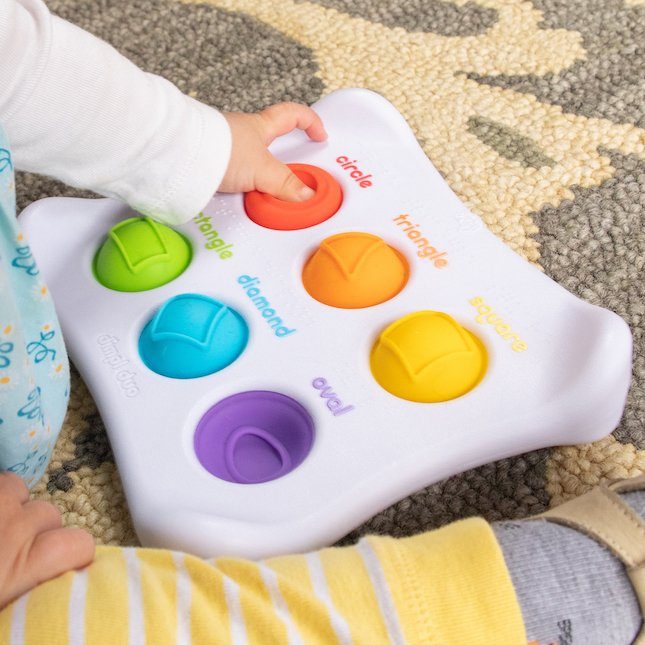 Image: Fat Brain Toys
Dimpl Duo has silicone bubbles in different shapes that toddlers push and pop. The listing says it includes braille, which adds another texture to explore. It's an easy, quiet toy for car rides, restaurants and waiting rooms.
- ✓Quiet and portable
- ✓Easy to clean silicone
- ✓Satisfying for kids who love to fidget
- ✕Kids may lose interest faster than with building toys
- ✕Not a true Montessori material
- ✕Check the age label on the version you buy
Melissa & Doug Primary Lacing Beads
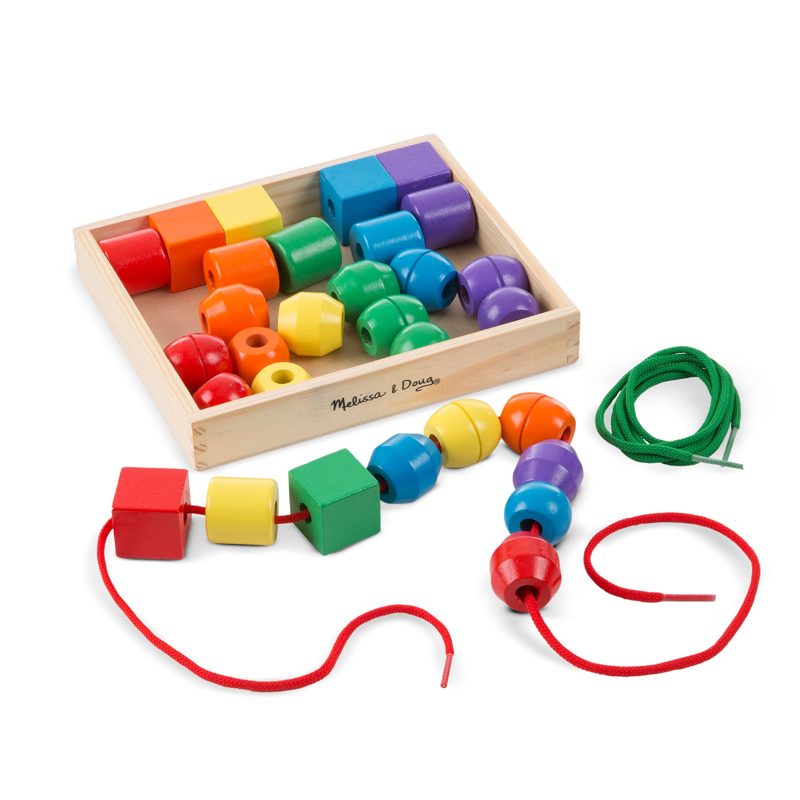 Image: Melissa & Doug
This set includes 30 painted wooden beads, two laces and a storage case. Threading beads builds hand-eye coordination and finger strength, and kids can sort beads by color and shape too. The listing is labeled for ages 3+.
- ✓Classic fine motor activity
- ✓Comes with a storage case
- ✓Doubles as a sorting and counting toy
- ✕Small parts, so not for kids under 3
- ✕Laces can fray over time
- ✕Needs supervision with younger siblings around
Our guides on montessori and classic toys
- Best Toddler Busy Boards and Sensory Toys
- Fisher-Price Chatter Telephone Review: Pull-Along Since 1961
- Fisher-Price Corn Popper Review: The 1957 Push Toy
- Fisher-Price Rock-a-Stack Review: Classic Stacking Rings
- Green Toys Recycling Truck Review: Recycled Plastic, No Metal
- Bilibo Review: Open-Ended Rocking Shell for Active Play
- How to Set Up a Toy Rotation
- Best Toy Storage and Organizers (2026)
- Nugget Play Couch Review: Four Foam Pieces, Endless Forts
- IKEA FLISAT Table Review: Storage, Fit and Everyday Care
- Best Play Kitchen for Toddlers (2026)
- Best Toddler Puzzles (2026)
Also useful: our holiday gift guide by age.
Part of our Toys & Learning section. Our main guide covers developmental toys by age.
FAQ
What makes a toy Montessori? Montessori toys are usually simple, made from natural materials and focused on one skill. They let children repeat an activity until they master it.
How many toys does a toddler need? Fewer than you might think. Many parents keep 6 to 8 toys out and rotate them every week or two.
Are wooden toys safer than plastic? Not automatically. Any toy sold in the US must meet ASTM F963. Check age labels and look for small-parts warnings.
Do I need a Montessori subscription box? No, though some families like the convenience. See our guide to toy and activity subscription boxes.
Do Montessori toys need to be wooden? No. Simple, purposeful design matters more than material.
What's the best first Montessori toy? Many parents start with an object permanence box around 8 to 12 months.
Are Montessori toys better than regular toys? Not necessarily. Many ordinary toys, like blocks, stacking cups and simple puzzles, fit Montessori principles. The key ideas are simplicity, a clear purpose, and letting the child lead.
How do I know when to rotate a toy? If your child ignores a toy for several days, or has clearly mastered it, swap it for something new. Bring back old favorites later, because children often use them in new ways.
Can Montessori toys help with speech? Toys don't teach speech on their own, but talking with your child as they play, naming objects, actions and colors, supports language development.
Buying guide: choosing Montessori-style toys
1. Follow the child
Choose toys that match what your child is working on now, like dropping, stacking, sorting or threading, rather than what the box says.
2. One skill at a time
Simple toys with a clear purpose help toddlers focus and see their own mistakes.
3. Natural materials
Wood, metal and fabric are common, though material matters less than the toy's design.
4. Fewer, rotated toys
Offer a few toys on a low shelf and rotate every week or two.
For open-ended pretend play, see the best play kitchens for toddlers. For first building sets, read LEGO DUPLO vs Mega Bloks.
Setting up a Montessori-style play space
- Use a low, open shelf with a few toys, each in its own spot or tray.
- Let your child choose, and avoid interrupting focused play.
- Model putting toys back after use.
- Add practical-life activities like pouring water, wiping tables or helping in the kitchen at a safe height.
Safety notes
- Small parts: For children under 3, avoid pieces that fit inside a toilet paper tube, a common at-home choke check. Lacing beads are labeled 3+.
- Check wooden toys for splinters, loose parts or chipped paint.
- Supervise laces and strings, which can be strangulation hazards.
- Check recalls at CPSC.gov/Recalls.
Related reviews
More in Toys & Learning
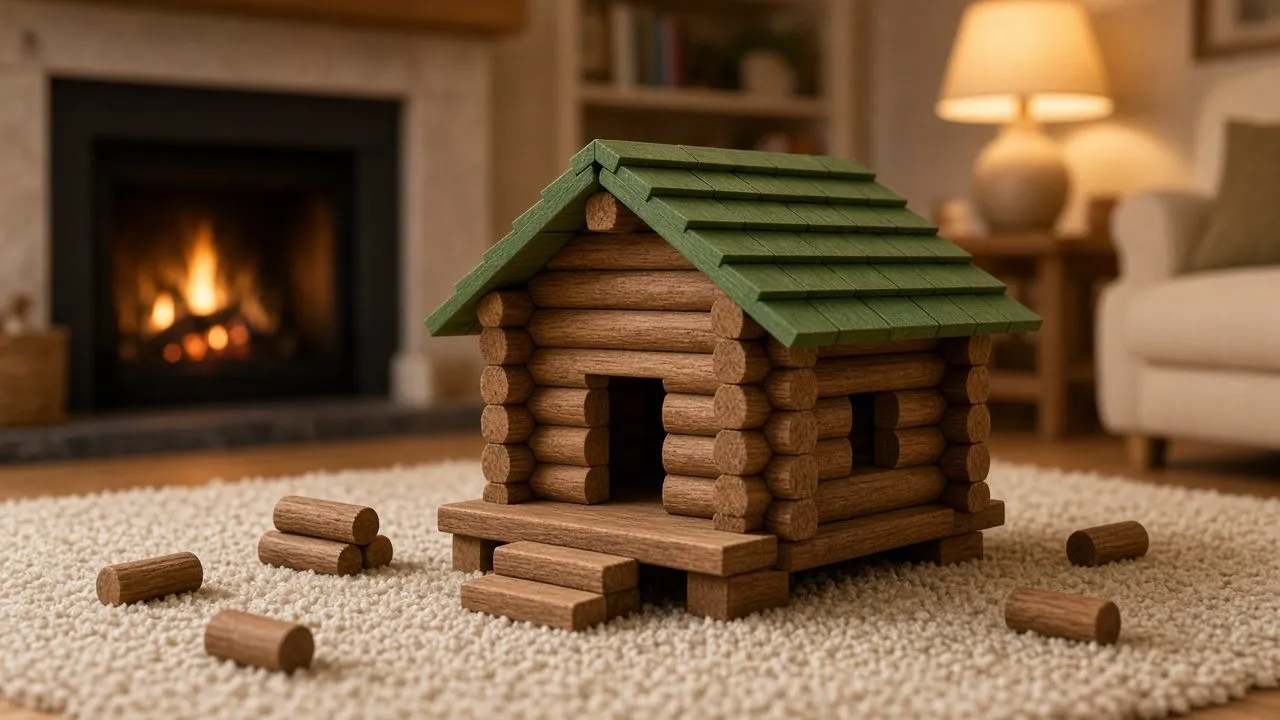
Lincoln Logs Review: Notched Wood Building Since 1916
Lincoln Logs review: screen-free wooden building since 1916. Set contents, age fit and what to check before you buy. Research-based, not…
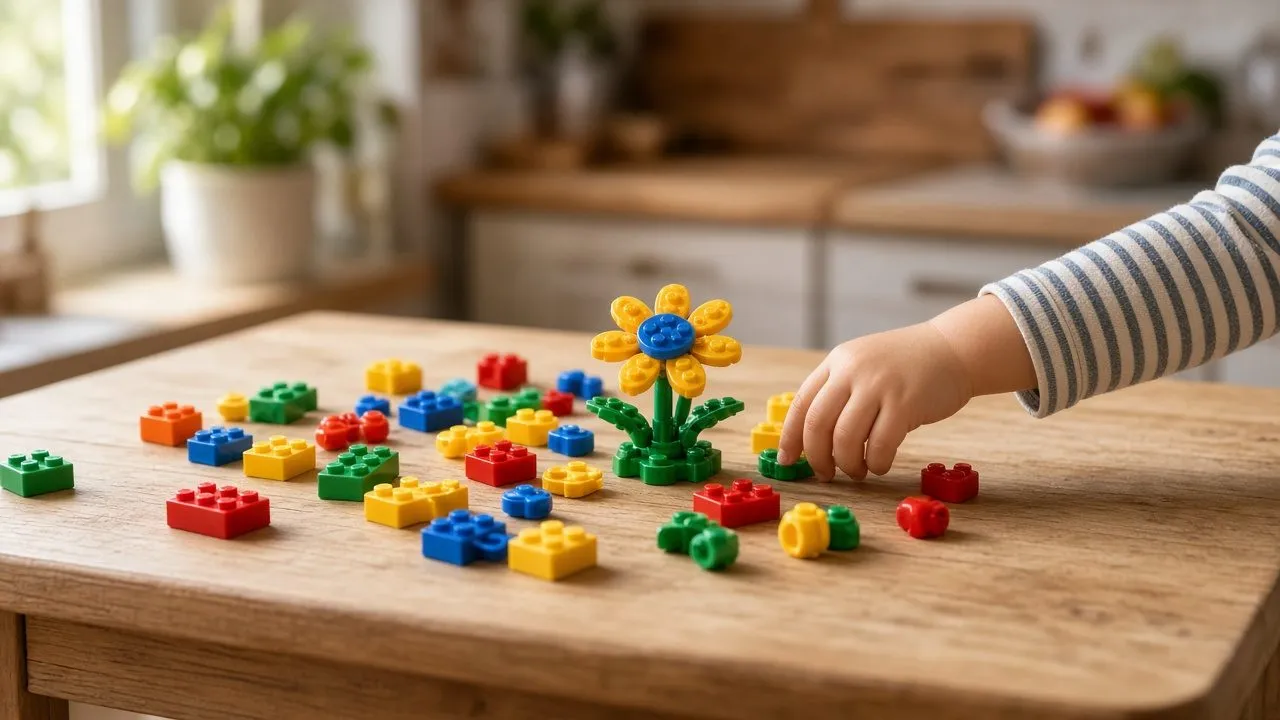
Plus-Plus Learn to Build Review: One-Shape Building Pieces
Plus-Plus Learn to Build review: a compact, one-shape building set for fine motor play, with small-piece cautions. Research-based, not…
Toniebox 2 Review: Audio, Setup and Content Costs
Toniebox 2 review: a screen-free kids audio player. Sound, setup, content costs, and realistic expectations. Research-based, not tested.