
In this guide
- Quick picks
- The picks side by side
- Which puzzle for which age
- Knob, chunky, sound, jigsaw and floor puzzles
- Puzzle safety: age labels and the small-parts rule
- Tips for puzzle time
- Melissa & Doug Farm Friends Jumbo Peg Puzzle
- Ravensburger On Safari (2, 3, 4, 5 pieces)
- Hape Animal Friends Wooden Peg Puzzle
- Melissa & Doug Farm Animals Chunky Puzzle
- Mudpuppy Under The Sea 12 Piece Pouch Puzzle
- Melissa & Doug Safari Social Floor Puzzle
- Melissa & Doug Farm Animals Sound Puzzle
- Recalls
- How we researched this
- Sources
- Questions parents ask
Reader-supported: SproutPicks may earn a commission from qualifying affiliate links, at no extra cost to you. Full disclosure.
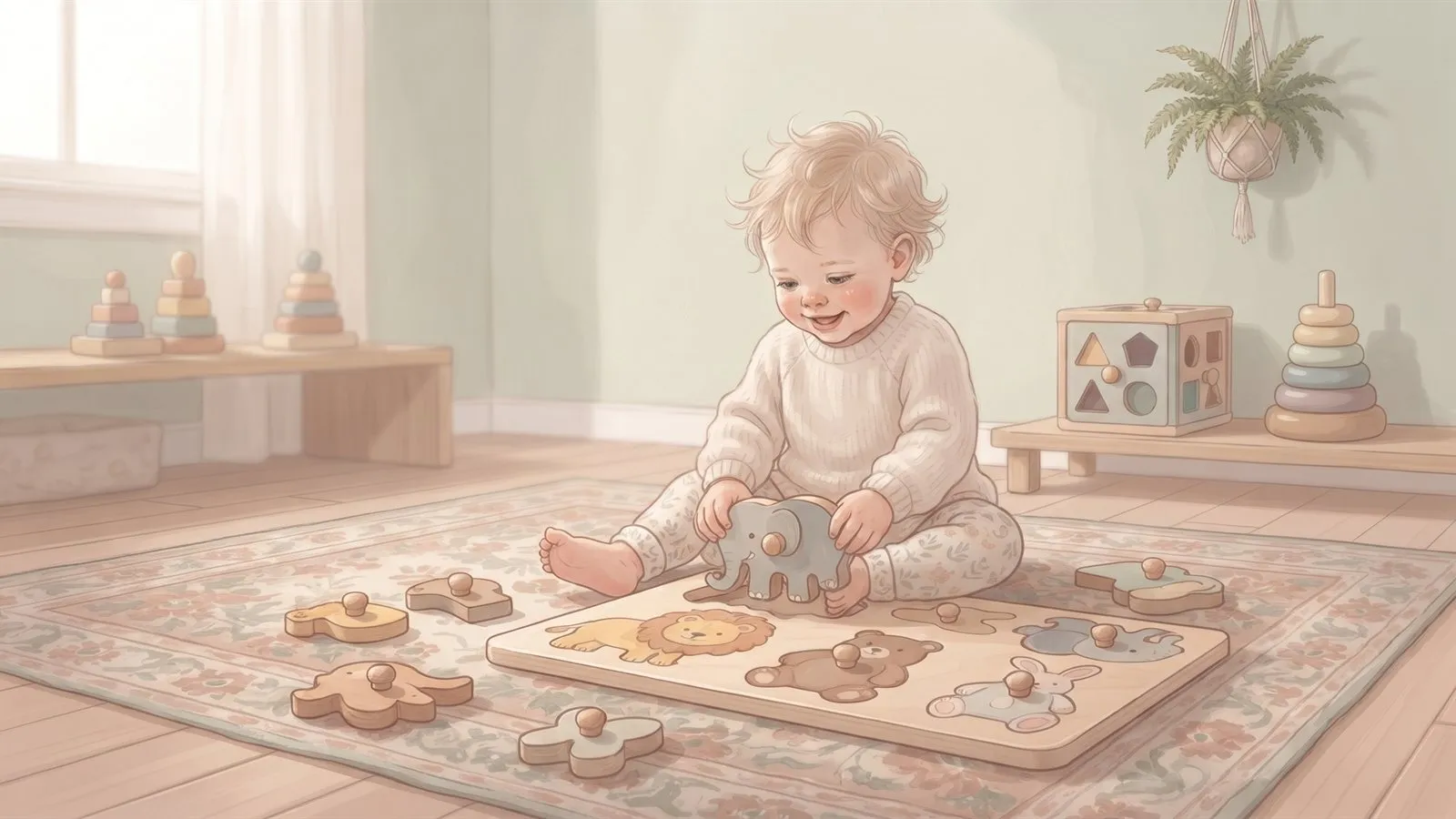
Puzzles are one of the few toys that grow with a toddler. A 1-year-old lifts a big wooden farm animal out by its knob and drops it back in. A 2-year-old turns a chunky piece until it fits. A 3-year-old finishes a 12-piece jigsaw and asks for another. Along the way they practice grip, hand-eye coordination, problem-solving and new words. The trick is picking the right puzzle for the right age, because a puzzle that's too hard just gets thrown. Below are the best toddler puzzles sold in the US in November 2026, from first knob puzzles to a first floor puzzle, with verified age labels, piece counts and prices, plus what CPSC's age guidelines and small-parts rules mean for puzzles.
Quick picks
Melissa & Doug Farm Friends Jumbo Peg Puzzle
Ravensburger On Safari (2, 3, 4, 5 pieces)
Hape Animal Friends Wooden Peg Puzzle
Melissa & Doug Farm Animals Chunky Puzzle
Mudpuppy Under The Sea 12 Piece Pouch Puzzle
Melissa & Doug Safari Social Floor Puzzle
Melissa & Doug Farm Animals Sound Puzzle
How we score: SproutPicks Scores are our own editorial ratings out of 10. For puzzles they weigh how well the design fits the labeled age (piece size, knobs, piece count and picture clues), durability for toddlers who chew and throw, how long the puzzle stays useful, recall history and value. They are based on maker and retailer listings, CPSC age and small-parts guidance, AAP advice and patterns in parent reviews. They are editorial ratings from research, and we did not test these puzzles.
The picks side by side
| Puzzle | Type | Maker age label | Pieces | Material | Price checked (Nov 2026) |
|---|---|---|---|---|---|
| Melissa & Doug Farm Friends Jumbo Peg Puzzle | Jumbo knob/peg | 1+ years | 8 | Wood | $12.97 at Walmart |
| Hape Animal Friends Wooden Peg Puzzle | Peg | 12 months+ | 4 | Wood | $17.99 at Hape |
| Ravensburger On Safari | Progressive jigsaw set | 18 months+ | 2, 3, 4 and 5 (four puzzles) | Not stated | $12.99 at Ravensburger |
| Melissa & Doug Farm Animals Chunky Puzzle | Chunky inset | 2+ years | 8 | Wood | $9.99 at Walmart |
| Mudpuppy Under The Sea Pouch Puzzle | Jigsaw | 2+ years | 12 | Thick greyboard | $12.99 at Mudpuppy |
| Melissa & Doug Safari Social Floor Puzzle | Floor jigsaw | 3+ years | 24 | Cardboard | $16.99 at Melissa & Doug |
| Melissa & Doug Farm Animals Sound Puzzle | Peg, with sounds | 2+ years | 8 | Wood | About $17 to $19 at Melissa & Doug |
Details are from Hape's and Ravensburger's US product pages, Walmart listings, and Melissa & Doug and Mudpuppy product pages as shown in search results, because both sites blocked our automated check. Melissa & Doug's pages showed more than one price for some puzzles, so check before you buy. Prices change often.
Which puzzle for which age
What age should a toddler start doing puzzles? Around 12 months. CPSC's age guidelines say puzzles are generally appropriate from 12 months, starting with simple frames and large pieces with easy-to-grip knobs. Most toddlers move to chunky inset puzzles around 2 and simple cardboard jigsaws around 3.
CPSC's Age Determination Guidelines, which toy makers use to set age labels, break it down like this:
- 12 to 18 months: simple frame puzzles with a few large pieces and easy-to-grip knobs. At this age the fun is lifting pieces out and putting them back.
- Around 2: inset puzzles, where each piece has its own spot. Knobs still help, because toddlers can turn a piece while it sits in the hole. CPSC also mentions electronic puzzles that say the object's name.
- Around 3: some children still like knobs, and cardboard jigsaws can be introduced because 3-year-olds mouth pieces less.
- 4 to 5: no knobs needed, and more pieces.
How many pieces should a toddler puzzle have? Start small. CPSC's guidelines suggest just a few pieces for children under 2, about 8 to 12 pieces at age 3, 12 to 18 at age 4 and up to 35 at age 5. Every child is different, so if your toddler gets frustrated, go back to fewer pieces.
For more ideas at each age, see our best toys for 1-year-olds and best toys for 3-year-olds guides.
Knob, chunky, sound, jigsaw and floor puzzles
- Knob or peg puzzles have a small handle on each piece. They're the easiest first puzzle because a 1-year-old can grab and lift without fine finger control. Jumbo knobs are easier than small pegs.
- Chunky puzzles have thick wooden pieces with no knobs. Toddlers grip the edges, and many pieces stand up on their own for pretend play.
- Sound puzzles play a noise when a piece goes in the right spot. They're fun and reward a correct fit, but they need batteries and can be finicky.
- Progressive jigsaw sets come with several small puzzles that get harder, such as 2, 3, 4 and 5 pieces. They're the best bridge from inset puzzles to real jigsaws.
- Floor puzzles have big cardboard pieces that make a large picture on the floor. They suit older toddlers and preschoolers, and they're good for doing together.
Are wooden or cardboard puzzles better for toddlers? For children under 3, wooden knob and chunky puzzles are usually the better choice, because they hold up to chewing and the large pieces are easy to grip. CPSC's guidelines say cardboard puzzles can be introduced around age 3, when children mouth objects less. Thick cardboard jigsaws are fine for 2-year-olds if the maker labels them for that age.
If you like simple, open-ended wooden toys, many knob and chunky puzzles also fit a Montessori-style shelf; see our best Montessori toys for toddlers.
Puzzle safety: age labels and the small-parts rule
Toys for children under 3 must pass the federal small-parts rule, 16 CFR part 1501. No piece, or part that breaks off in CPSC's use-and-abuse tests, may fit entirely inside a test cylinder 1.25 inches wide, which is roughly the size of a young child's throat. That's why puzzles labeled 3+ can have smaller pieces than puzzles labeled for toddlers.
What this means at home:
- Follow the age label. A 3+ label often means the puzzle has small parts or a choking risk for younger children. Don't hand a big sibling's puzzle to a 1-year-old.
- Check knobs and pegs often. Are knob puzzles a choking hazard? They can be if a knob comes loose. Toys for children under 3 can't have small parts that fit in the CPSC test cylinder, but a knob that breaks off may be small enough to choke on. Check knobs and pegs often, and throw out any puzzle with a loose or cracked knob.
- Retire chewed cardboard. Soggy, peeling cardboard pieces can tear into small bits.
- Watch the batteries. Sound puzzles must have screwed-shut battery doors. Keep spare batteries, especially button batteries, locked away.
- Check secondhand puzzles for missing knobs, splinters and recalls on CPSC.gov.
Our how to choose safe toys guide covers age labels, magnets, batteries and more.
Tips for puzzle time
- Do it together. Name each animal or vehicle as your toddler places it. It's an easy way to build vocabulary.
- Start with fewer pieces. Take out one or two pieces and let your toddler put them back before trying the whole puzzle.
- Rotate. Put a puzzle away for a couple of weeks and it feels new again. Our toy rotation guide shows how.
- Store cardboard pieces in a zip pouch or bag so they don't get lost.
Do puzzles help toddler development? Yes. The AAP lists puzzles among the traditional toys that help children learn problem-solving skills. Puzzles also build hand-eye coordination, the pincer grasp and early words when you name the pictures together.
Melissa & Doug Farm Friends Jumbo Peg Puzzle
This wooden farm puzzle, sold for years as the Large Farm Jumbo Knob Puzzle, has 8 pieces: a chicken, pig, sheep, duck, goat, cow, horse and farmer. Melissa & Doug labels it for ages 1 and up. The jumbo knobs are easy for small hands to grab, and a full-color picture under each piece shows where it goes, which helps first-time puzzlers match. The board measures about 15 x 12.6 inches, per the listing. Walmart listed it at $12.97 in November 2026; Melissa & Doug's own pages showed $19.99 to $24.99.
- ✓Jumbo knobs suit young toddlers
- ✓Matching pictures under each piece
- ✓Eight familiar animals for first words
- ✕Eight pieces can be a lot at 12 months
- ✕Pieces only fit one way, so older toddlers outgrow it
- ✕Price varies a lot between sellers
Ravensburger On Safari (2, 3, 4, 5 pieces)
Ravensburger's My First Puzzles sets are some of the best bridges to jigsaws. On Safari (item 07301) has four puzzles, a hippo, elephant, zebra and lion, in 2, 3, 4 and 5 pieces, so your child starts with an easy win and works up. Ravensburger labels it for 18 months and up and says the puzzles have plenty of visual clues. Each finished picture is about 6.5 x 4.5 inches. Ravensburger's page doesn't state the material, so we can't confirm how thick the pieces are. Ravensburger listed it at $12.99 and in stock in November 2026.
- ✓Four puzzles that step up in difficulty
- ✓Labeled from 18 months
- ✓Low price for four puzzles
- ✕Small finished pictures
- ✕Material not stated on the page
- ✕Easy to mix up pieces between puzzles
Hape Animal Friends Wooden Peg Puzzle
Made with The Met museum, Hape's Animal Friends puzzle has just 4 pieces, a hippo, owl, bunny and boar, each with a large wooden peg. Hape labels it for 12 to 24 months and says it's made of durable wood with a smooth, nontoxic finish and rounded edges. Four pieces is the right number for a first puzzle, per CPSC's guidance for the youngest toddlers. Hape's page didn't list dimensions or say whether there's a picture under each piece. Hape listed it at $17.99 in November 2026, and The Met Store listed it at $19.99.
- ✓Only 4 pieces, ideal for a first try
- ✓Large pegs and rounded edges
- ✓Art-inspired animals
- ✕Outgrown quickly
- ✕Dimensions not listed
- ✕Pricier per piece than Melissa & Doug
Melissa & Doug Farm Animals Chunky Puzzle
This chunky puzzle has 8 thick wooden pieces, seven farm animals and a barn, that stand upright on their own, so the puzzle doubles as a set of play figures. Melissa & Doug labels it for ages 2 and up, and there's a full-color picture under each piece. With no knobs, toddlers grip the edges, which is good practice for the next step. Walmart listed it at $9.99 in November 2026, and Melissa & Doug's page showed $12.99.
- ✓Pieces stand up for pretend play
- ✓Thick pieces hold up to rough use
- ✓Low price
- ✕No knobs, so harder for young 1-year-olds
- ✕Stand-up pieces wander off around the house
- ✕Mostly MDF, per one retailer listing
Mudpuppy Under The Sea 12 Piece Pouch Puzzle
Mudpuppy makes bright, illustrated jigsaws with extra-thick pieces. This one has 12 pieces that make a 14 x 11 inch ocean scene, and it comes in a zippered pouch that keeps pieces together. Mudpuppy labels it for ages 2 and up, and its similar puzzles are made from greyboard with 90% recycled paper and soy-based inks, per Mudpuppy. Twelve pieces is a stretch for a young 2-year-old, so try it with help first. Mudpuppy listed it at $12.99 in November 2026. Some other Mudpuppy 12-piece designs are labeled 2 to 4.
- ✓Extra-thick pieces for small hands
- ✓Zippered pouch for storage and travel
- ✓Recycled materials, per Mudpuppy
- ✕Cardboard won't survive chewing
- ✕Twelve pieces is hard for some 2-year-olds
- ✕One puzzle per pouch
Melissa & Doug Safari Social Floor Puzzle
Floor puzzles are a great next step after a 12-piece jigsaw. This Melissa & Doug safari puzzle has 24 large cardboard pieces with an easy-clean surface and is labeled for ages 3 and up. Melissa & Doug's listing gives two different sizes, about 3 x 4 feet in one place and 36 x 24 inches in another, so plan for a good patch of floor. Melissa & Doug listed it at $16.99 in November 2026, and its Dinosaur Dawn and Traffic Jam floor puzzles have the same piece count and price if your child prefers those themes.
- ✓Large pieces for working on the floor
- ✓Easy-clean surface
- ✓Good for siblings to do together
- ✕Labeled 3+, not for younger toddlers
- ✕Listed size isn't consistent
- ✕Needs a lot of floor space
Melissa & Doug Farm Animals Sound Puzzle
This 8-piece wooden peg puzzle plays each animal's sound when its piece goes in the right spot. Melissa & Doug labels it for ages 2 and up. The sounds are triggered by light sensors under the pieces, so it works best in a bright room, and it needs 2 AAA batteries, which aren't included. The board is about 12 x 9 inches, per Melissa & Doug. Parent reviews are mixed, with some reporting sounds that stopped working, which is common with electronic puzzles. Melissa & Doug's pages showed $16.99 to $18.99 in November 2026, and it was out of stock at Walmart when we checked.
- ✓Sounds reward a correct fit
- ✓Pegs for easy gripping
- ✓Great for learning animal names and sounds
- ✕Needs bright light to trigger sounds
- ✕Batteries not included
- ✕Mixed reviews on how long the sounds last
Recalls
We searched CPSC's recall database for each pick:
- Melissa & Doug Farm Friends Jumbo Peg Puzzle: no CPSC recall found as of November 20, 2026.
- Ravensburger On Safari: no CPSC recall found as of November 20, 2026.
- Hape Animal Friends Wooden Peg Puzzle: no CPSC recall found as of November 20, 2026.
- Melissa & Doug Farm Animals Chunky Puzzle: no CPSC recall found as of November 20, 2026.
- Mudpuppy Under The Sea 12 Piece Pouch Puzzle: no CPSC recall found as of November 20, 2026.
- Melissa & Doug Safari Social Floor Puzzle: no CPSC recall found as of November 20, 2026.
- Melissa & Doug Farm Animals Sound Puzzle: no CPSC recall found as of November 20, 2026.
For context, Melissa & Doug's one recent recall wasn't a puzzle: in September 2026 it recalled the Lights & Sounds Fire Truck Activity Board sold at Target, because a part could detach and cause choking. And knob puzzles have been recalled in the past; in 2007 Small World Toys recalled wooden sound puzzles because the knobs could come off, a reminder to check knobs on any puzzle, new or old.
More on montessori and classic toys: see Best Toddler Busy Boards and Sensory Toys and IKEA FLISAT Table Review: Storage, Fit and Everyday Care.
Also useful: our holiday gift guide by age.
Part of our Toys & Learning section. Our main guide covers developmental toys by age.
How we researched this
This guide is research-based. We did not test these puzzles. In November 2026 we compared age labels, piece counts, materials and prices from Hape's and Ravensburger's US product pages and Walmart listings. Melissa & Doug's and Mudpuppy's sites blocked our automated check, so details for those puzzles come from their product pages as shown in search results and from retailer listings, and we note where prices or sizes disagree. We read CPSC's 2020 Age Determination Guidelines section on puzzles, the small-parts rule at 16 CFR 1501, the AAP's HealthyChildren.org guide to choosing toys, and CPSC recall listings. Owner feedback comes from retailer reviews. Prices change often.
Sources
- HealthyChildren.org (AAP), What to Look for in a Toy
- CPSC, Age Determination Guidelines (2020)
- 16 CFR 1501.4, Size requirements and test procedure (small parts)
- CPSC, Melissa & Doug Recalls Fire Truck Activity Board Toys (2026)
- CPSC, Small World Toys Recalls Wooden Sound Puzzles with Knobs (2007)
- Melissa & Doug, Farm Friends Jumbo Peg Puzzle
- Walmart, Melissa & Doug Large Farm Jumbo Knob Puzzle
- Hape, Animal Friends Wooden Peg Puzzle
- Ravensburger, On Safari (07301)
- Melissa & Doug, Farm Animals Chunky Puzzle
- Walmart, Melissa & Doug Farm Animals Chunky Puzzle
- Mudpuppy, Under The Sea 12 Piece Pouch Puzzle
- Melissa & Doug, Safari Social Floor Puzzle
- Melissa & Doug, Farm Animals Sound Puzzle
Questions parents ask
What age should a toddler start doing puzzles?
Around 12 months. CPSC's age guidelines say puzzles are generally appropriate from 12 months, starting with simple frames and large pieces with easy-to-grip knobs. Most toddlers move to chunky inset puzzles around 2 and simple cardboard jigsaws around 3.
How many pieces should a toddler puzzle have?
Start small. CPSC's guidelines suggest just a few pieces for children under 2, about 8 to 12 pieces at age 3, 12 to 18 at age 4 and up to 35 at age 5. Every child is different, so if your toddler gets frustrated, go back to fewer pieces.
Are wooden or cardboard puzzles better for toddlers?
For children under 3, wooden knob and chunky puzzles are usually the better choice, because they hold up to chewing and the large pieces are easy to grip. CPSC's guidelines say cardboard puzzles can be introduced around age 3, when children mouth objects less. Thick cardboard jigsaws are fine for 2-year-olds if the maker labels them for that age.
Are knob puzzles a choking hazard?
They can be if a knob comes loose. Toys for children under 3 can't have small parts that fit in the CPSC test cylinder, but a knob that breaks off may be small enough to choke on. Check knobs and pegs often, and throw out any puzzle with a loose or cracked knob.
Do puzzles help toddler development?
Yes. The AAP lists puzzles among the traditional toys that help children learn problem-solving skills. Puzzles also build hand-eye coordination, the pincer grasp and early words when you name the pictures together.
More in Toys & Learning
Best Holiday Gifts for Babies (2026)
Seven holiday gifts for babies under 12 months, from a play gym to board books, plus CPSC rules on small parts, button batteries, magnets…

Best Magnetic Tiles for 2-Year-Olds (Safety-First)
Magnetic tiles for 2-year-olds, safety-first: why brands say 3+, Magna-Tiles vs Connetix, and better non-magnet alternatives like DUPLO.
LEGO DUPLO vs Mega Bloks: Which First Blocks?
LEGO DUPLO vs Mega Bloks for toddlers: age ranges, brick size, compatibility, sets and which first building blocks to buy.