
In this guide
Reader-supported: SproutPicks may earn a commission from qualifying affiliate links. The manufacturer and editorial reference links in this review are not affiliate links. Full disclosure.
Created and fact-checked (America/Chicago). Source-based editorial review; not a hands-on test.
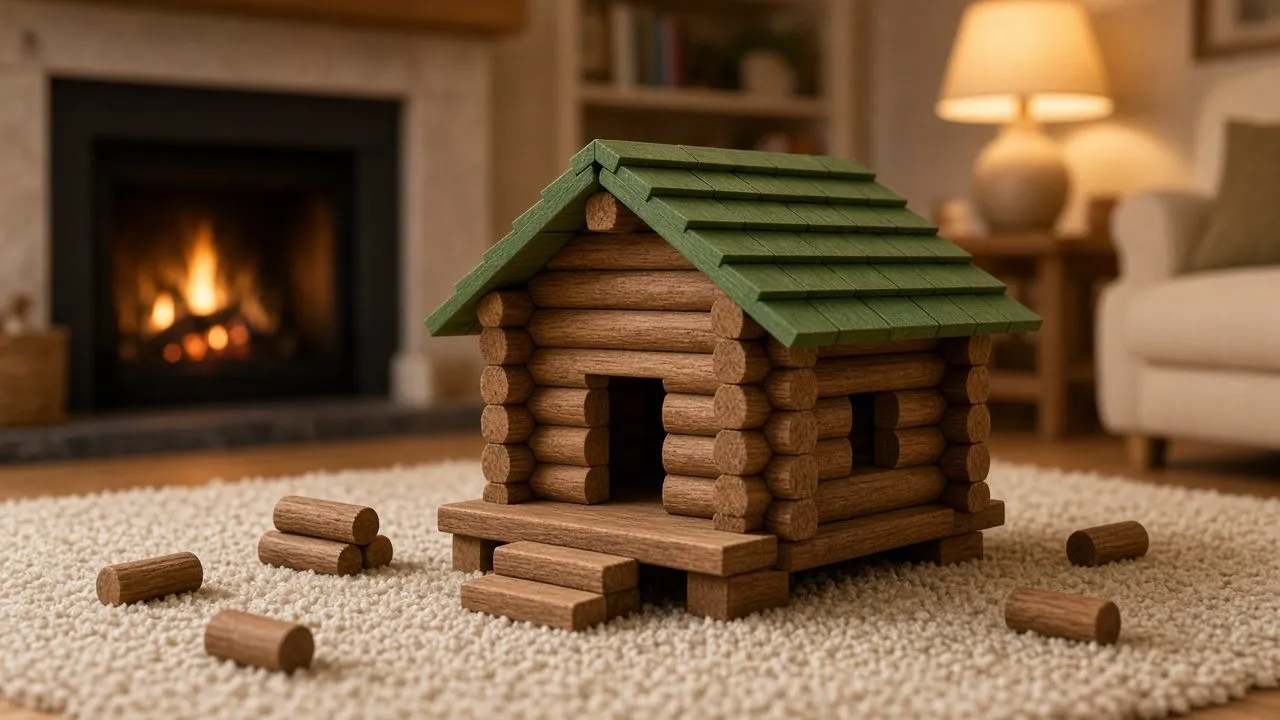
Lincoln Logs are notched wooden logs that stack into cabins and forts. HISTORY says John Lloyd Wright created the set in 1916, modeled on the Imperial Hotel in Tokyo, and began selling it through his Red Square Toy Company in 1918. [1] It says more than 100 million sets have sold and the toy entered the National Toy Hall of Fame in 1999. [1]
Our source-based verdict: a simple, screen-free building toy with real wood and real nostalgia. Set contents vary a lot, so read each box. We have not tested it ourselves.
At a glance
Lincoln Logs (various sets)
- Main limit
- Small pieces; contents vary by set
A single-model review, not a ranked or scored roundup.
Who makes them now
Basic Fun! calls Lincoln Logs "America's National Toy" and says the sets use real wood pieces, stained and crafted, sold in collectible tins and heritage packages. [2] Its current range includes a Collector's Edition Village Set and themed sets such as Big Sky Ranch. [2]
Ownership history
HISTORY says Wright sold his company to Playskool in 1943, and the rights later passed to Milton Bradley and Hasbro. [1]
Play value
Notched logs teach planning and spatial thinking: kids must alternate directions to build walls. Pair them with figures or blocks for longer pretend play. Check the age guidance on the box, since sets include small pieces.
Choosing a set
Bigger sets mean more logs and more ambitious builds, but even a small tin is enough to start. Check the piece count, whether roof boards and figures are included, and the age guidance printed on the box before you buy for a younger child.
Pros and trade-offs
What looks useful on the evidence
Where expectations need restraint
- Contents vary by set. [2]
- Small pieces.
- Limited shapes.
- Roof pieces can be fiddly.
Who it suits—and who should skip it
Consider it if: you want a classic wooden building toy.
Look elsewhere if: your child prefers freeform shapes or magnets.
Alternatives and related reading
- Wooden blocks: HABA blocks review.
- Small pieces: Plus-Plus review.
- Magnetic tiles: Best Magnetic Tiles.
More on building toys: see Best Magnetic Tiles for 2-Year-Olds (Safety-First) and Tegu Magnetic Wooden Blocks Review: Open-Ended Play.
Also useful: our holiday gift guide by age.
Part of our Toys & Learning section. Our main guide covers age-appropriate toys.
Questions parents ask
Who invented them?
John Lloyd Wright, in 1916. [1]
Are they real wood?
Basic Fun! says they use real wood pieces. [2]
Sources and research method
We compared dated launch or availability evidence with current manufacturer information checked on November 9, 2026. This is desk research, not a purchased-product test, a lab measurement or an owner survey. We have not verified current store stock, prices or reuse rights for product photography; official photos can be viewed through the manufacturer link.
- HISTORY: "The Birth of Lincoln Logs", February 11, 2016.
- Basic Fun!: Lincoln Logs, checked November 9, 2026.
More in Toys & Learning

Best Holiday Gifts for Babies (2026)
Seven holiday gifts for babies under 12 months, from a play gym to board books, plus CPSC rules on small parts, button batteries, magnets…

Fisher-Price Chatter Telephone Review: Pull-Along Since 1961
Fisher-Price Chatter Telephone review: the pull-along toy since 1961. Pretend talk, walking practice and value. Research-based, not tested.

JLab JBuddies Studio 2 Review: Budget Volume-Limited Headphones
JLab JBuddies Studio 2 review: budget kids headphones with 85/95 dB volume limits and long battery life. Research-based, not tested.