
In this guide
- Quick picks
- Safe-sleep basics first
- TOG to room temperature chart
- Kyte Baby Sleep Bag 1.0 TOG
- Woolino 4 Season Ultimate Baby Sleep Bag
- HALO SleepSack Wearable Blanket, 100% Cotton
- Burt's Bees Baby Beekeeper Wearable Blanket
- Love to Dream Sleep Bag Long Sleeve 1.0 TOG
- Recalls to know about
- How we researched this
- Sources
- Questions parents ask
Reader-supported: SproutPicks may earn a commission from qualifying affiliate links, at no extra cost to you. Full disclosure.
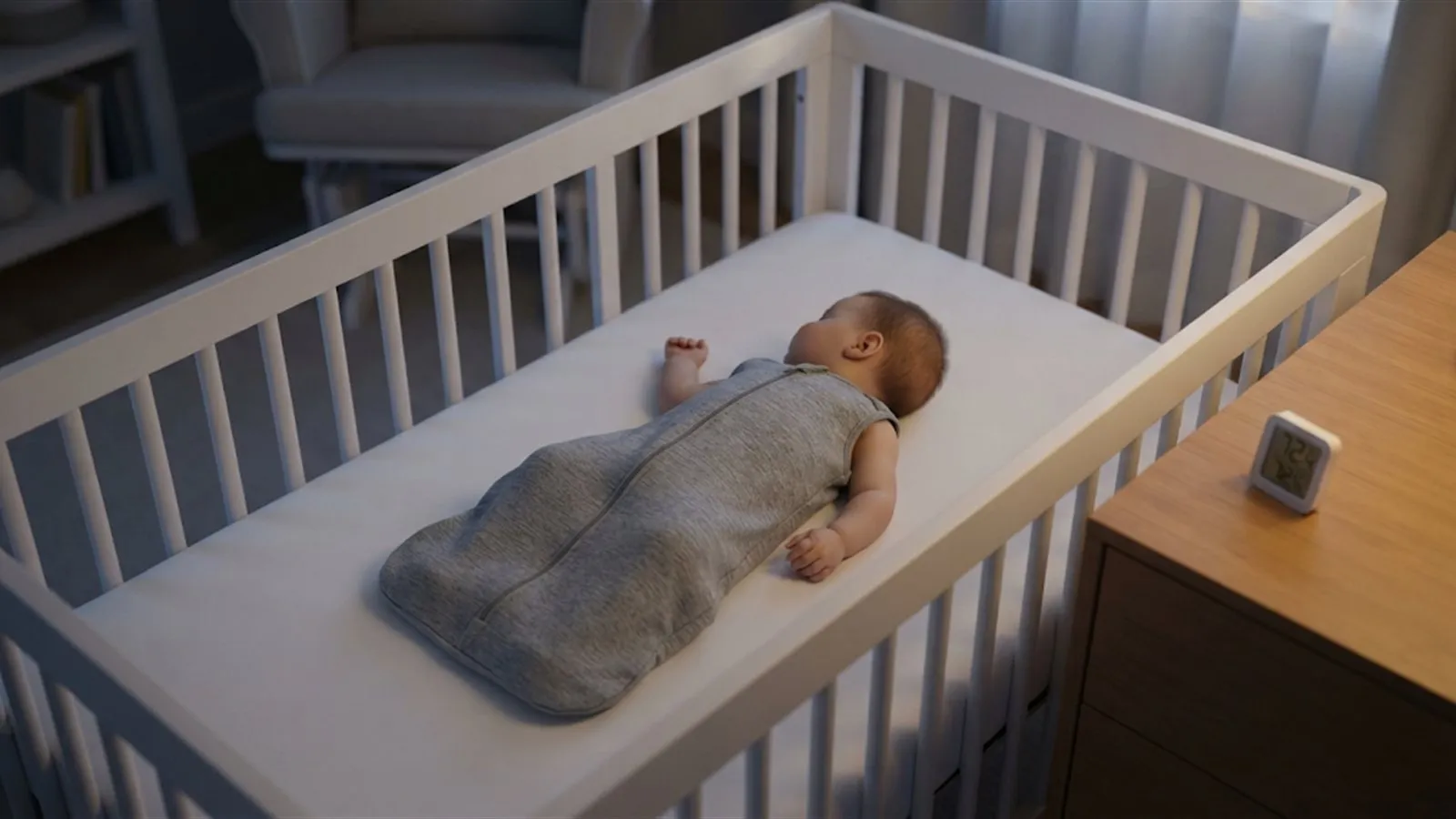
A sleep sack, also called a wearable blanket, does the job of a blanket without anything loose in the crib. That matters because the American Academy of Pediatrics (AAP) recommends nothing in the sleep space but a fitted sheet. The real decisions are how warm the sack should be, which is what the TOG rating tells you, what fabric suits your baby, and how it fits. We compared five sleep sacks across cotton, bamboo and merino wool, and pulled together a TOG chart you can use with a room thermometer.
Quick picks
Kyte Baby Sleep Bag 1.0 TOG
Woolino 4 Season Ultimate Baby Sleep Bag
HALO SleepSack Wearable Blanket, 100% Cotton
Burt's Bees Baby Beekeeper Wearable Blanket
Love to Dream Sleep Bag Long Sleeve 1.0 TOG
How we score: SproutPicks Scores are our own editorial ratings out of 10, based on published specs, how clearly each maker explains TOG and sizing, safety-relevant design (sleeveless or arms-free, no weighting, size range), and patterns in owner reviews. We did not test these sleep sacks ourselves, and the scores are not Amazon ratings.
Safe-sleep basics first
- No loose blankets. The AAP says soft objects and loose bedding raise the risk of entrapment, suffocation and strangulation. A wearable blanket is the AAP's suggested alternative if you are worried about your baby getting cold.
- No weighted sleep sacks, swaddles or blankets. The AAP says to avoid weighted objects on or near a sleeping baby. The CDC states that weighted sleepers, swaddles, sleep sacks and blankets are not safe for infants, and CPSC's safe-sleep guidance says, "Don't use weighted blankets or weighted swaddles." Target, Walmart, Nordstrom and Babylist committed to stop selling weighted infant products in 2024. None of our picks are weighted.
- Avoid overheating. The AAP notes that overheating can increase the risk of SIDS. Dress your baby in no more than one layer more than an adult would be comfortable in, watch for sweating, a hot chest or flushed skin, and skip hats indoors.
- Swaddles are for before rolling. The AAP says to stop swaddling once a baby shows signs of trying to roll, which usually happens around 3 to 4 months. After that, use a sleep sack with arms free. A sack should fit your baby's size and must never cover the head.
- Back to sleep, bare crib. A sleep sack doesn't change the basics: on the back, on a firm flat surface, with only a fitted sheet.
TOG to room temperature chart
TOG (thermal overall grade) measures how much warmth a fabric holds in. Higher numbers are warmer. The ranges below come from Love to Dream's published US chart; Kyte Baby's chart is very close (0.5 TOG for 74-78°F, 1.0 TOG for 69-73°F, 2.5 TOG for 61-68°F). Use the temperature of the room where your baby actually sleeps, not the forecast.
| TOG | Room temperature | Typical use |
|---|---|---|
| 0.2 to 0.5 | About 75-81°F (Kyte lists 0.5 TOG at 74-78°F) | Warm rooms and summer without air conditioning |
| 1.0 | About 68-75°F | Most climate-controlled nurseries year-round |
| 1.5 | About 64-72°F | Slightly cool rooms |
| 2.5 | About 61-68°F | Cool rooms and winter nights |
| 3.5 | Below about 61°F | Cold rooms; usually toddler sizes |
Charts are a starting point. Adjust the layer under the sack, from a short-sleeve bodysuit to footed pajamas, and check your baby's chest or the back of the neck rather than the hands, which often feel cool.
1. Kyte Baby Sleep Bag 1.0 TOG
Best for: Families with a climate-controlled nursery who want a soft, stretchy bamboo sack.
Kyte Baby's sleep bags come in 0.5, 1.0 and 2.5 TOG, and the brand ties each to a specific temperature range, which makes choosing easy. The fabric is listed as 97% bamboo rayon and 3% spandex, and the 2.5 TOG version adds polyester filling. Sizing is by weight and height: XS 7-13 lb, S 14-20 lb, M 18-30 lb, L 28-42 lb and XL 38-50 lb, per the size chart retailers publish. The XL size reaches well into the preschool years, so you can stay with one brand for a long time.
- Why we like it: Clear TOG-to-temperature guidance, a wide size run, and a 2.5 TOG option for cold rooms.
- Trade-offs: It is a premium-priced sack, and bamboo rayon needs gentle washing to keep its softness.
- Skip it if: Your nursery runs hot in summer and you'd rather buy an inexpensive 0.5 TOG cotton sack.
We cover fit and care in more depth in our Kyte Baby Sleep Bag review.
2. Woolino 4 Season Ultimate Baby Sleep Bag
Best for: Rooms that change temperature through the night or the year, and families who want one sack instead of several TOGs.
Woolino pairs a 100% superfine Australian merino wool lining with a GOTS organic cotton outer. Woolino says the bags do not have a fixed TOG and are designed for rooms between 63 and 75°F (17-24°C). The baby size is a single adjustable size for about 2 months to 2 years, with underarm snaps to fit smaller babies and a minimum recommended weight of 10 lb. It is sleeveless, opens with a two-way side zipper that lays fully flat, and has a closable opening for a car seat or stroller harness. At about $109 for the baby size on Woolino's site at the time of writing, it costs more up front but can replace several sizes.
- Why we like it: Wool helps buffer swings in room temperature, and the one-size design is good value over two years.
- Trade-offs: No TOG number, so you'll rely on the 63-75°F range and your own checks. Wool needs a cool, gentle wash; Woolino's own pages list slightly different maximum wash temperatures, so follow the care label.
- Skip it if: Your nursery regularly sits above 75°F, or your baby is under 10 lb.
More detail is in our Woolino 4 Season review.
3. HALO SleepSack Wearable Blanket, 100% Cotton
Best for: Warm rooms, and parents who want several affordable sacks for laundry rotation.
HALO's cotton SleepSack is a sleeveless 0.5 TOG wearable blanket in 100% cotton interlock, with a zipper that opens from the bottom for diaper changes. It is the classic, widely sold option. Retailer size charts list sizes from newborn (about 5-10 lb) through XL (about 26-36 lb), though the ranges vary a little by retailer and print, so check HALO's chart for the version you buy.
- Why we like it: Simple, breathable, easy to find and generally among the less expensive options.
- Trade-offs: At 0.5 TOG it is too light for a cool room on its own; you'll need warmer pajamas underneath or a different sack in winter.
- Skip it if: Your nursery is below about 70°F most nights.
A note on HALO recalls: in March 2026 CPSC announced a recall of about 45,000 HALO Magic Sleepsuits (batch codes PO30592, PO30641 and PO30685) because the zipper head can detach and pose a choking hazard. That recall covers the Magic Sleepsuit, not the cotton SleepSack wearable blanket, but check the label if you own a Magic Sleepsuit. If you are still swaddling, see our HALO SleepSack Swaddle review.
4. Burt's Bees Baby Beekeeper Wearable Blanket
Best for: Parents who want organic cotton at a moderate price.
The Beekeeper is made of organic cotton and comes in two fabric weights: a lightweight 0.5 TOG and a medium-weight 1.5 TOG. That gives you a warm-room and a cool-room option from the same brand. It is sleeveless and sold in sizes Small through Extra Large.
- Why we like it: Organic cotton, two clearly labeled weights, and a price below most bamboo and wool sacks.
- Trade-offs: Some listings and reviews mix up which weight is which, and at least one buyer reported the size labeling was off, so read the TOG and size on the specific listing before you buy.
- Skip it if: You want a single sack for both summer and winter; buy Woolino or two Kyte TOGs instead.
5. Love to Dream Sleep Bag Long Sleeve 1.0 TOG
Best for: Babies over 6 months in a moderate room who sleep better with their arms covered.
Love to Dream rates this sleep bag for 68-75°F. It comes in two sizes on the US site: 6-18 months (maximum height 35 inches) and 18-36 months (maximum height 42 inches). The brand advises choosing by height, not age. Long sleeves add warmth to the arms without adding a loose layer.
- Why we like it: Good for kids who kick off pajama layers or wake with cold arms, and the brand publishes a full TOG chart from 0.2 to 3.5.
- Trade-offs: Starts at 6 months, so it is not a newborn option, and sleeves make overheating easier in a warm room. We couldn't find published weight limits, only heights.
- Skip it if: Your baby is under 6 months, or your nursery runs warm. Younger babies coming out of a swaddle may suit a transition product first; our Zipadee-Zip review covers one option.
Recalls to know about
We checked CPSC for recent sleep-sack recalls. Besides the HALO Magic Sleepsuit recall above, in November 2025 CPSC announced a recall of about 700 Zigjoy toddler sleep sacks with feet, sold on Amazon and zigjoy.com, because they violated the federal flammability standard for children's sleepwear. Inexpensive, unfamiliar brands sold online are worth a recall search before you buy. We found no active recalls for the five picks above at the time of writing.
More on swaddles and sleep sacks: start with our guide to best baby swaddles, then Best Footed Pajamas and Sleepers for Winter (2026) and HALO SleepSack Swaddle vs Love to Dream Swaddle Up.
Also useful: a cool-mist humidifier for the nursery.
Part of our Sleep & Nursery section. Our main guide covers best baby bassinets.
How we researched this
These picks are research-based; we did not hands-on test them. We read the makers' own product pages and TOG guides (Woolino, Kyte Baby, Love to Dream and HALO), retailer size charts where the maker's chart wasn't accessible, the AAP's safe-sleep guidance on HealthyChildren.org, CPSC statements and recall notices, and patterns in owner reviews. Where a spec could not be confirmed, such as Love to Dream weight limits or exact current prices for most picks, we left it out.
Sources
- AAP / HealthyChildren.org, A parent's guide to safe sleep
- CPSC Commissioner statement on weighted infant products (April 2024)
- CPSC recall: HALO Magic Sleepsuits
- CPSC recall: Zigjoy sleep sacks with feet
- Love to Dream, What is a TOG rating?
- Kyte Baby, Choosing the right TOG
- Kyte Baby sleep bag size chart (retailer)
- Woolino, 4 Season Ultimate Baby Sleep Bag
- HALO, Wearable Blanket 100% Cotton TOG 0.5
- Burt's Bees Baby Beekeeper Wearable Blanket listing
Questions parents ask
What TOG sleep sack should my baby wear?
Match the TOG to the room, not the season. As a rough guide from Love to Dream's chart, 0.2 TOG suits about 75-81°F, 1.0 TOG about 68-75°F, 1.5 TOG about 64-72°F and 2.5 TOG about 61-68°F. Adjust the layer underneath and check your baby's chest or neck for sweating.
Are weighted sleep sacks safe?
No. The AAP advises against weighted sleep products for infants, the CDC says weighted sleepers, swaddles, sleep sacks and blankets are not safe for infants, and CPSC guidance says not to use weighted blankets or weighted swaddles.
When can a baby sleep with a regular blanket?
The AAP recommends keeping blankets, pillows and other soft bedding out of the sleep space during infancy. Use a wearable blanket instead, and ask your pediatrician when a loose blanket is appropriate for your child.
Should a sleep sack have sleeves?
Either works. Sleeveless sacks let heat escape through the arms and are the more common choice for babies. Long-sleeve versions, like Love to Dream's 1.0 TOG sleep bag, can help in a cool room. Never add a hat indoors.
When should I switch from a swaddle to a sleep sack?
Stop swaddling once your baby shows signs of trying to roll, which the AAP says usually happens around 3 to 4 months but can be earlier. Move to a sleep sack with arms free.
More in Sleep & Nursery
Best Play Yards (Pack n Plays) (2026)
Five play yards and travel cribs compared on limits, weight, bassinets and price, plus the CPSC play yard rule, mattress warnings and AAP…
Hatch Rest 2nd Gen Sound Machine Review
Hatch Rest 2nd Gen review: sounds, night light, Time-to-Rise, the app and Hatch+, safe volume and placement, and why Hatch now points…
Best Travel Cribs and Play Yards for Flying and Visits
Travel cribs and play yards compared by packed weight, fold size and limits, with five researched picks and the CPSC rule on never adding…