
In this guide
Reader-supported: we may earn a commission from links on this page. Full disclosure
Updated: October 2026 · Researched from manufacturer specs, safety standards and public buyer reviews.
Nanit and Owlet are the two smart baby monitor brands parents compare most, but they don't monitor the same thing. The Nanit Pro is an overhead camera with sleep tracking. The Owlet Dream Sock is a wearable that tracks your baby's pulse rate and oxygen level and has FDA De Novo authorization. Choosing between them comes down to what you want to know at 2 a.m.
The short answer: if you want to see your baby and track sleep, get the Nanit Pro. If you want health readings with alerts, get the Owlet Dream Sock. Neither replaces safe sleep practices.
Safe sleep first: The AAP advises against using home monitors as a way to reduce SIDS risk. Put baby to sleep on their back, on a firm, flat surface, with no pillows, bumpers or loose blankets. A monitor should support those habits, not replace them.
Quick picks
Nanit Pro Smart Baby Monitor
- Type
- 1080p video · sleep insights
Owlet Dream Sock
- Type
- FDA De Novo · wearable
Nanit vs Owlet: head-to-head
Specs and prices come from Nanit and Owlet product pages and FDA records (checked October and November 2026).
| Feature | Nanit Pro | Owlet Dream Sock |
|---|---|---|
| What it is | Overhead WiFi HD camera | Wearable pulse oximetry sock + base station |
| Video | 1080p, night vision | None (Owlet Cam sold separately or in Dream Duo) |
| Health readings | Breathing motion via patterned wear (not medical) | Pulse rate and oxygen saturation with notifications |
| FDA status | Not a medical device | De Novo authorization (Nov 2023) |
| Ages | Newborn to toddler (camera) | 1–18 months, 6–30 lb |
| Subscription | Optional Insights, about $100/year | Optional Owlet360 |
| Parent unit | Phone app only | Base station + phone app |
| Needs WiFi | Yes | Yes for app; base station alerts locally |
| List price (checked) | Varies by bundle | $299.99 on owlet.com |
The differences that matter
Video vs vital signs
This is the main split. Nanit shows you what's happening: whether your baby is awake, rolled over or crying. Owlet tells you about pulse rate and oxygen saturation, which a camera can't measure. Many parents of healthy, full-term babies find a camera is enough. Parents of babies with health concerns should talk to their pediatrician, who may recommend a prescribed medical monitor instead of a consumer product.
Medical authorization
The Owlet Dream Sock's De Novo authorization means the FDA reviewed it as a medical device for displaying pulse rate and oxygen data and notifying parents. Nanit is a consumer camera; its breathing motion feature is for wellness, not medical use. Neither is intended to prevent SIDS.
False alarms and reliability
Owner reviews of wearables often mention false alarms, usually when the sock slips or isn't fitted well, and connection drops between sock and base. Camera monitors are more prone to WiFi drop-outs and app lag. Good placement (camera mount, sock sizing, strong WiFi) solves most issues.
Ongoing cost
Neither requires a subscription. Nanit puts more features behind its Insights plan, so the true cost over a year or two can be higher. Owlet360 is optional.
How long you'll use it
The Dream Sock ends at 18 months. A Nanit camera can keep working well into the toddler years, and many families reuse it for a second child.
Which should you choose?
- First baby, healthy and full term, on a budget: Start with a camera. The Nanit Pro without a subscription covers live video, audio and room conditions, which is what most parents check at night.
- You want to track sleep and build a routine: Nanit with Insights. Its nightly reports show sleep and wake times and how often you went in, which can help when sleep training.
- You feel anxious about your baby's breathing: The Owlet Dream Sock gives pulse rate and oxygen readings with notifications. Talk to your pediatrician first, especially if your baby has a health condition.
- You want both video and vital signs: Use a Nanit camera with the Dream Sock, or buy Owlet's Dream Duo bundle so everything runs in one app.
- Your WiFi is unreliable: Neither is ideal. A non-WiFi monitor with its own parent screen will be more dependable.
How we picked
We did not buy or test these monitors. This comparison follows our standard research method:
- Started with the searches. "Nanit vs Owlet" is one of the most common baby monitor comparisons.
- Pulled specs from the makers. Features, ages, prices and subscription details come from Nanit and Owlet.
- Checked regulatory status. We confirmed Owlet's De Novo authorization through FDA announcements and Owlet's own statements.
- Read owner reviews. We looked for patterns in false alarms, connectivity, app quality and subscriptions.
- Followed safe sleep guidance. We used the AAP's safe sleep recommendations.
How we score: SproutPicks Scores are our own editorial ratings, based on published specs, safety certifications and standards, and patterns across verified owner reviews. We don't hands-on test every product, and these scores are not Amazon ratings. Nursery scores include sub-scores for Safety, Value and Ease of Use.
Nanit Pro Smart Baby Monitor
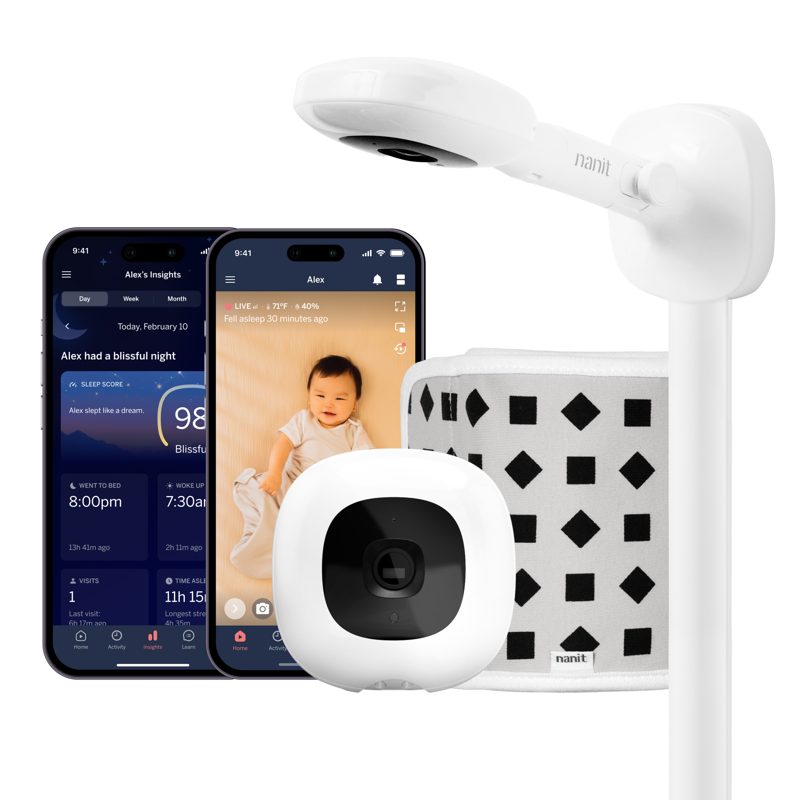 Image: Nanit
The Nanit Pro is an overhead WiFi camera that streams 1080p HD video to your phone, with night vision, two-way audio and temperature and humidity sensors. Its main draw is computer-vision sleep tracking: Nanit's app logs when your baby fell asleep, woke up and how often you visited, and can send a nightly summary.
Basic live streaming works without a subscription. Nanit's Insights plan, which adds sleep tracking history, video history and coaching, costs about $100 a year (some bundles include a trial). Breathing Motion Monitoring works with Nanit's patterned Breathing Wear or Smart Sheets, which track the pattern's movement on camera.
Nanit is a wellness product, not a medical device. It is not FDA-cleared to detect or prevent SIDS or any medical condition.
- ✓Sharp 1080p overhead view
- ✓Detailed sleep tracking and app
- ✓Breathing motion with Nanit wear, no device on baby
- ✓Temperature and humidity sensors
- ✕Needs WiFi; no standalone parent screen
- ✕Best features need a subscription
- ✕Not a medical device
Owlet Dream Sock
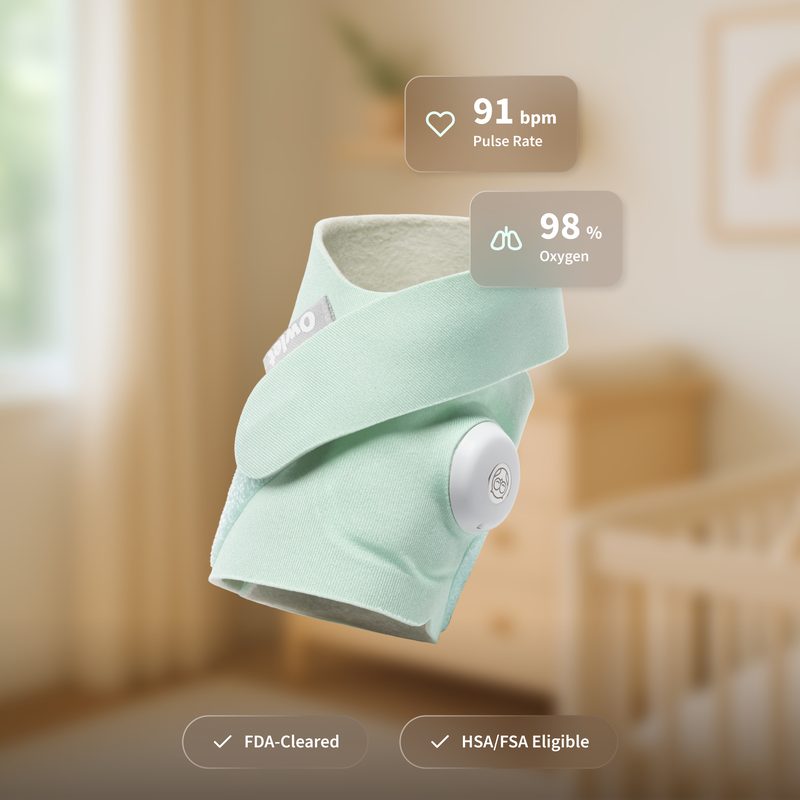 Image: Owlet
The Owlet Dream Sock is a fabric sock that wraps around a baby's foot and uses pulse oximetry to track pulse rate and oxygen saturation. In November 2023 the FDA granted Owlet a De Novo authorization for the Dream Sock, making it a medical device that can notify parents when readings fall outside preset ranges. Owlet lists it at $299.99 for babies 1 to 18 months and 6 to 30 lb.
Readings go to a base station that lights up and sounds an alert, and to the Owlet Dream app. Owlet lists about 16 hours of battery life per charge. The app works without a required subscription; an optional Owlet360 plan adds extra sleep history and features.
There's no camera in the sock. Owlet sells the Dream Duo bundle with its Cam if you want video too. Owlet says the Dream Sock is not intended to prevent or diagnose SIDS.
- ✓FDA De Novo authorized pulse rate and oxygen notifications
- ✓Base station alerts even with your phone away
- ✓No required subscription
- ✓Pairs with Owlet Cam in a bundle
- ✕$299.99 without video
- ✕Sock fit matters; loose fits can cause false alerts
- ✕Needs charging every day
- ✕Only up to 18 months
Buying guide: choosing a smart baby monitor
Decide what you want to know
- Is baby awake or crying? Any camera or audio monitor.
- How is baby sleeping over time? Nanit's sleep tracking.
- Pulse and oxygen readings? Owlet Dream Sock, after talking to your pediatrician.
Check your WiFi
Both rely on WiFi for app features. If your nursery has weak coverage, consider a mesh router or a non-WiFi monitor. See our best baby monitors guide for options.
Consider privacy
Use a strong, unique password, turn on two-factor authentication where offered, and keep firmware updated on any WiFi camera.
Budget for the full setup
Add up mounts, breathing wear or extra socks, and any subscription. Bundles such as Owlet's Dream Duo can cost less than buying separately.
Safety notes
- Cords out of reach. Keep camera cords at least 3 feet from the crib, and use the maker's wall or crib mount.
- Fit the sock correctly. Follow Owlet's sizing and placement guide, and check your baby's skin regularly.
- Not a substitute for supervision. No consumer monitor prevents SIDS.
- Talk to your pediatrician if your baby was premature or has a heart or breathing condition.
More on baby monitors: see Nanit Pro Baby Monitor Review: Is It Worth It?.
Also useful: all our head-to-head comparisons.
FAQ
Nanit vs Owlet: which is better? They do different jobs. Nanit is a camera that shows video and tracks sleep patterns. The Owlet Dream Sock is an FDA-authorized wearable that tracks pulse rate and oxygen saturation. Choose Nanit if you mainly want to see your baby, Owlet if you want health readings, or both if your budget allows.
Is the Owlet Dream Sock FDA approved? The FDA granted the Owlet Dream Sock a De Novo authorization in November 2023. It is authorized to display pulse rate and oxygen saturation and notify parents when readings are outside preset ranges. It is not intended to prevent or diagnose SIDS.
Does Nanit monitor breathing? Nanit Breathing Motion Monitoring tracks the movement of a pattern on Nanit's Breathing Wear or Smart Sheet through the camera. It does not measure oxygen or heart rate and is not a medical device.
Do Nanit and Owlet need a subscription? Neither requires one for basic use. Nanit's Insights plan, about $100 a year, unlocks sleep history and video history. Owlet360 is optional and adds extra history and features.
Can I use Nanit and Owlet together? Yes. They run on separate apps and don't interfere with each other. Some parents use a Nanit camera with an Owlet sock for video plus pulse and oxygen readings.
Do baby monitors prevent SIDS? No. The American Academy of Pediatrics says not to use home cardiorespiratory monitors as a strategy to reduce SIDS risk. Follow safe sleep basics: baby on their back, on a firm flat surface, with no soft bedding, in your room for at least the first 6 months.
What age is the Owlet Dream Sock for? Owlet lists the Dream Sock for babies 1 to 18 months old and 6 to 30 lb, with different sock sizes as your baby grows.
Is Nanit worth it without a subscription? For many families, yes. You still get HD live video, night vision, two-way audio and room sensors. The subscription mainly adds sleep analytics and video history.
Related reviews
- Best Baby Monitors
- Best Non-WiFi Baby Monitor for Two Kids
- Best Baby Bassinets
- Best White Noise Machines for Babies
More in Sleep & Nursery
Unsafe Sleep Products to Avoid: Inclined Sleepers, Loungers, Bumpers and Weighted Sacks
Which baby sleep products are banned or unsafe: inclined sleepers, padded bumpers, loungers and weighted sacks, with CPSC rules, AAP…
Halo BassiNest vs SNOO: Alternatives Compared
Halo BassiNest vs SNOO compared, plus Cradlewise and Newton: bedside swivel vs smart motion, FDA status, price bands and who should buy…
Yogasleep Dohm vs Hatch Rest: Which Sound Machine?
Dohm Classic vs Hatch Baby compared: fan white noise vs app night light, Rest+ discontinuation, prices and which to buy for your nursery.