
In this guide
- Quick picks
- What real owners say: the big takeaways
- How we picked
- Comparison table
- Feature-by-feature comparison
- Strider 12 Sport
- Joovy Bicycoo MG Balance Bike
- Retrospec Cub 2 Balance Bike
- Radio Flyer Air Ride Balance Bike
- Buying guide: choosing a balance bike for a 2-year-old
- How kids learn on a balance bike
- Moving to a pedal bike
- Which balance bike is right for your child?
- Safety notes
- Related guides
- Recall and spec check
- Our guides on balance bikes, trikes and scooters
- More Outdoor Play & Ride-Ons guides
- FAQ
Reader-supported: we may earn a commission from links on this page. Full disclosure
Updated: November 2026 · Researched from manufacturer specs, safety standards and public buyer reviews.
Quick answer
The Strider 12 Sport is the best toddler balance bike overall. Pick the Joovy Bicycoo MG for air tires, the Retrospec Cub 2 on a budget, or the Radio Flyer Air Ride for grass and gravel.
Balance bikes have no pedals. Kids push along with their feet and learn to steer and balance first, and many skip training wheels entirely when they move to a pedal bike.
The things that matter most are seat height (to fit your child's inseam), bike weight and tire type. A bike that's too heavy or too tall is the most common reason toddlers give up.
Safety note: Always use a properly fitted helmet. Your child should be able to sit with both feet flat on the ground. Ride away from streets, driveways and pools, and supervise closely.
Quick picks
Strider 12 Sport
Joovy Bicycoo MG Balance Bike
Retrospec Cub 2 Balance Bike
Radio Flyer Air Ride Balance Bike

What real owners say: the big takeaways
We read Amazon reviews, parenting forum threads and Reddit discussions. These patterns kept coming up:
- Kids learn fast. Many parents report their child coasting with feet up within weeks.
- Light bikes win. Lighter bikes get the most praise from parents of young toddlers.
- Foam vs. air tires. Foam tires never go flat; air tires ride smoother on grass and gravel.
- Fit by inseam, not age. Parents who measured first had fewer problems.
- Brakes are optional at this age. Most toddlers stop with their feet.
How we picked
We did not buy or test these products. Here is how we chose them:
- Started with what parents actually buy. Best-selling, most-reviewed balance bikes on Amazon.
- Checked fit specs. Seat height range and weight limits from manufacturer listings.
- Compared weight and tires.
- Read the complaints. Patterns about assembly, seat range and durability.
- Covered different budgets.
We'll update this guide as listings and owner feedback change.
What we weighed most. A balance bike is about fit and weight. A bike that's too tall or too heavy for the child is the most common reason toddlers lose interest. We gave the most weight to minimum seat height (so the youngest riders can sit flat-footed), the adjustment range (so the bike lasts several years), bike weight relative to a toddler's body weight, and tire type. After that came steering limiters, handbrakes for older riders, build quality, ease of adjustment, and long-term owner feedback on how fast kids learned and moved to pedal bikes.
Sources. Seat heights, weights and tire specs come from maker listings. In the US, bikes with seat heights under 25 inches are regulated as "sidewalk bicycles" under CPSC rules. We did not ride or weigh these bikes ourselves.
How we score: SproutPicks Scores are our own editorial ratings, based on published specs, safety certifications and standards, and patterns across verified owner reviews. We don't hands-on test every product, and these scores are not Amazon ratings. Toy and outdoor-play scores include sub-scores for Safety, Learning Value (skills like balance and coordination) and Durability.
Comparison table
| Bike | Seat height | Tires | Weight | Score |
|---|---|---|---|---|
| Strider 12 Sport | 11–17 in. | 12" foam, never flat | 6.7 lb | 9.2/10 |
| Joovy Bicycoo MG Balance Bike | Check listing | 12" air tires | About 6.7–7.7 lb | 8.6/10 |
| Retrospec Cub 2 Balance Bike | 11–15 in. | 12" puncture-proof | Light (check listing) | 8.3/10 |
| Radio Flyer Air Ride Balance Bike | Check listing | 12" air tires | Steel frame (heavier) | 8.1/10 |
Feature-by-feature comparison
| Feature | Strider 12 Sport | Joovy Bicycoo MG | Retrospec Cub 2 | Radio Flyer Air Ride |
|---|---|---|---|---|
| Frame | Steel, 6.7 lb | Aluminum, ~8.75 lb | Light (check listing) | Steel (heavier) |
| Seat height | 11–17 in. | Check listing | 11–15 in. | Check listing |
| Tires | Foam, never flat | Air-filled | Puncture-proof | Rubber air tires |
| Brake | None (foot stopping) | Rear hand brake | None | Check listing |
| Ages (per listing) | Toddler to about 5 | Check listing | ~18 months–3 years | 1.5–5 years |
| Main owner complaint | Price | Heavy for young toddlers | Outgrown fast | Limited long-term feedback |
| Best for | Most kids, long adjustment range | Rough ground, older toddlers | Budget first bike | Comfortable ride, footrest |
Strider 12 Sport
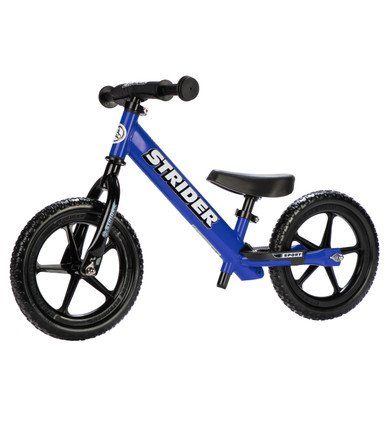 Image: Strider
Strider is the brand most parents think of first. The 12 Sport has a seat height range of 11 to 17 inches (fitting inseams of about 12 to 18 inches), never-flat 12-inch foam tires, and a 6.7 lb steel frame, according to Strider. It's labeled for ages 1 to 4, with a 60 lb maximum rider weight.
- ✓Light and easy to handle
- ✓Wide seat and handlebar adjustment
- ✓Huge owner base and accessory options
- ✕Foam tires are bumpier on rough ground
- ✕No brake
- ✕Premium price for a simple bike
Joovy Bicycoo MG Balance Bike
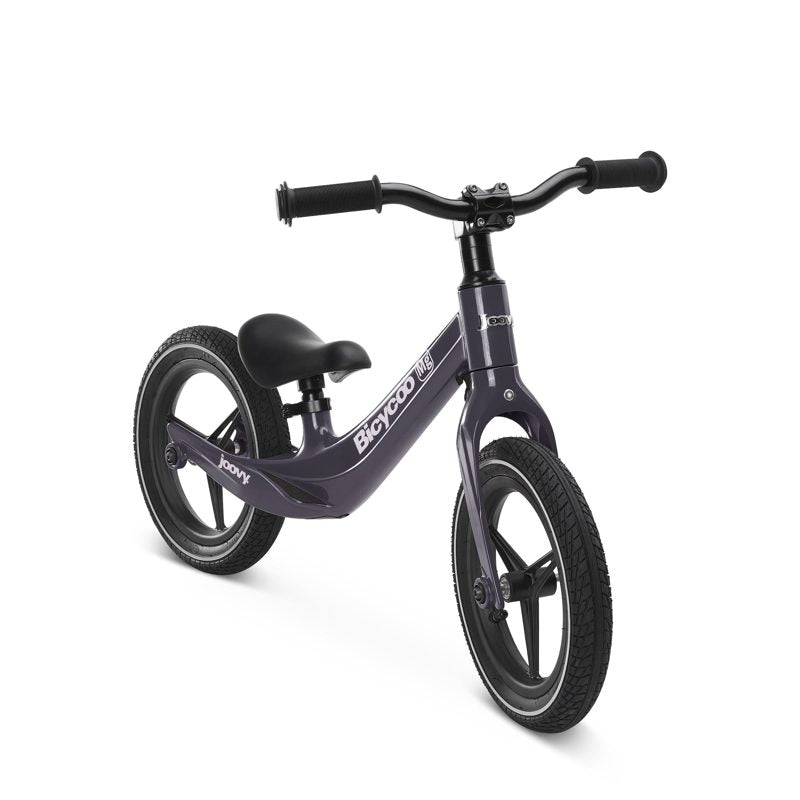 Image: Joovy
The Bicycoo MG is the current version of Joovy's Bicycoo, which used to have an aluminum frame. It has a one-piece magnesium frame and 12-inch air-filled tires, and Joovy rates it for 18 months to 5 years and riders up to 55 lb. Joovy lists it at $99.99 and gives its weight as both 6.7 and 7.7 lb on the same page. Air tires give a smoother ride on rough ground. Joovy's current page doesn't mention a hand brake, so check the listing if a brake matters to you.
- ✓Air tires for smoother rides
- ✓Hand brake for older toddlers
- ✓Aluminum frame
- ✕Heavier than the Strider
- ✕Air tires can go flat
- ✕Brake may be hard for small hands
Retrospec Cub 2 Balance Bike
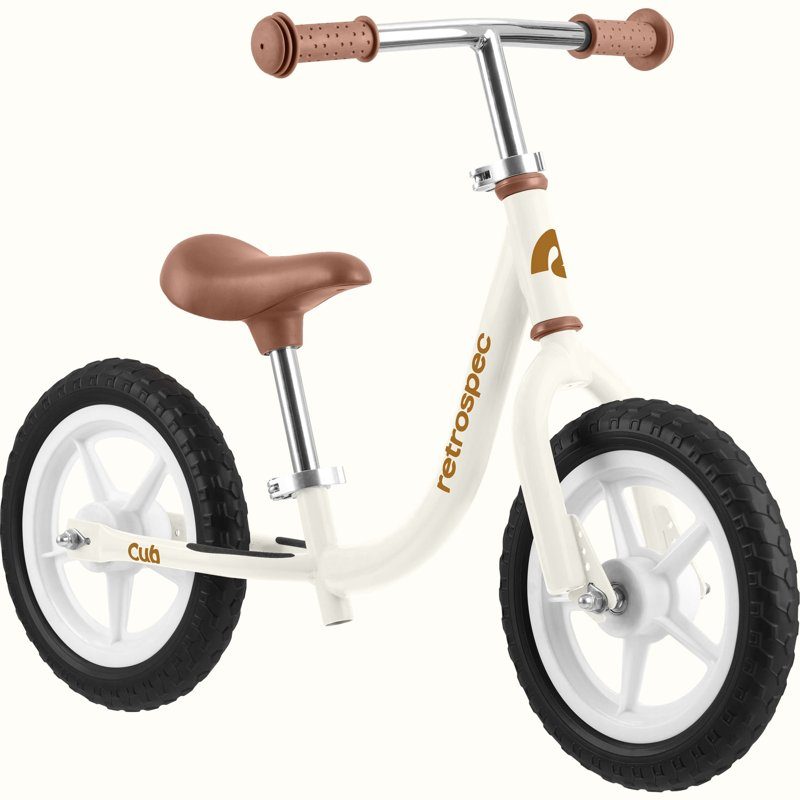 Image: Retrospec
The Cub 2, which replaced the original Cub, is a low-cost steel balance bike for younger toddlers, rated for 18 months to 4 years. It has flat-free 12-inch EVA foam tires, no brake, a seat that adjusts from 11 to 15 inches and an extra-narrow step-through frame with grip-tape footholds. Retrospec lists it at $69.99, often on sale.
- ✓Low price
- ✓Good for small toddlers
- ✓Tires won't go flat
- ✕Smaller seat range, so kids outgrow it sooner
- ✕Basic components
- ✕Best on paved surfaces
Radio Flyer Air Ride Balance Bike
Radio Flyer's Air Ride has 12-inch rubber air tires, a footrest and a bell, and is labeled for ages 1.5 to 5, per the listing.
- ✓Air tires for mixed terrain
- ✓Long age range
- ✓Footrest for coasting
- ✕Steel frame is heavier
- ✕Air tires need occasional pumping
- ✕Newer listing with fewer reviews
Buying guide: choosing a balance bike for a 2-year-old
1. Measure inseam, not age
Measure your child's inseam with shoes on (a book pressed up between the legs against a wall works well). For a beginner, the seat's lowest height should be about an inch or so below the inseam so they can sit with both feet flat and knees slightly bent. Check the maker's sizing chart, as some list inseam ranges directly.
2. Weight matters more than you'd think
A lighter bike is easier to lift, steer and pick up after a fall. A common rule of thumb parents share is to keep the bike at roughly a third of the child's body weight or less. That's why lightweight steel and aluminum frames are popular.
3. Foam vs. air tires
Foam or puncture-proof tires are lighter, never go flat and need no maintenance, which makes them ideal for sidewalks and indoors. Air tires add cushioning and grip on grass, gravel and trails, but add weight and need pumping.
4. Brakes
Toddlers mostly stop with their feet. A hand brake is useful for older preschoolers riding faster or on hills, and it builds a skill they'll use on a pedal bike, but small hands need levers they can reach.
5. Adjustability
Tool-free seat and handlebar adjustments make it easy to keep the fit right as a child grows. Long seat posts, or extra-long posts sold separately, extend the bike's useful life.
6. Steering limiter
Some bikes limit how far the handlebar turns, which can prevent sharp jackknife turns and protect brake cables. Others leave steering free.
7. Footrest
A footrest gives kids a place for their feet once they start gliding. It's helpful but not essential.
How kids learn on a balance bike
- Walking: At first, toddlers walk the bike while sitting or standing over it. Let them go at their own pace.
- Striding: They start taking bigger steps and pushing off.
- Gliding: They lift their feet for short glides, which is the key balance moment.
- Steering and stopping: They lean into turns and learn to stop with their feet (or a hand brake).
There's no need to hold the bike or the child. Parents and bike educators often suggest letting the child figure out balance on their own, on flat, smooth ground.
Moving to a pedal bike
Many balance-bike riders skip training wheels entirely and move to a pedal bike once they can glide, steer and stop confidently, often somewhere between ages 3 and 5. Choose a pedal bike sized so they can still touch the ground, and keep it light.
Which balance bike is right for your child?
For most families, the Strider 12 Sport is the safest bet, thanks to its light frame, never-flat tires and wide seat range. If you ride on rough ground or your child is older, the Joovy Bicycoo MG's air tires suit that. For a low-cost first bike for a young toddler, the Retrospec Cub 2 works well, but expect to size up sooner. The Radio Flyer Air Ride adds comfort features like air tires and a footrest, with less long-term owner feedback so far.
Safety notes
- Helmet every ride. Use a helmet certified to the CPSC bicycle helmet standard that fits snugly, sitting level just above the eyebrows, with straps forming a V under each ear.
- Closed-toe shoes. Kids stop with their feet, so sandals and bare feet lead to scraped toes.
- Ride away from traffic and driveways, and stay off hills until your child can stop reliably.
- Supervise closely, especially near streets, pools, stairs and slopes.
- Check the bike. Make sure the seat and handlebar clamps are tight, the tires are in good shape, and any brake works.
- Check for recalls at CPSC.gov/Recalls.
Every ride needs a helmet that fits. Compare the best toddler bike helmets, and if your child prefers pedals, the best toddler tricycles.
Related guides
Recall and spec check
On November 19, 2026 we searched the CPSC recall records for every pick in this guide and linked each maker’s own product page so you can confirm current specs and limits. Recalls can be announced at any time, so check CPSC and register your product with the maker to get notices.
- Strider 12 Sport · maker’s product page · no recall found
- Joovy Bicycoo MG Balance Bike · maker’s product page · no recall found · Joovy's current Bicycoo, with a magnesium frame.
- Retrospec Cub 2 Balance Bike · maker’s product page · no recall found · Replaced the original Cub.
- Radio Flyer Air Ride Balance Bike · maker’s product page · no recall found
Our guides on balance bikes, trikes and scooters
- Best Balance Bike for an 18-Month-Old (2026)
- Best 16-Inch Kids' Bikes for First Pedal Riders
- Strider vs woom: Which Balance Bike Should You Buy?
- Wishbone 3-in-1 Review: Trike-to-Balance-Bike From Age 1
- Best Toddler Tricycle (2026): Push Trikes Compared
- Best Kids' Scooters for Ages 3–5
- Micro Mini vs Globber Primo: Which Toddler Scooter Should You Buy?
More Outdoor Play & Ride-Ons guides
FAQ
What age should a child start a balance bike? Many start between 18 months and 2 years, once they walk confidently. Fit by inseam rather than age.
How do I measure for a balance bike? Measure your child's inseam in shoes. The lowest seat height should be about the same or slightly lower, so both feet rest flat.
Do balance bikes need brakes? Most toddlers stop with their feet. A hand brake helps older kids moving to faster riding.
When do kids move to a pedal bike? Often between ages 3 and 5, once they can glide with feet up and steer confidently.
Is a balance bike better than training wheels? Many parents and bike educators prefer balance bikes, because they teach balance and steering first, and those are the hardest parts of riding. Training wheels can let kids pedal without learning to balance.
Can an 18-month-old use a balance bike? Some can, if the bike's lowest seat height fits their inseam. Many toddlers start by walking the bike, and real gliding usually comes later.
Foam or air tires for a toddler? Foam tires are lighter and maintenance-free, which suits sidewalks and indoors. Air tires ride better on grass and gravel.
How long will a balance bike last? Bikes with wide seat ranges can fit from around 18 months to age 4 or 5. Check the maximum seat height against your child's growth.
Should my child use a balance bike or a scooter? Many kids use both. Read our scooter guide for three-wheel options.
What is the best balance bike for a 2-year-old? Pick by inseam, not age. The Strider 12 Sport has a seat range of 11 to 17 inches and foam tires that never go flat. The Retrospec Cub 2 is a lower-cost option Retrospec rates for 18 months to 4 years. Measure your child in shoes and choose a bike whose lowest seat height lets them stand flat-footed.
Strider vs Woom: which should I buy? We don't list Woom here, but the trade-offs are well documented. The Strider 12 Sport costs less and uses maintenance-free foam tires. Woom's balance bike costs more and adds air tires and a rear hand brake, according to the maker. If budget matters most, Strider is the simpler buy.
More in Outdoor Play & Ride-Ons
Best Toddler Snowsuits (2026)
The best toddler snowsuits from Reima, L.L.Bean, The North Face, Columbia and Patagonia, plus AAP layering advice and why snowsuits don't…
Best Kids' Sleds (2026)
Five kids' sleds compared, from steerable sleds with brakes to baby pull sleds, plus AAP rules on helmets, supervision, feet-first riding…