
In this guide
Reader-supported: we may earn a commission from links on this page. Full disclosure
Updated: October 2026 · Researched from manufacturer specs, safety standards and public buyer reviews.
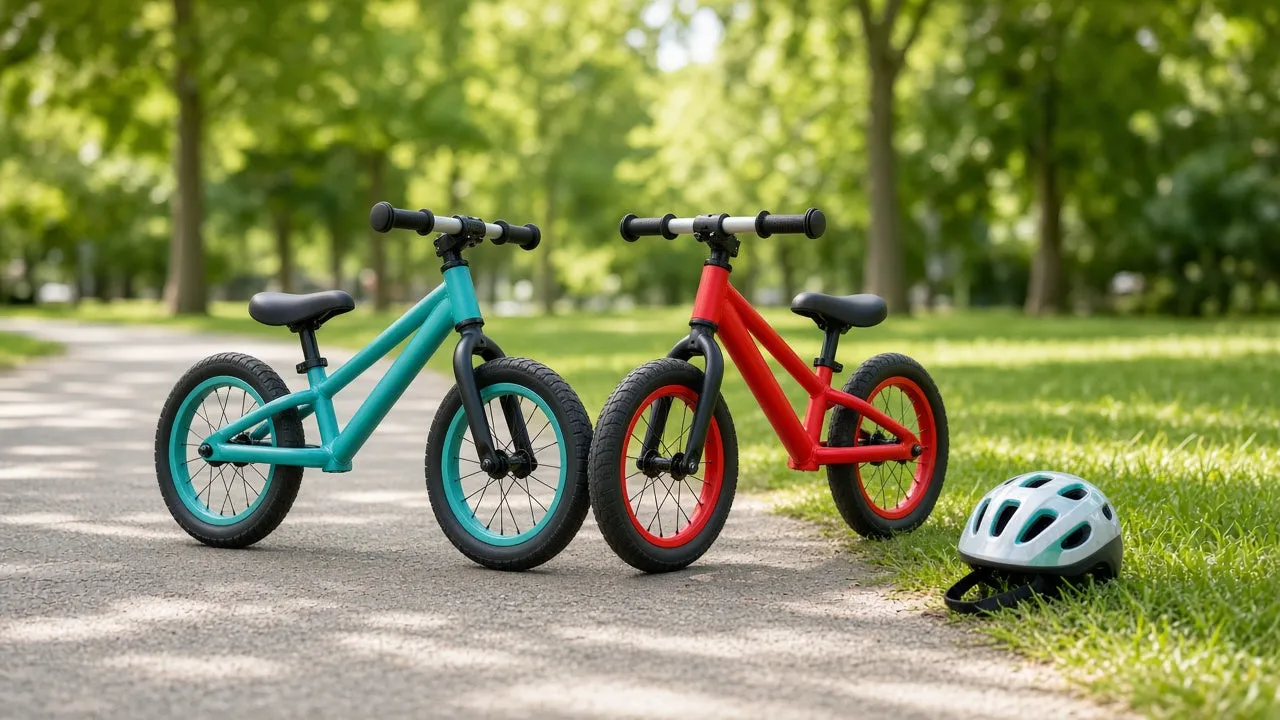
Strider and woom are the two balance bike brands parents compare most. Both make light 12-inch bikes for toddlers, both are widely recommended, and both have loyal fans. They take very different approaches, though. Strider keeps things simple and affordable with foam tires and a long adjustment range. woom builds a lighter, more refined bike with air tires and a real hand brake, at roughly twice the price.
The short answer: the Strider 12 Sport is the best value for most families: it fits ages 1 to 4 per Strider and costs much less. The woom GO 1 is the premium choice if you want the lightest frame, a child-sized brake and smoother air tires, and you're fine moving up a size sooner. If budget is the main concern, the Retrospec Cub covers the basics for less.
Safety note: Always use a properly fitted helmet. Your child should be able to sit with both feet flat on the ground. Ride away from streets, driveways, hills and pools, and supervise closely.
Quick picks
Strider 12 Sport
- Weight · key feature
- 6.7 lb · foam tires
woom GO 1 (12-inch)
- Weight · key feature
- 6.4 lb · air tires + brake
Retrospec Cub Balance Bike
- Weight · key feature
- Puncture-proof tires
Strider vs woom: head-to-head
This table compares the two bikes using each maker's published specs (checked November 2026). Prices change often, so treat them as a rough guide.
| Feature | Strider 12 Sport | woom GO 1 |
|---|---|---|
| Frame | Steel | AA 6061 aluminum |
| Listed weight | 6.7 lb | 6.4 lb |
| Seat height | 11–17 in. (two seat posts) | 10.2–13.9 in. |
| Child age / size (per maker) | 1–4 years, 12–18 in. inseam | 1.5–3.5 years, 31–40 in. |
| Tires | 12" EVA foam, never flat | 12" Schwalbe air tires |
| Brake | None (foot stopping) | Rear V-brake, child-sized green lever |
| Steering limiter | No | Yes |
| Footrest | Yes, built-in | No (footrest on GO 1 PLUS) |
| Where sold | Amazon and most big retailers | Mostly direct from woom.com |
| Price (checked Nov 2026) | Usually around $120–$140 | $249 list |
| Main owner complaint | No brake; foam tires feel bumpy | Price; outgrown sooner |
The real differences, explained
1. Price and value
This is the biggest gap. The woom GO 1 lists at $249, while the Strider 12 Sport usually sells for about half that. Strider's longer seat range also means one bike can carry many kids from their second birthday to age 4 or a little beyond. woom expects you to move up to the 14-inch GO 1 PLUS or a woom 2 sooner. woom bikes do hold resale value well, so part of the extra cost can come back when you sell.
2. Weight and handling
Both bikes are light. woom lists 6.4 lb and Strider 6.7 lb, so the difference on paper is small. woom adds a long wheelbase, a low step-over and a steering limiter, which make it feel stable for very small riders. Strider's light weight and simple design are why it became the default balance bike in the first place.
3. Tires
Strider's foam tires never go flat. They're ideal for sidewalks, driveways and indoor practice, but they grip less and feel firmer on grass, gravel and wood chips. woom's air-filled Schwalbe tires cushion bumps and grip better on mixed surfaces, but they add a little maintenance.
4. Brakes
The woom GO 1 has a child-sized rear V-brake with a green lever, a color woom uses across its range so kids learn which lever is the rear brake. Strider has no brake on the 12 Sport; kids stop with their feet. Most toddlers don't need a brake, but older 3-year-olds who ride fast or on slopes may benefit from learning one early.
5. Fit and age range
woom's lowest saddle height (10.2 in.) is a little lower than Strider's (11 in.), which helps the smallest toddlers. Strider's top seat height (17 in. with the long post) is much higher than woom's (13.9 in.), which is why it lasts longer. If your child is tall for their age or already 3, the Strider or the 14-inch woom GO 1 PLUS is the better fit.
How we picked
We did not buy or test these bikes. This comparison follows our standard research method:
- Started with the search. "Strider vs woom" is one of the most common balance bike comparisons parents search for.
- Pulled specs from the makers. Weight, seat heights, tire types, brakes and age ranges come from Strider and woom product pages.
- Read owner feedback. We looked at Amazon reviews for the Strider, reviews on woom.com and parent discussion threads, focusing on complaints and patterns over time.
- Checked safety guidance. We reviewed CPSC guidance on children's bicycles and helmets.
- Added a budget option. Not every family wants to spend $120 or more on a first bike, so we included a lower-cost pick.
How we score: SproutPicks Scores are our own editorial ratings, based on published specs, safety certifications and standards, and patterns across verified owner reviews. We don't hands-on test every product, and these scores are not Amazon ratings. Outdoor-play scores include sub-scores for Safety, Learning Value and Durability.
Strider 12 Sport
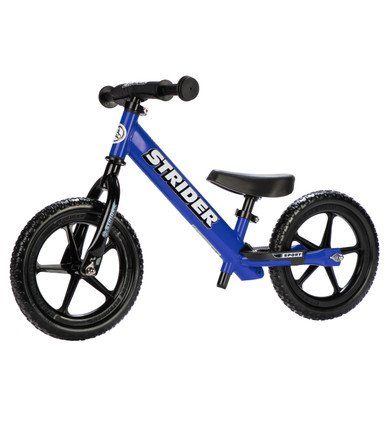 Image: Strider
The Strider 12 Sport is the bike most parents picture when they hear "balance bike." Strider lists a 6.7 lb steel frame, a seat height range of 11 to 17 inches using two included seat posts, never-flat 12-inch foam tires, a padded seat and mini grips sized for small hands. Strider labels it for ages 1 to 4 (inseams of about 12 to 18 inches), with a 60 lb maximum rider weight and a built-in footrest.
Its biggest advantage is range. With the standard and extra-long seat posts, the 12 Sport can fit a small 2-year-old and still work for many 4-year-olds, and some tall-enough 5-year-olds. It also has the largest accessory ecosystem of any balance bike, from rocking bases to a snow-ski kit, and a huge owner community, which makes it easy to find spare parts and second-hand bikes.
What you give up compared with woom is refinement. There is no hand brake, the foam tires feel firmer on rough ground, and the steel frame is a little heavier than woom's aluminum frame on paper.
- ✓Wide 11–17 in. seat range fits ages 1 to 4
- ✓Foam tires never go flat and need no pumping
- ✓Much lower price than woom
- ✓Huge owner base, accessories and resale market
- ✕No hand brake
- ✕Foam tires are bumpier on gravel and grass
- ✕Basic components compared with premium bikes
woom GO 1 (12-inch)
The woom GO 1 (formerly woom 1) is woom's 12-inch balance bike. woom lists a 6.4 lb aluminum frame, a saddle height of 10.2 to 13.9 inches, Schwalbe air-filled tires, a steering limiter, and a child-sized rear V-brake with a green lever so kids can learn which lever is the rear brake. It is sized for children about 18 months to 3.5 years and 31 to 40 inches tall, and costs $249 on woom.com (checked November 2026).
The low minimum saddle height is the GO 1's big strength for young toddlers: kids around 31 inches tall can sit flat-footed. The steering limiter helps stop the handlebars from jackknifing during falls, and the hand brake lets older toddlers practice the skill they will need on a pedal bike.
The trade-off is a shorter size window. woom says to move up to the 14-inch GO 1 PLUS or a woom 2 once a child outgrows it, and some owners note the fixed handlebar height feels low for tall 3-year-olds. woom also sells direct, so you won't find it on Amazon.
- ✓Lightest bike here at 6.4 lb
- ✓Hand brake with a child-sized lever
- ✓Air tires ride smoother on grass and gravel
- ✓Steering limiter and very low saddle for small toddlers
- ✓Strong resale value
- ✕About $249, roughly double the Strider
- ✕Shorter size range (to about 3.5 years)
- ✕Air tires can puncture and need pumping
- ✕Sold mainly direct from woom
Retrospec Cub Balance Bike
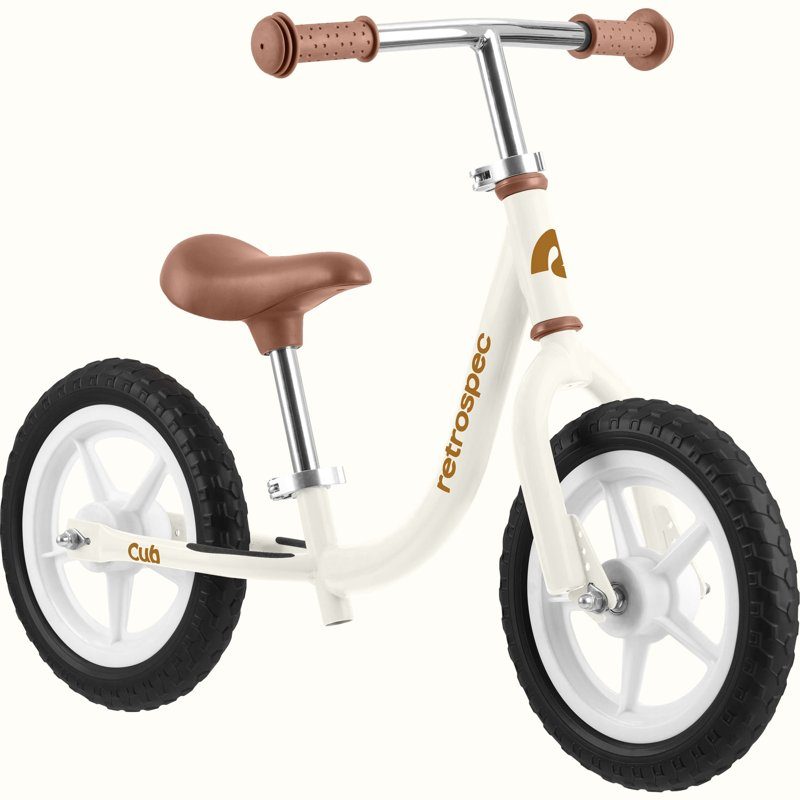 Image: Retrospec
If neither the Strider nor the woom fits your budget, the Retrospec Cub is a common alternative. Retrospec lists a low 11 to 14.5-inch seat range, puncture-proof 12-inch tires and a light frame for roughly 18 months to 3 years.
It covers the basics: a low step-through, no-flat tires and simple adjustments. It doesn't have a brake or the long seat range of the Strider, so most kids will outgrow it sooner.
- ✓Low price
- ✓Low seat for small toddlers
- ✓Tires won't go flat
- ✕Shorter seat range than Strider
- ✕Basic components and finish
- ✕No brake
Buying guide: Strider or woom for your child?
Choose the Strider 12 Sport if…
- You want one bike that fits from about age 2 to 4.
- Your child rides mostly on sidewalks, paths and driveways.
- You want no maintenance and no flat tires.
- You'd rather spend less and keep the difference for a helmet and a first pedal bike.
Choose the woom GO 1 if…
- Your child is small (around 31 to 36 inches tall) and needs a very low saddle.
- You ride on grass, gravel or park trails where air tires help.
- You want your child to learn to use a hand brake early.
- You plan to resell the bike or pass it to a sibling and value build quality.
Measure before you buy
Measure your child's inseam with shoes on by pressing a hardcover book gently up between their legs against a wall, then measuring from the floor to the top of the book. The lowest seat height should be about an inch below that number so they can sit flat-footed with slightly bent knees. Most fit problems come from buying by age instead of inseam.
Don't forget the helmet
Budget for a properly fitting helmet that meets the CPSC bicycle helmet standard. It should sit level on the forehead, about two finger-widths above the eyebrows, with straps forming a V under each ear.
How kids typically learn
Most toddlers start by walking the bike, then take longer strides, then lift their feet for short glides. Let them set the pace and keep sessions short. Many parents report their child gliding confidently within a few weeks of regular play, but every child is different.
Safety notes
- Helmets every ride. Use a helmet certified to the CPSC bicycle helmet standard, and replace it after any crash.
- Sidewalk bikes. In the US, small children's bikes with low seat heights are regulated as sidewalk bicycles under CPSC rules (16 CFR 1512). Buy from established brands and retailers.
- Ride in safe places. Keep toddlers away from streets, driveways, pools and steep hills. Balance bikes can pick up speed quickly on slopes.
- Check the bike. Make sure the seat clamp and handlebars are tight, the seat post is above the minimum insertion mark, and air tires are pumped to the listed pressure.
- Check recalls at CPSC.gov/Recalls.
More on balance bikes, trikes and scooters: see Best Balance Bike for an 18-Month-Old (2026) and Wishbone 3-in-1 Review: Trike-to-Balance-Bike From Age 1.
Also useful: all our head-to-head comparisons.
FAQ
Strider vs woom: which balance bike is better? For most families, the Strider 12 Sport is the better value: it costs roughly half as much and fits a wider age range. The woom GO 1 is the better-built bike, with an aluminum frame, air tires, a steering limiter and a child-sized hand brake. Choose woom if budget allows and your child is on the younger, smaller side.
Is the woom GO 1 worth the money? It can be if you value low weight, a hand brake and resale value. woom bikes tend to resell well, which reduces the real cost. If your child will only ride on sidewalks for a year or two, the Strider gives you most of the benefit for less.
Which is lighter, Strider or woom? On paper the woom GO 1 is slightly lighter: woom lists 6.4 lb and Strider lists 6.7 lb for the 12 Sport. The difference is small; both are light enough for most 2-year-olds.
Does a toddler need a hand brake on a balance bike? Not usually. Most toddlers stop with their feet. A brake becomes more useful for older preschoolers who ride faster or on slopes, and learning to use it early can make the move to a pedal bike easier.
What age is best to start a balance bike? Many children start between 18 months and 2.5 years, once they walk confidently. Fit matters more than age: your child should sit with both feet flat on the ground and knees slightly bent.
How do I size a balance bike? Measure your child's inseam in shoes. Choose a bike whose lowest seat height is about an inch below the inseam. The woom GO 1 starts at 10.2 in. and the Strider 12 Sport at 11 in.
Foam tires or air tires for a balance bike? Foam tires (Strider) never go flat and need no maintenance, which is great for sidewalks. Air tires (woom) give more grip and cushioning on grass, gravel and trails but need pumping and can puncture.
Can my child go straight from a balance bike to a pedal bike? Many do. Kids who can glide with their feet up, steer and stop often skip training wheels entirely. Choose a light first pedal bike to keep the transition easy.
Related reviews
- Best Toddler Balance Bikes
- Best Kids Scooters for Ages 3–5
- Best Outdoor Playsets and Climbers for Toddlers
More in Outdoor Play & Ride-Ons
Burley Bee Bike Trailer Review: Simple, Safe Basics
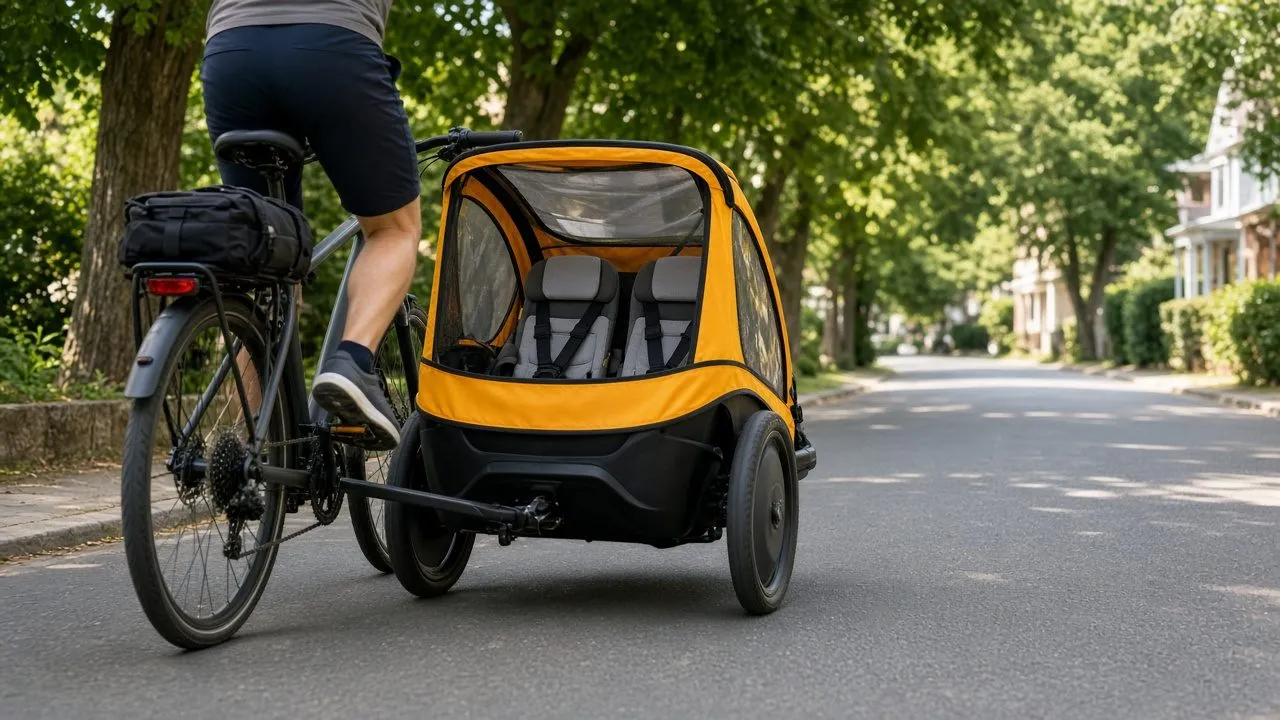
Burley Bee review: a simple, safe double bike trailer for bike paths, without jogging or stroller modes. Research-based, not tested.
Little Tikes Cozy Coupe Review: Classic Ride-On, Real Limits
Little Tikes Cozy Coupe review: the classic toddler ride-on car. Size, durability, and what it will not teach. Research-based, not tested.
Best Toddler Snowsuits (2026)
The best toddler snowsuits from Reima, L.L.Bean, The North Face, Columbia and Patagonia, plus AAP layering advice and why snowsuits don't…