
In this guide
- Quick picks
- What real owners say: the big takeaways
- How we picked
- Comparison table
- Feature-by-feature comparison
- Micro Kickboard Micro Mini Scooter
- Globber Primo 3-Wheel Scooter
- Radio Flyer My 1st Scooter Sport
- Buying guide: the best 3-wheel scooter for a 3-year-old
- How to help a preschooler learn to scoot
- When to move up to a two-wheel scooter
- Which scooter is right for your child?
- Safety notes
- Related guides
- Recall and spec check
- Which scooter at age 3, 4 and 5
- FAQ
Reader-supported: we may earn a commission from links on this page. Full disclosure
Updated: November 2026 · Researched from manufacturer specs, safety standards and public buyer reviews.
Quick answer
For most kids aged 3 to 5, the Micro Kickboard Micro Mini is the best scooter: a stable three-wheel, lean-to-steer design that lasts into kindergarten. The Globber Primo is the best value, with a steering lock for beginners and a deck rated up to 110 lb.
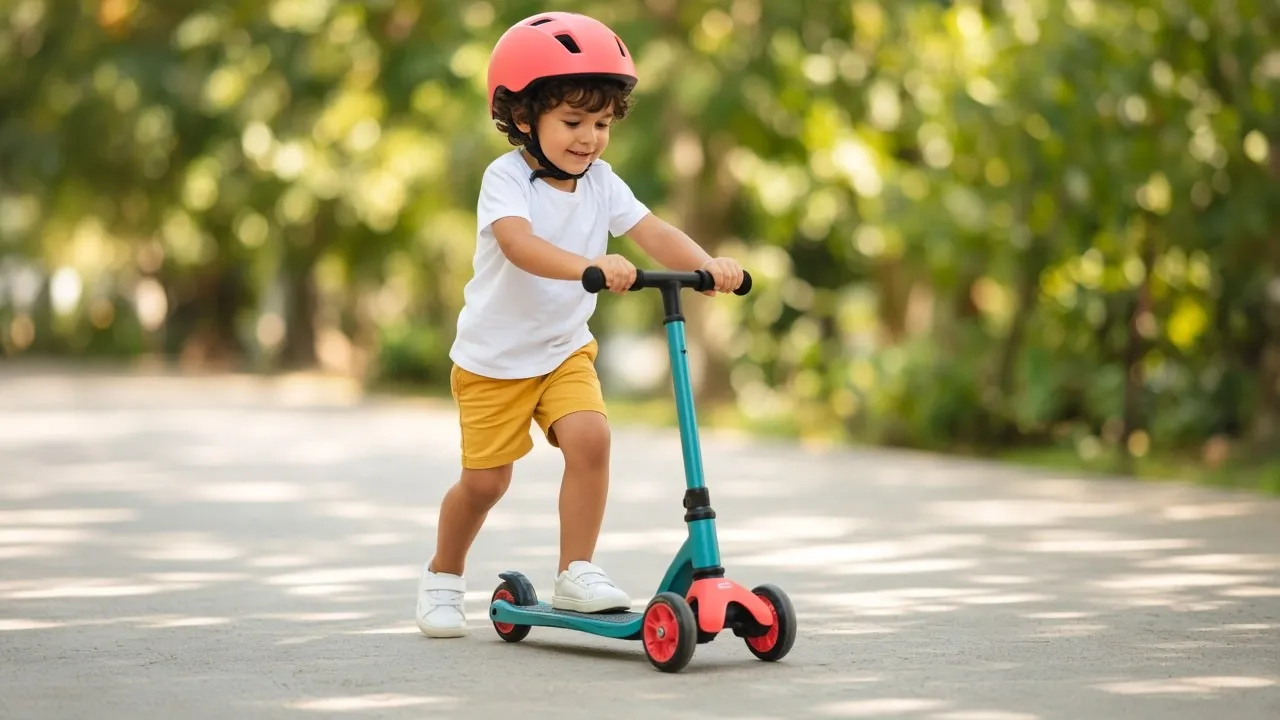
Three-wheel scooters are a great first ride for preschoolers. Two wheels in front make them stable, and lean-to-steer designs help kids build balance and coordination.
The big differences are steering style, handlebar adjustment, weight and build quality. Below are three well-reviewed options.
Safety note: Always use a helmet, and consider knee and elbow pads. Ride on smooth, flat paths away from traffic, driveways and hills, and supervise closely.
Quick picks
Micro Kickboard Micro Mini
Globber Primo 3-Wheel Scooter
Radio Flyer My 1st Scooter Sport
What real owners say: the big takeaways
We read Amazon reviews, parenting forum threads and Reddit discussions. These patterns kept coming up:
- Lean-to-steer clicks quickly. Many parents say kids figured it out in days.
- Quality shows over time. Premium scooters get praise for lasting through siblings.
- Weight matters. Parents end up carrying scooters often, so light is better.
- Adjustable handlebars extend use.
- Brakes get used. A rear foot brake helps kids learn to stop.
How we picked
We did not buy or test these products. Here is how we chose them:
- Started with what parents actually buy. Best-selling three-wheel scooters on Amazon.
- Checked age ranges and weight limits. From manufacturer listings.
- Compared steering and adjustability.
- Read the complaints. Patterns about wheels, durability and steering.
- Covered different budgets.
We'll update this guide as listings and owner feedback change.
What we weighed most. For preschool scooters, stability and steering style matter more than speed. We gave the most weight to three-wheel stability, steering a beginner can handle (lean-to-steer or a steering lock), a handlebar that adjusts as the child grows, and a reliable rear foot brake. After that we looked at weight (a parent usually ends up carrying it home), rider weight limits, whether parts can be replaced, and long-term durability in owner reviews, including how often scooters get passed down to younger siblings.
Standards we looked for. In the US, kick scooters are covered by the ASTM F2264 standard for non-powered scooters, and toys for children under 12 must meet CPSC requirements. We relied on maker listings and labeling for these details. We did not ride, measure or crash-test any scooter.
How we score: SproutPicks Scores are our own editorial ratings, based on published specs, safety certifications and standards, and patterns across verified owner reviews. We don't hands-on test every product, and these scores are not Amazon ratings. Toy and outdoor-play scores include sub-scores for Safety, Learning Value (skills like balance and coordination) and Durability.
Comparison table
| Scooter | Steering | Adjustable bar | Age range | Score |
|---|---|---|---|---|
| Micro Kickboard Micro Mini | Lean-to-steer | Yes (49–68 cm) | 2–5 years | 9.2/10 |
| Globber Primo 3-Wheel Scooter | Lean-to-steer with steering lock | Yes (adjustable heights) | 3+ years | 8.7/10 |
| Radio Flyer My 1st Scooter Sport | Handlebar steering | Check listing | 2–5 years | 8.0/10 |
Feature-by-feature comparison
| Feature | Micro Mini | Globber Primo | Radio Flyer My 1st Scooter Sport |
|---|---|---|---|
| Steering | Lean-to-steer | Lean-to-steer + steering lock | Handlebar steering |
| Handlebar height | Adjustable, 49–68 cm | Adjustable (check listing) | Check listing |
| Weight / limit | 4.2 lb scooter, 110 lb rider | Deck rated to 110 lb | Check listing |
| Brake | Rear foot brake | Rear foot brake | Foot brake |
| Ages (per listing) | 2–5 years | 3+ years | 2–5 years |
| Main owner complaint | Price | Feels heavier | Outgrown quickly |
| Best for | Long-term use, siblings | Nervous beginners on a budget | First scooter for young 2s and 3s |
Micro Kickboard Micro Mini Scooter
Micro now sells the former Mini Deluxe as the Micro Mini Scooter: the same 4.2 lb scooter with an adjustable T-bar (19.25 to 27 inches), rated for ages 2 to 5 and riders up to 110 lb, listed at $89.99.
The Mini Micro Deluxe is the original three-wheel lean-to-steer scooter. Micro lists an adjustable handlebar (49 to 68 cm), a scooter weight of 4.2 lb and a maximum rider weight of 110 lb, and says parts are replaceable (Micro Kickboard product page).
- ✓Very smooth, quiet ride
- ✓Light (4.2 lb)
- ✓Replaceable parts
- ✕Premium price
- ✕Lean-to-steer takes a few rides for some kids
- ✕No seat
Globber Primo 3-Wheel Scooter
Globber's Primo has a patented steering lock for beginners, an adjustable handlebar and a reinforced deck that supports up to 110 lb, per the listing.
- ✓Steering lock helps beginners
- ✓Lower price than Micro
- ✓Grows with your child
- ✕Heavier than Micro
- ✕Wheels can be louder
- ✕Fewer replaceable parts
Radio Flyer My 1st Scooter Sport
Radio Flyer's My 1st Scooter Sport has an extra-wide base, two front wheels and a foot brake for stability, according to the brand. It's labeled for ages 2 to 5.
- ✓Very stable wide base
- ✓Foot brake
- ✓Budget-friendly
- ✕Kids may outgrow it quickly
- ✕Less smooth than premium scooters
- ✕Handlebar steering is less natural for balance
Buying guide: the best 3-wheel scooter for a 3-year-old
1. Three wheels first
Almost every preschooler should start on a three-wheel scooter. Two wheels in front give a wide, stable base, so a child can learn to push, glide and brake before they have the balance a two-wheel scooter needs. Most kids move to two wheels somewhere around age 5 to 7, once they can glide confidently and stop on their own.
2. Lean-to-steer vs. handlebar steering
With lean-to-steer, the child tilts their body and the scooter turns. It is smooth and builds balance, and it is the style most kids' scooter brands use. With handlebar steering, the bar turns the wheels like a bike, which some very young children find more intuitive but which can make sharp, wobbly turns at speed. A steering lock, offered on some models, keeps the scooter going straight while a beginner learns to push.
3. Adjustable handlebar
The handlebar should sit roughly between your child's waist and chest. An adjustable T-bar lets one scooter fit from toddler to kindergarten, which is the main reason premium scooters often work out cheaper per year of use.
4. Brake
Look for a wide rear foot brake that a small foot can find easily. Practice braking in a driveway or empty playground before heading for sidewalks or hills.
5. Weight and portability
Preschoolers rarely ride the whole way home. A lighter scooter with a carry strap, or one that folds or has a removable bar, makes the walk back easier. Check the scooter's own weight as well as the rider limit.
6. Wheels and deck
Wider polyurethane wheels give a smoother ride on cracked sidewalks. A low, wide deck makes pushing off easier and adds stability. Light-up wheels are fun but don't affect performance.
7. Durability and parts
Owners often say well-built scooters last through several children. Replaceable wheels, bearings and grips extend a scooter's life, so check whether spare parts are sold.
Scooting also calls for a helmet. See our best toddler bike helmets guide.
How to help a preschooler learn to scoot
- Start on flat, smooth ground. An empty playground, tennis court or quiet path is ideal. Avoid slopes until braking is reliable.
- Find the pushing foot. Let your child choose which foot stays on the deck. Most kids naturally push with their stronger leg.
- Practice push-and-glide. Encourage two or three pushes followed by a glide with both feet on the deck. Short games like "glide to the line" help.
- Teach braking early. Practice pressing the rear brake with the back foot before your child picks up speed.
- Add turns last. On a lean-to-steer scooter, show them how to gently lean the direction they want to go. Leave the steering lock on until they are gliding straight with confidence.
Keep sessions short and fun. Most preschoolers pick up the basics within a few outings.
When to move up to a two-wheel scooter
Signs your child may be ready: they can glide on one foot for several seconds, turn smoothly without stopping, brake on their own, and are bored by their three-wheeler. Many families make the switch somewhere between ages 5 and 7, but readiness varies more than age does. Some children jump straight from a balance bike to a two-wheel scooter, because the balance skills carry over.
Which scooter is right for your child?
If you want one scooter to last from age 2 into kindergarten and likely beyond, the Micro Kickboard Micro Mini is the long-term pick, with an adjustable bar and replaceable parts, at a higher price. If your child is nervous and you want a lower cost, the Globber Primo's steering lock is a helpful training feature. For a young 2- or 3-year-old's very first scooter, the Radio Flyer My 1st Scooter Sport has a wide, stable base, though owners say kids outgrow it sooner.
Safety notes
- Helmet every ride. Choose a helmet certified to the CPSC bicycle helmet standard (16 CFR 1203) that fits snugly, sitting level about two finger-widths above the eyebrows.
- Consider pads. Knee and elbow pads and closed-toe shoes help with the scrapes beginners often get.
- Ride away from traffic. Keep preschoolers off streets, driveways with moving cars and steep hills. Adult supervision is recommended for this age.
- Check before riding. Make sure the handlebar clamp is tight, the wheels spin freely and the brake works.
- Follow the limits. Stay within the maker's age and rider-weight limits.
- Check for recalls. Search the model at CPSC.gov/Recalls.
Related guides
Recall and spec check
On November 19, 2026 we searched the CPSC recall records for every pick in this guide and linked each maker’s own product page so you can confirm current specs and limits. Recalls can be announced at any time, so check CPSC and register your product with the maker to get notices.
- Micro Kickboard Micro Mini Scooter · maker’s product page · no recall found · Formerly sold as the Mini Deluxe; same scooter.
- Globber Primo 3-Wheel Scooter · maker’s product page · no recall found
- Radio Flyer My 1st Scooter Sport · maker’s product page · no recall found
Which scooter at age 3, 4 and 5
- Age 3: a three-wheel scooter with two wheels in front. The Radio Flyer My 1st Scooter Sport (labeled 2 to 5) is the simplest start, and the Globber Primo adds a steering lock for beginners.
- Age 4: the Micro Kickboard Micro Mini or Globber Primo, with the handlebar raised to about waist height.
- Age 5: most still do well on three wheels. Move to two wheels when your child can glide and stop on their own, often between ages 5 and 7.
At every age: a properly fitted helmet, closed shoes, and practice away from traffic and driveways.
More on balance bikes, trikes and scooters: see Wishbone 3-in-1 Review: Trike-to-Balance-Bike From Age 1 and Best Balance Bike for an 18-Month-Old (2026).
FAQ
What is the best scooter for a 4-year-old?
A three-wheel, lean-to-steer scooter with an adjustable handlebar suits most 4-year-olds. The Micro Kickboard Micro Mini and the Globber Primo are our top picks.
What scooter should a 5-year-old ride?
Most 5-year-olds still do well on a three-wheeler. Move to two wheels when your child can glide and stop on their own, often between ages 5 and 7.
What age is right for a three-wheel scooter? Most are labeled for about ages 2 or 3 to 5. Check the handlebar height and weight limit.
Lean-to-steer or handlebar steering? Lean-to-steer builds balance and turns more smoothly. Handlebar steering is more intuitive at first.
Does my child need a helmet? Yes. Always use a properly fitted helmet.
When should kids switch to a two-wheel scooter? Usually around 5 or 6, once they're confident and coordinated.
What size scooter does a 3-year-old need? Choose a three-wheel scooter with a low deck and a handlebar that adjusts to roughly waist-to-chest height. Check the maker's height range against your child.
Is a scooter or a balance bike better for a preschooler? They build different skills, and many kids use both. Balance bikes teach the balance needed for pedal bikes, and scooters teach pushing, gliding and braking. Read our balance bike guide.
Are light-up wheels worth it? They don't change how a scooter rides, but many kids love them, and they can make a scooter more visible at dusk. Don't treat them as a substitute for supervision and reflective gear.
How long will a three-wheel scooter last? It depends on the model's height range and build. Owner reviews suggest well-built scooters with adjustable bars are often used for three or more years and passed down.
Can a 2-year-old ride a scooter? Some three-wheel scooters are labeled for ages 2 and up. Look for a low deck and a wide base, keep rides short and flat, and use a helmet and close supervision.
Do kids' scooters need maintenance? Not much. Wipe off grit, check that the handlebar clamp and the wheels are tight, and replace worn wheels or brake parts if the maker sells them.
Should I buy a scooter with a seat? Some 3-in-1 scooters include a removable seat for toddlers under 2. It can extend use at the young end, but once a child is standing and pushing, the seat is usually removed.
What is the best 3-wheel scooter for a 3-year-old? The Micro Kickboard Micro Mini is the classic lean-to-steer pick, with an adjustable handlebar and replaceable parts. If your child is a nervous beginner, the Globber Primo has a steering lock that keeps it rolling straight at first.
Micro Mini vs Globber Primo: what is the difference? The Micro Mini steers by leaning and is light, at 4.2 lb per Micro. The Globber Primo also leans to steer but adds a lock for beginners and a deck rated up to 110 lb, per the listing. Both work well for ages 3 to 5.
More in Outdoor Play & Ride-Ons
Thule Yepp Nexxt 2 Maxi Review: Rear Bike Seat Fit and Rack
Thule Yepp Nexxt 2 Maxi review: a rack-mount rear bike seat with magnetic buckle. Rack fit and leg clearance tips. Research-based, not…
Best Toddler Snowsuits (2026)
The best toddler snowsuits from Reima, L.L.Bean, The North Face, Columbia and Patagonia, plus AAP layering advice and why snowsuits don't…
Burley Bee Bike Trailer Review: Simple, Safe Basics
Burley Bee review: a simple, safe double bike trailer for bike paths, without jogging or stroller modes. Research-based, not tested.