
In this guide
- Quick picks
- Why sled choice and safety matter
- The AAP's sledding rules
- Helmets
- Choosing a safe hill
- Sleds by age
- How to choose a kids' sled
- Flexible Flyer Metal Runner Sled
- Gizmo Riders Stratos
- Gizmo Riders Baby Rider
- Flexible Flyer Toddler Boggan
- Slippery Racer Downhill Xtreme
- What we left out, and why
- More outdoor play
- How we researched this
- Sources
- Questions parents ask
Reader-supported: SproutPicks may earn a commission from qualifying affiliate links, at no extra cost to you. Full disclosure.
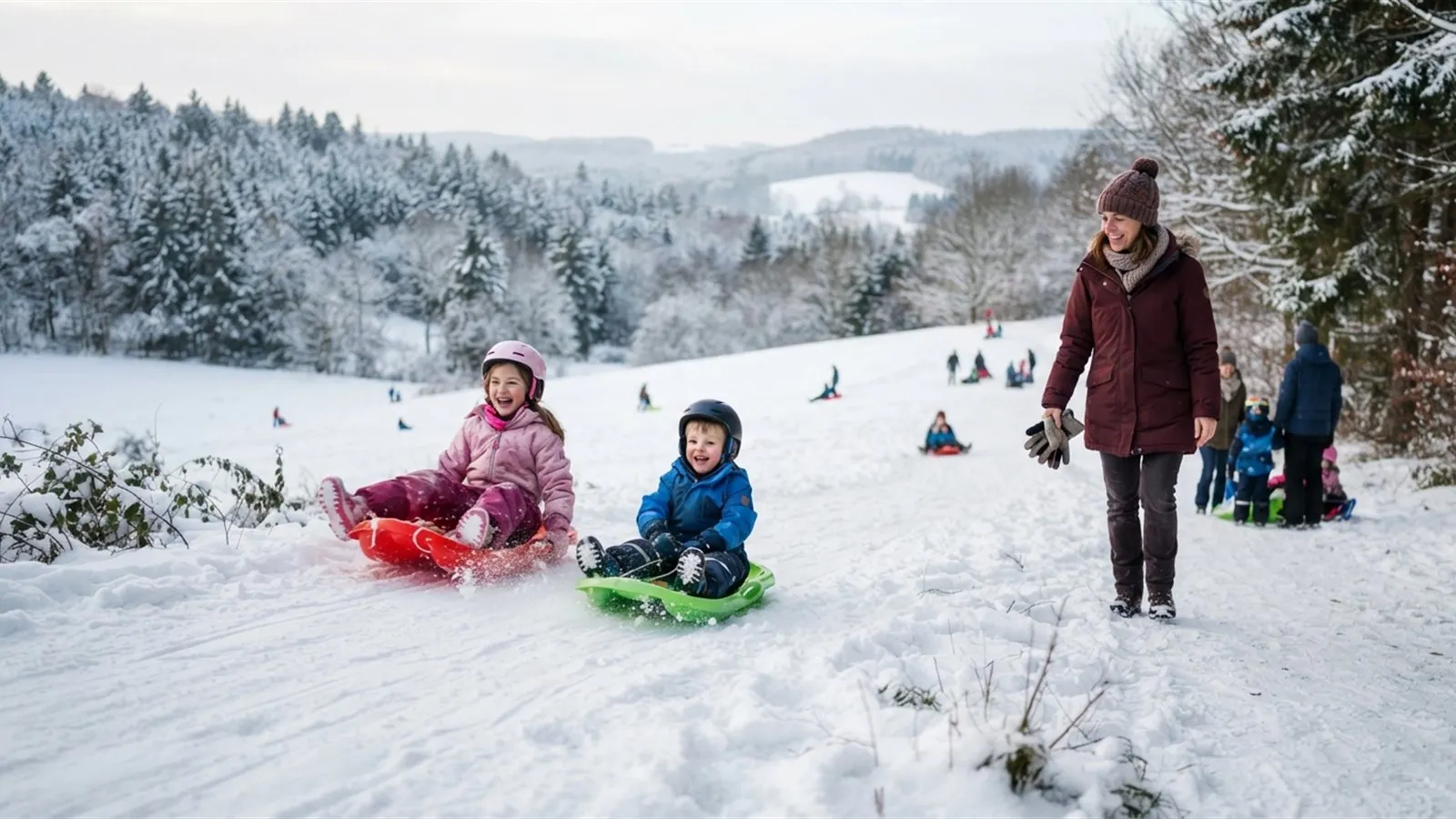
A good sled turns a snow day into hours of outdoor play, but sledding also sends thousands of children to the emergency room every winter, and head injuries are the main worry. The safest sled is one your child can steer and slow down, ridden sitting up and feet first, on a clear hill, with a helmet and an adult nearby. Below are five sleds that currently sell in the US, from a classic steerable runner sled and a plastic bobsled with a hand brake to two pull sleds for babies and toddlers, plus a budget toboggan for older kids. We also cover what the American Academy of Pediatrics (AAP) and injury researchers say about helmets, supervision and choosing a hill.
Quick picks
Flexible Flyer Metal Runner Sled
Gizmo Riders Stratos
Gizmo Riders Baby Rider
Flexible Flyer Toddler Boggan
Slippery Racer Downhill Xtreme
How we score: SproutPicks Scores are our own editorial ratings out of 10. For sleds they weigh control first (steering and braking, which the AAP and injury researchers favor), then a clear age and weight rating from the maker or retailer, child restraint and stability for pull sleds, durability, and value. They are based on maker and retailer specifications, AAP and hospital injury-research guidance, and patterns in owner reviews. They are editorial ratings from research, not lab tests, and we did not test these sleds.
Why sled choice and safety matter
Researchers at Nationwide Children's Hospital's Center for Injury Research and Policy studied US emergency department data from 2008 through 2017. They found about 220,000 people were treated for sledding injuries over those 10 years, and nearly 70% were 19 or younger. Nearly 82% of the children had a head injury. Most injuries, 63%, happened in collisions, usually with an object such as a tree, fence or pole. The good news is that the injury rate fell over the decade, and most of the risk factors are things parents can control: the sled, the hill, the riding position and the helmet.
The AAP's sledding rules
The AAP's winter safety page, updated in January 2026, gives a clear list. In our own words:
- Supervise. Children under 12 should always be supervised while sledding.
- Separate ages. Keep preschoolers away from teens on the same run.
- Feet first, sitting up. Riding feet first or sitting up, rather than lying down head first, may prevent head injuries.
- Consider a helmet to prevent serious head injury.
- Steerable sleds. Use steerable sleds, not snow disks or inner tubes, which are harder to control.
- Check the sled. It should be structurally sound, with no sharp edges or splinters, and any steering parts should move freely.
- Pick a safe slope. No trees or fences, snow rather than ice, not too steep, a flat runout at the bottom, and away from cars and crowds.
What is the safest type of sled for kids? A sled your child can steer and slow down. The AAP recommends steerable sleds over snow disks and inner tubes, which are hard to control, and a Nationwide Children's Hospital study linked tubes and disks to a higher risk of concussion in children. Whatever the sled, ride sitting up, feet first.
Helmets
Should kids wear a helmet for sledding? Yes, we think so. The AAP says to consider a helmet while sledding to prevent serious head injury, and Nationwide Children's researchers recommend helmets for everyone, noting that most children treated for sledding injuries had a head injury. A snow sport helmet is best; a properly fitted bike helmet is better than none.
A winter hat under a helmet can push it out of position, so check the fit with whatever your child will wear underneath, or use a thin liner. The helmet should sit level, low on the forehead, with a snug strap. If your child already has a bike helmet, our guide to the best toddler bike helmets covers fit, and the same checks apply on the hill.
Choosing a safe hill
What makes a hill safe for sledding? The AAP says a sledding hill should be free of trees, fences and other obstacles, covered in snow rather than ice, not too steep (less than 30 degrees) and end in a flat area where sleds can slow down. Avoid hills that run into a street, parking lot or water, and avoid crowded slopes.
Walk the run before your child rides it. Look for rocks, stumps and drainage ditches hidden under the snow, and decide where riders walk back up so they stay out of the path of others. Nationwide Children's researchers also recommend sledding in daylight, and teaching children to roll off a sled that is going too fast or is about to crash.
Can I tow a sled behind a car, ATV or snowmobile? No. Nationwide Children's researchers advise against being pulled by any motorized vehicle. In their study, about 3% of sledding injuries involved a sled pulled by a vehicle, and 14% of those patients were admitted to the hospital.
Sleds by age
What age can a child go sledding? Babies and toddlers can ride a pull sled that an adult tows on flat ground, if the sled has a backrest and harness and the child can sit up well. For going downhill, follow the sled's age label, which is often 3 or 5 and up, and the AAP says children under 12 should always be supervised while sledding.
- Babies and young toddlers: a pull sled with a high back and a harness, towed by an adult at walking pace on level ground. Not for hills.
- Preschoolers: very gentle slopes with an adult close by. A steerable sled rated for their age, or riding with a parent where the sled allows two riders within its weight limit.
- School-age kids: a steerable sled they can control, on a hill they've walked first, with a helmet.
How to choose a kids' sled
- Control. Steering and a brake are the most important features. Runner sleds steer with a crossbar; plastic bobsleds steer with a wheel and often have a hand brake.
- Snow type. Metal runner sleds work best on packed snow and can sink in deep powder. Plastic sleds glide better on fresh snow.
- Age and weight rating. Retail listings sometimes disagree, so check the label on the sled itself.
- Riders. Some sleds that look like two-seaters are rated for one rider. Follow the maker's rating, not the shape.
- Tow rope. A rope or retractable cord makes walking back up easier. Never tie a rope around a child, and keep cords away from necks.
- Storage. Long wooden sleds take up garage wall space; plastic sleds stack.
Flexible Flyer Metal Runner Sled
The Flexible Flyer is the classic American sled: a wooden deck on steel runners, steered by pushing a crossbar with your hands or feet. Retail listings, including Target's, describe a birch deck with powder-coated steel runners and a steering bar, recommend it for kids 5 and up and give a 250-pound weight limit. The product manual we found describes it as a one-person sled that can carry two children within the weight limit. It comes in more than one length; Target's listing for the 60-inch version gave its size as 60 by 20.5 inches and listed it at $169.99 in November 2026, while other lengths and sellers vary widely, so compare the length and model number before you buy. Runner sleds are fast on packed snow and real steering gives children control, which is exactly what the AAP asks for. They are heavy, though, and struggle in deep powder.
- ✓Real steering with a crossbar
- ✓Wood and steel construction lasts
- ✓250-pound limit lets a parent ride too, per listings
- ✓Multiple lengths
- ✕Heavy to carry uphill
- ✕Sinks in deep, fresh snow
- ✕Prices and sizes vary a lot between listings
- ✕No brake beyond dragging your feet
Gizmo Riders Stratos
The Stratos, from Flybar's Gizmo Riders line, is a plastic bobsled with a steering wheel and a spring-loaded hand brake that you pull up to dig into the snow. Target lists it for ages 3 and up, weighing 8.75 pounds, with a retractable tow cord. Listings disagree on the details: Target's specifications say 250 pounds and one rider, while Tractor Supply and others say 260 pounds and the shape suggests two seats. Gizmo Riders answered a Target shopper that it's meant for one rider, so we'd treat it that way. Prices we saw ran from about $93 to $135, and one Target color was out of stock in November 2026. A steering wheel and a brake give a young rider more control than almost any other sled type, which is why it ranks so high.
- ✓Steering wheel plus a hand brake
- ✓Ages 3 and up, per listings
- ✓Light plastic body with a retractable tow cord
- ✕Listings disagree on weight limit and number of riders
- ✕Pricier than plain plastic sleds
- ✕Steering parts can wear or freeze; check them before each season
Gizmo Riders Baby Rider
The Baby Rider is a pull sled, not a hill sled. It has a high, angled backrest meant to reduce tipping, an anti-slip foam seat, a 3-point harness and a front tow strap. Retailers, including Home Depot and Toys"R"Us Canada, list it for babies from 6 months to 3 years and up to 55 pounds, and one listing gives its size as about 29 by 15 by 13 inches. Walmart listed it at $59.99. Use it to tow a baby who can sit up well around the yard or a flat park path at walking pace, with the harness buckled every time. The 55-pound limit means many kids outgrow it by preschool.
- ✓3-point harness and high backrest
- ✓Rated from 6 months, per listings
- ✓Foam seat is warmer than bare plastic
- ✕Flat ground only, not for hills
- ✕55-pound limit is outgrown fairly soon
- ✕Pricier than a basic toddler pull sled
Flexible Flyer Toddler Boggan
The plastic Toddler Boggan is the simple, cheap way to pull a toddler through the snow. Listings describe a molded sled about 26.5 inches long with an extra-high back, an adjustable safety strap built into the seat and a wide base for stability. Dunham's and Target list it for ages 18 months to 4 years. We saw prices of about $20 to $30. We didn't find an official weight limit from Flexible Flyer, and listings for related models gave different figures, so check the label on the sled. A wooden pull sleigh with the same name is a different, much more expensive product, and one owner said it had no safety belt, so make sure you're buying the plastic one with the strap.
- ✓Low price
- ✓High back and an adjustable safety strap
- ✓Light and easy to carry
- ✕No official weight limit found
- ✕Strap is simpler than a 3-point harness
- ✕Flat ground only
Slippery Racer Downhill Xtreme
The Downhill Xtreme is a flexible plastic toboggan with a pull rope and two sets of handles, sold as a sled for one or two riders. It's popular because it's light, cheap and fast on fresh snow. We include it with a clear caveat: it has no steering, and the listings we checked don't show a brake, which is the kind of sled the AAP and Nationwide Children's researchers say is harder to control. Listings also disagree on its weight capacity, with 150 pounds the most common figure and others giving 220 or 250 pounds, so we'd go by the lowest number. We couldn't confirm a current typical price. Save it for older kids on short, gentle hills with a long, flat runout and no obstacles.
- ✓Light and easy to carry
- ✓Handles for riders and a pull rope
- ✓Glides well on fresh snow
- ✕No steering and no brake
- ✕Weight capacity varies by listing
- ✕Only for gentle hills
What we left out, and why
We left out snow tubes and saucers. They're popular and fun, but the AAP recommends steerable sleds instead, and Nationwide Children's researchers linked tubes and disks to a higher concussion risk in children. We also left out the European steerable bobsleds from Hamax and Stiga, which are well regarded but which we couldn't find in steady US distribution; Hamax's own page lists its Sno Blade for ages 8 and up. If you buy any sled not listed here, look for steering, a brake and a clear age and weight label.
More outdoor play
When the snow melts, the same habits carry over: helmets, supervision and the right gear for your child's age. Our guides to the best toddler balance bikes, the best kids' scooters for ages 3 to 5 and the best outdoor playsets and climbers for toddlers cover the warmer months.
More on backyard and winter play: see Best Toddler Snowsuits (2026) and Little Tikes Cozy Coupe Review: Classic Ride-On, Real Limits.
How we researched this
This guide is research-based. We did not test these sleds. In November 2026 we read the AAP's winter safety page (updated January 2026), Nationwide Children's Hospital's 2020 release on its sledding injury study, KidsHealth's sledding safety tips and CPSC injury data summaries. For products, we checked listings from Target, Tractor Supply, Home Depot, Walmart, Dunham's and other retailers, plus Hamax's product page. Several maker and retailer sites limited automated access, and listings often disagreed on weight limits and rider numbers; where they did, we say so and suggest going by the label on the sled. Prices change often in winter.
Sources
- AAP HealthyChildren.org, Winter Safety
- Nationwide Children's Hospital, sledding injury study release (2020)
- KidsHealth, Safety Tips: Sledding
- Target, Flexible Flyer Metal Runner Sled
- Target, Gizmo Riders Stratos Sled
- Tractor Supply, Gizmo Riders Stratos
- Home Depot, Gizmo Riders Baby Rider
- Target, Flexible Flyer Toddler Boggan
- Hamax, Sno Blade
Questions parents ask
What is the safest type of sled for kids?
A sled your child can steer and slow down. The AAP recommends steerable sleds over snow disks and inner tubes, which are hard to control, and a Nationwide Children's Hospital study linked tubes and disks to a higher risk of concussion in children. Whatever the sled, ride sitting up, feet first.
Should kids wear a helmet for sledding?
Yes, we think so. The AAP says to consider a helmet while sledding to prevent serious head injury, and Nationwide Children's researchers recommend helmets for everyone, noting that most children treated for sledding injuries had a head injury. A snow sport helmet is best; a properly fitted bike helmet is better than none.
What age can a child go sledding?
Babies and toddlers can ride a pull sled that an adult tows on flat ground, if the sled has a backrest and harness and the child can sit up well. For going downhill, follow the sled's age label, which is often 3 or 5 and up, and the AAP says children under 12 should always be supervised while sledding.
What makes a hill safe for sledding?
The AAP says a sledding hill should be free of trees, fences and other obstacles, covered in snow rather than ice, not too steep (less than 30 degrees) and end in a flat area where sleds can slow down. Avoid hills that run into a street, parking lot or water, and avoid crowded slopes.
Can I tow a sled behind a car, ATV or snowmobile?
No. Nationwide Children's researchers advise against being pulled by any motorized vehicle. In their study, about 3% of sledding injuries involved a sled pulled by a vehicle, and 14% of those patients were admitted to the hospital.
More in Outdoor Play & Ride-Ons
Thule Yepp Nexxt 2 Maxi Review: Rear Bike Seat Fit and Rack
Thule Yepp Nexxt 2 Maxi review: a rack-mount rear bike seat with magnetic buckle. Rack fit and leg clearance tips. Research-based, not…
Burley Bee Bike Trailer Review: Simple, Safe Basics
Burley Bee review: a simple, safe double bike trailer for bike paths, without jogging or stroller modes. Research-based, not tested.
Wishbone 3-in-1 Review: Trike-to-Balance-Bike From Age 1
Wishbone 3-in-1 review: a wooden trike that converts to a balance bike from age 1 to preschool. Worth the cost? Research-based, not tested.