
In this guide
- Quick picks
- What real owners say: the big takeaways
- How we picked
- Comparison table
- Feature-by-feature comparison
- Thermos FUNtainer 12 oz Water Bottle
- CamelBak Eddy+ Kids 14 oz
- Contigo Kids AUTOSPOUT Straw Water Bottle 14 oz
- Hydro Flask 12 oz Kids Wide Mouth
- Buying guide: choosing a kids' water bottle
- How to clean a kids' straw bottle (and prevent mold)
- Which water bottle is right for your child?
- Safety notes
- Related guides
- FAQ
Reader-supported: we may earn a commission from links on this page. Full disclosure
Updated: November 2026 · Researched from manufacturer specs, safety standards and public buyer reviews.
A good kids' water bottle is easy to open, doesn't leak in a backpack and is simple to clean. Insulated steel keeps water cold all day, while plastic is lighter and cheaper.
The main choices are stainless vs. plastic, straw style, and how leak-proof the lid is when closed.
Safety note: Check straws and bite valves regularly for tears and replace worn parts. Take straw lids apart to clean them, since moisture can trap mold. Insulated steel bottles here are for cold drinks only unless the maker says otherwise.
Quick picks
Thermos FUNtainer 12 oz Water Bottle
CamelBak Eddy+ Kids 14 oz
Contigo Kids AUTOSPOUT Straw Water Bottle 14 oz
Hydro Flask 12 oz Kids Wide Mouth
What real owners say: the big takeaways
We read Amazon reviews, parenting forum threads and Reddit discussions. These patterns kept coming up:
- Cleaning is the top complaint. Straws and valves need a brush to stay clean.
- Leak-proof usually means closed. Most straw bottles can drip if tipped while open.
- Steel stays cold, plastic is lighter. Parents of young kids often pick lighter plastic bottles.
- Kids chew bite valves. Replacement valves get mentioned often.
- Fit matters. Parents check cup holders and backpack pockets.
How we picked
We did not buy or test these products. Here is how we chose them:
- Started with what parents actually buy. We looked at best-selling, heavily reviewed options on Amazon.
- Compared materials and lid types. Steel vs. plastic, push-button vs. flip straw.
- Read the listings closely. We noted materials, capacity and care instructions from manufacturer listings.
- Read the complaints, not just the praise. We looked for patterns about leaks, durability and cleaning.
- Covered different budgets and ages.
We'll update this guide as listings and owner feedback change.
What we weighed most. A kids' water bottle lives in a backpack, gets dropped on blacktop, and gets washed constantly. We gave the most weight to leak performance when the lid is closed (and how spill-prone it is when open), how easily a child can open and drink from it on their own, cleanability (especially straws, valves and lid seals, where mold complaints come from), material (stainless steel vs. BPA-free plastic), and durability over a school year as reported by owners. Size, cold retention and price came next.
What we did not do. We did not fill, drop or leak-test bottles. Cold retention times come from maker listings and are best-case figures.
How we score: SproutPicks Scores are our own editorial ratings, based on published specs, safety certifications and standards, and patterns across verified owner reviews. We don't hands-on test every product, and these scores are not Amazon ratings. Each score includes sub-scores for Safety, Value and Ease of Use.
Comparison table
| Bottle | Material | Size | Lid | Score |
|---|---|---|---|---|
| Thermos FUNtainer 12 oz Water Bottle | 18/8 stainless steel, vacuum insulated | 12 oz | Push-button pop-up straw | 9.0/10 |
| CamelBak Eddy+ Kids 14 oz | Plastic | 14 oz | Flip-up bite-valve straw | 8.8/10 |
| Contigo Kids AUTOSPOUT Straw Water Bottle 14 oz | BPA-free plastic | 14 oz | Button-operated pop-up straw | 8.5/10 |
| Hydro Flask 12 oz Kids Wide Mouth | Stainless steel, vacuum insulated | 12 oz | Straw lid | 8.3/10 |
Feature-by-feature comparison
| Feature | Thermos FUNtainer 12 oz | CamelBak Eddy+ Kids 14 oz | Contigo AUTOSPOUT 14 oz | Hydro Flask Kids 12 oz |
|---|---|---|---|---|
| Material | Stainless, vacuum insulated | Plastic | BPA-free plastic | Stainless, vacuum insulated |
| Cold retention (per maker) | Up to 12 hr | Not insulated | Not insulated | Up to 24 hr |
| Lid / drinking style | Push-button pop-up straw | Flip-up bite-valve straw | Button pop-up straw | Straw lid, wide mouth |
| Closed leak performance | Leak-proof closed (per maker) | Leak-resistant closed | Spill-proof valve | Check listing |
| Main owner complaint | Leaks when open | Bite valves wear | Lid hard to clean | Straw lid leaks when tipped |
| Best for | Most kids, cold drinks at school | Budget, lightweight | Backpacks | Longest cold, easy to add ice |
Thermos FUNtainer 12 oz Water Bottle
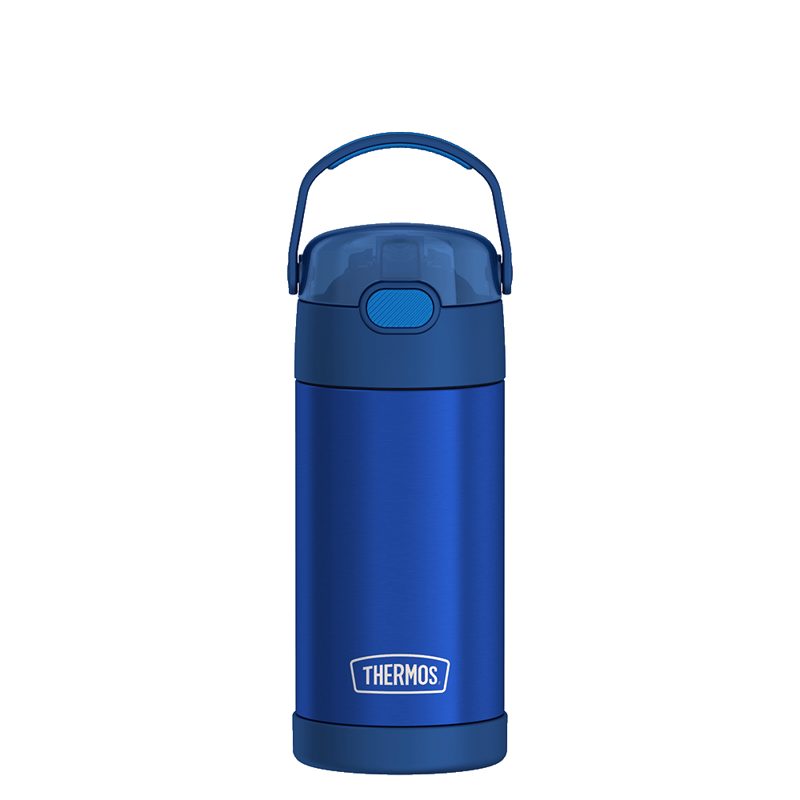 Image: Thermos
The FUNtainer is a long-running favorite. Thermos lists vacuum insulation that keeps drinks cold up to 12 hours, a push-button lid with a covered, removable silicone straw, and a carry handle. It's leak-proof when closed and not for hot liquids.
- ✓Keeps drinks cold for hours
- ✓Covered straw stays clean in a bag
- ✓Very durable steel
- ✕Heavier than plastic bottles
- ✕Hand-washing recommended
- ✕Can drip if held upside down while open
CamelBak Eddy+ Kids 14 oz
The Eddy+ Kids uses CamelBak's flip, bite and sip straw. It's leak-resistant when closed and spill-resistant when open, per the listing, with an integrated handle.
- ✓Light and easy to carry
- ✓Low price
- ✓Spill-resistant even when open
- ✕Not insulated
- ✕Kids chew the bite valve
- ✕Valve needs regular cleaning
Contigo Kids AUTOSPOUT Straw Water Bottle 14 oz
Contigo's kids bottle has a button that pops up the straw and a spill-proof valve, per the listing. It's labeled for ages 3 and up, with top-rack dishwasher-safe parts.
- ✓Spill-proof when closed
- ✓Easy one-button open
- ✓Affordable
- ✕Not insulated
- ✕Lid has more parts to clean
- ✕Some kids find the button stiff
Hydro Flask 12 oz Kids Wide Mouth
Hydro Flask's kids bottle is double-wall vacuum insulated and keeps drinks cold up to 24 hours, per the listing. The wide mouth makes it easier to add ice and clean.
- ✓Excellent cold retention
- ✓Wide mouth for ice and cleaning
- ✓Very durable
- ✕Expensive
- ✕Straw lid isn't leak-proof
- ✕Heavier for small kids
Buying guide: choosing a kids' water bottle
1. Stainless steel vs. plastic
Insulated stainless steel keeps water cold for hours, is durable and doesn't hold flavors, but it's heavier, can dent, and is often hand-wash only. BPA-free plastic is lighter, cheaper and often dishwasher safe, but it isn't insulated and can scratch or hold odors over time. For school, many parents pick stainless for cold water, or plastic for younger kids who need a lighter bottle.
2. Lid style
Push-button pop-up straws are easy for young kids and keep the straw covered. Bite-valve straws are spill-resistant when open, but the valve wears out and needs replacing. Wide-mouth straw lids make ice and cleaning easier. Chug or spout lids suit older kids and are easier to clean, since there's no straw.
3. Leak-proof vs. spill-resistant
"Leak-proof" usually means only when the lid is fully closed or locked. Open straws and bite valves are generally spill-resistant at best. If the bottle rides in a backpack with books or a laptop, choose a lid that locks.
4. Size
Most kids' bottles are 12 to 16 ounces. Smaller bottles are lighter for preschoolers, and larger ones suit older kids, sports or hot days. Check that the bottle fits the side pocket of your child's backpack and the cup holder in the car.
5. Cleaning and mold
Straws, valves and lid seals are where residue and mold build up. Look for lids that come apart, replacement straws and valves sold separately, and a straw-cleaning brush. Bottles with fewer hidden parts are easier to keep clean.
6. Can your child use it alone?
Before school starts, check that your child can open, drink from and close the bottle by themselves. Buttons that are too stiff are a common complaint.
7. Replacement parts and personalization
Brands that sell replacement straws, valves and lids extend a bottle's life. Name labels or engraving help with lost-and-found.
Choosing between the two most common school bottles? See our Thermos Funtainer vs Owala Kids comparison.
How to clean a kids' straw bottle (and prevent mold)
- Take the lid apart every day. Remove the straw, valve and any silicone seals.
- Wash with warm soapy water, using a narrow straw brush through the straw and around the valve.
- Air-dry fully with the parts separated. Reassembling while damp traps moisture.
- Deep-clean weekly. Many parents soak parts in a diluted vinegar or baking soda solution, or use bottle-cleaning tablets, following the maker's care guidance.
- Replace worn parts. Throw away straws or valves with tears, stains you can't remove, or mold you can't clean.
Which water bottle is right for your child?
For most kids, the Thermos FUNtainer 12 oz is the best balance of cold retention, durability and an easy push-button lid. Teach kids to close it, since it leaks when left open. If you want a lighter, cheaper bottle, the CamelBak Eddy+ Kids is spill-resistant, but plan to replace bite valves. For backpack use, the Contigo AUTOSPOUT's spill-proof valve is a strong option. For the longest cold retention and easy ice-adding, the Hydro Flask Kids Wide Mouth is the premium choice, but keep it upright when the straw lid is open.
Safety notes
- Inspect straws and bite valves. Chewed or torn silicone pieces can break off. Replace them at the first sign of damage.
- Cold drinks only, unless the maker says otherwise. Many kids' straw bottles are not designed for hot liquids. Hot drinks can build pressure and spray from a straw lid.
- Be careful with milk and juice. These leave residue that spoils quickly in straws and seals. Clean the bottle immediately, and don't leave milk in it for hours at room temperature.
- Watch for dents on insulated bottles. A dent can break the vacuum seal, which reduces insulation. It's mainly a performance issue, but a heavily damaged bottle should be replaced.
- Check materials (BPA-free, food-grade stainless) in the listing, and check recalls at CPSC.gov/Recalls.
Related guides
More on sippy cups and water bottles: see Sippy Cup vs Straw Cup: Which Is Better for Your Baby? and Best Toddler Snack Cups.
Part of our Feeding & Mealtime section. Our main guide covers high chairs that are easy to clean.
FAQ
What size water bottle does a child need? 12 to 14 oz suits most preschool and early grade-school kids.
Stainless steel or plastic? Steel keeps drinks colder and lasts longer; plastic is lighter and cheaper.
How do I clean a straw bottle? Take the lid apart, use a small straw brush, and let all parts dry fully.
Can I put milk in these? Check the maker's instructions. Clean promptly after milk to avoid odors.
How do I stop a kids' water bottle from leaking in a backpack? Make sure the lid is fully closed or locked, the straw and valve are seated correctly after washing, and the bottle sits upright in a side pocket if possible.
Why does my child's water bottle smell? Odors usually come from residue in the straw, valve or lid seal. Take the lid apart, scrub each piece, deep-clean it, and let everything dry fully before reassembling.
How often should I replace the straw? Replace straws and bite valves when they're torn, chewed, or stained and won't come clean. With daily use, many parents replace them every few months.
Are stainless steel bottles dishwasher safe? Many insulated bottles are hand-wash only for the body, though lids may be top-rack safe. Check the maker's care instructions.
What water bottle is best for a 3-year-old? Choose a light, small (around 12 oz) bottle with an easy push-button or bite-valve straw your child can use alone. Check the labeled age range.
More in Feeding & Mealtime
Natursutten Pacifier Review: One-Piece Natural Rubber Soother
Natursutten pacifier review: a one-piece natural rubber soother. Plastic-free pros, wear, and latex-allergy cautions. Research-based, not…
Best Formula Maker Machines (2026)
The best formula maker machines compared on accuracy, cleaning and price, plus CDC and WHO 70°C mixing advice, Cronobacter risk and the…
ezpz Happy Mat Review
ezpz Happy Mat review: suction on tables and high chair trays, silicone care, dishwasher and microwave use, toddler portions and the best…