
In this guide
Reader-supported: SproutPicks may earn a commission from qualifying affiliate links. The manufacturer and editorial reference links in this review are not affiliate links. Full disclosure.
Created and fact-checked (America/Chicago). Source-based editorial review; not a hands-on test.
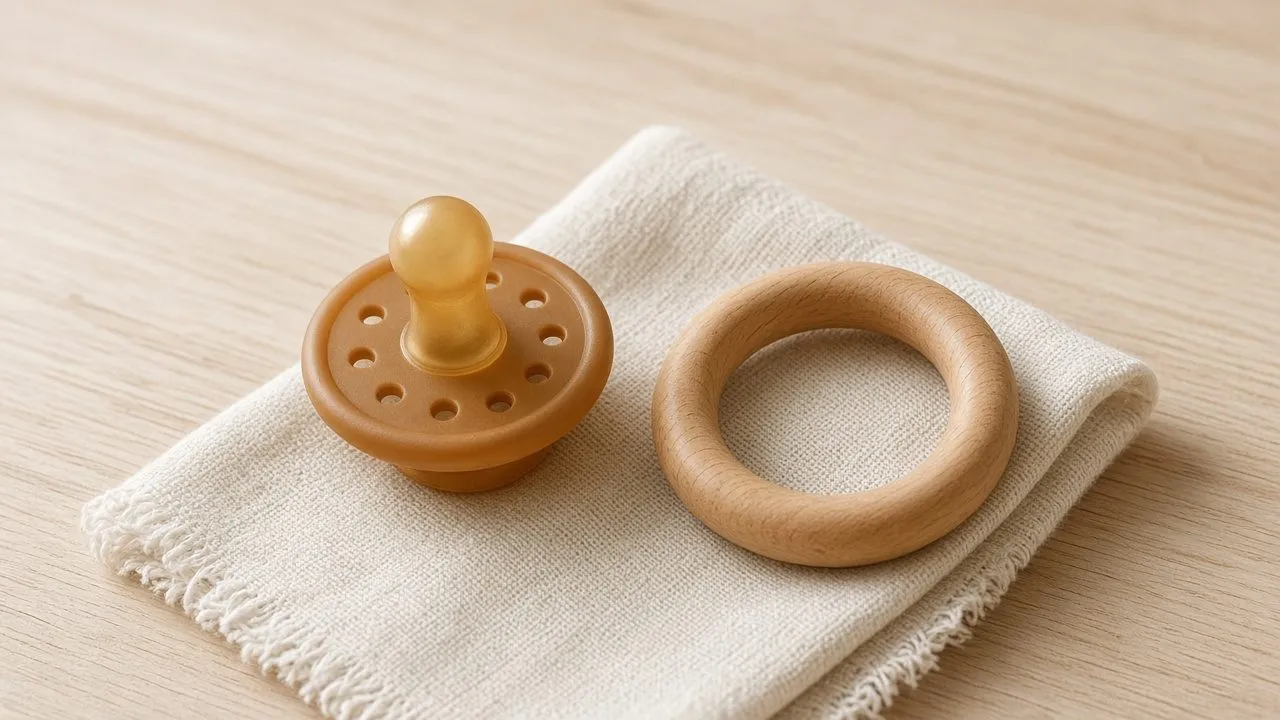
Natursutten pacifiers are molded in one piece from natural rubber, with no seams or plastic shield. People featured them in February 2008 as pacifiers made from pure natural rubber from the Hevea brasiliensis tree. [1]
Our source-based verdict: a good choice for parents who want a plastic-free soother. Natural rubber wears faster than silicone and is not for latex-allergic families. We have not tested it ourselves.
At a glance
Natursutten round-shield pacifier
- Main limit
- Natural latex; replace every 6–8 weeks
A single-model review, not a ranked or scored roundup.
What the listing says
The US retailer listing says the pacifiers are handcrafted in Italy from natural latex. [2] It lists an Original round shield for 0–6 months and a Butterfly shape for 6+ months. [2]
Care and replacement
The listing says to boil before first use and not to use a dishwasher or steam sterilizer. [2] It recommends replacing the pacifier every 6–8 weeks. [2] Check it before each use: pull on the nipple and discard it at any sign of cracks, stickiness or swelling.
Pacifier safety basics
Never tie a pacifier to a crib or around a neck. If you breastfeed, many clinicians suggest waiting until feeding is established before introducing a pacifier.
Natural rubber vs silicone
Natural rubber is softer and more flexible than silicone, which some babies prefer. Silicone resists heat and wears more slowly. If your baby rejects one material, the other is worth a try. Whatever you pick, keep a spare clean pacifier handy rather than rinsing a dropped one in your mouth.
Pros and trade-offs
What looks useful on the evidence
Where expectations need restraint
- Natural latex is not for latex allergies. [2]
- No dishwasher or steam sterilizer. [2]
- Replace every 6–8 weeks. [2]
- Rubber can wear quickly.
Who it suits—and who should skip it
Consider it if: you want a plastic-free pacifier.
Look elsewhere if: anyone in the home has a latex allergy.
Alternatives and related reading
- Teething: Sophie la girafe review.
- Soothing sounds: Sleep Sheep review.
- Bibs for drool: Copper Pearl bibs review.
More on teethers and pacifiers: start with our guide to high chairs for baby-led weaning.
Questions parents ask
Can I sterilize it?
The listing says boil before first use, and do not use a dishwasher or steam sterilizer. [2]
How often should I replace it?
Every 6–8 weeks. [2]
Sources and research method
We compared dated launch or availability evidence with current manufacturer information checked on November 9, 2026. This is desk research, not a purchased-product test, a lab measurement or an owner survey. We have not verified current store stock, prices or reuse rights for product photography; official photos can be viewed through the manufacturer link.
- People: "Natursutten Pacifiers: Better binkies for babies", February 11, 2008.
- My Blooming Baby (retailer): Natursutten round shield pacifier, checked November 9, 2026.
More in Feeding & Mealtime
How to Start Solids: Purees vs Baby-Led Weaning
How to start solids around 6 months: readiness signs, purees vs baby-led weaning, allergens, choking hazards and gagging vs choking, per…
Best Formula Maker Machines (2026)
The best formula maker machines compared on accuracy, cleaning and price, plus CDC and WHO 70°C mixing advice, Cronobacter risk and the…
Dr. Brown's vs Philips Avent Bottles
Dr. Brown's Options+ vs Philips Avent Natural Response on venting, nipple flow, cleaning, sizes and price, and which suits gassy or…