

In this guide
- Quick picks
- What real owners say: the big takeaways
- How we picked (we did not buy or test)
- Comparison table
- Feature-by-feature comparison
- Munchkin Miracle 360 Cup
- b.box Sippy Cup with Weighted Straw
- OXO Tot Transitions Straw Cup
- Thermos FUNtainer 12 oz Straw Bottle
- Safety and care note
- Our guides on sippy cups and water bottles
- FAQ
- Buying guide: sippy cup vs straw cup vs 360 cup
- When and how to introduce a cup
- Which cup is right for your child?
- Health and safety notes
- Related reviews
Reader-supported: we may earn a commission from links on this page. Full disclosure
Updated: November 2026 · Researched from manufacturer specs, safety standards and public buyer reviews.
Moving from bottle to cup is a big step. The right first cup makes it easier for your toddler and cuts down on spills for you. Most parents end up choosing between three styles: a spoutless 360 cup that works like an open cup, a straw cup with a valve, and an insulated straw bottle for older toddlers on the go.
Here are four popular, spill-resistant picks and who each one is best for.
Quick picks
Munchkin Miracle 360 Cup
- Style
- 360 rim with auto-seal
b.box Sippy Cup with Weighted Straw
- Style
- Weighted straw, flip-top lid
OXO Tot Transitions Straw Cup
- Style
- Valve straw, hinged cap
Thermos FUNtainer 12 oz Straw Bottle
- Style
- Insulated stainless straw bottle
What real owners say: the big takeaways
- "Spill-proof" varies. Most of these cups resist spills when tipped or dropped, but reviewers say no cup survives every throw, bite or loose lid.
- Cleaning is a big deal. Parents strongly prefer cups with few parts. Straw cups need a straw brush, and mold in valves is a common complaint when cups aren't taken apart.
- There's a learning curve. Some toddlers need a few days to figure out a 360 rim or a valve straw.
- Chewed straws wear out. Biting can split silicone straws over time, so replacement parts matter.
How we picked (we did not buy or test)
We did not buy or test these cups. We compared manufacturer listings and specs (age range, capacity, parts and cleaning), and read patterns across public buyer reviews. We picked one strong option for each common style.
What we weighed most. A toddler cup should cut spills without being hard to drink from, and it shouldn't hide gunk you can't clean. We gave the most weight to leak and spill resistance (closed and open, based on owner reports), how easy it is for a young child to drink from, how many parts there are and whether they come apart for cleaning, and how well the cup handles chewing and drops. After that came capacity, handles, insulation, dishwasher safety and price.
Sources. Capacities and ages come from maker listings. Feeding guidance comes from the AAP and pediatric dental groups. We did not drop- or leak-test these cups ourselves.
How we score: SproutPicks Scores are our own editorial ratings, based on published specs, safety certifications and standards, and patterns across verified owner reviews. We don't hands-on test every product, and these scores are not Amazon ratings. Each score includes sub-scores for Safety, Value and Ease of Use.
Comparison table
| Cup | Style | Capacity (per listing) | Age (per listing) | Cleaning | Score |
|---|---|---|---|---|---|
| Munchkin Miracle 360 | Spoutless 360 rim | 7 oz trainer (10 and 14 oz versions available) | Trainer from about 6 months; larger cups 12+ and 18+ months | Few parts, top-rack dishwasher safe | 9.1/10 |
| b.box Weighted Straw Cup | Weighted straw | 8 oz | 6 months+ | Dishwasher and sterilizer safe | 8.9/10 |
| OXO Tot Transitions Straw Cup | Valve straw | 9 oz | 6 months+ | Cap and straw come apart, dishwasher safe | 8.6/10 |
| Thermos FUNtainer | Insulated straw bottle | 12 oz | Kids (no infant age given) | Removable straw, hand wash recommended | 8.3/10 |
Feature-by-feature comparison
| Feature | Munchkin Miracle 360 | b.box Weighted Straw | OXO Tot Transitions | Thermos FUNtainer |
|---|---|---|---|---|
| Style | Spoutless 360 rim | Weighted straw | Valve straw | Insulated pop-up straw |
| Capacity | 7 oz (larger available) | 8 oz | 9 oz | 12 oz |
| Age (per listing) | About 6 months+ | 6 months+ | 6 months+ | Older toddlers/kids |
| Insulated | No | No | No | Yes, up to 12 hr cold |
| Main owner complaint | Learning curve | Chewed straws | Valve wears with biting | Drips when open |
| Best for | Learning open-cup drinking | Drinking at any angle | Easy cleaning | Cold drinks on the go |
Munchkin Miracle 360 Cup
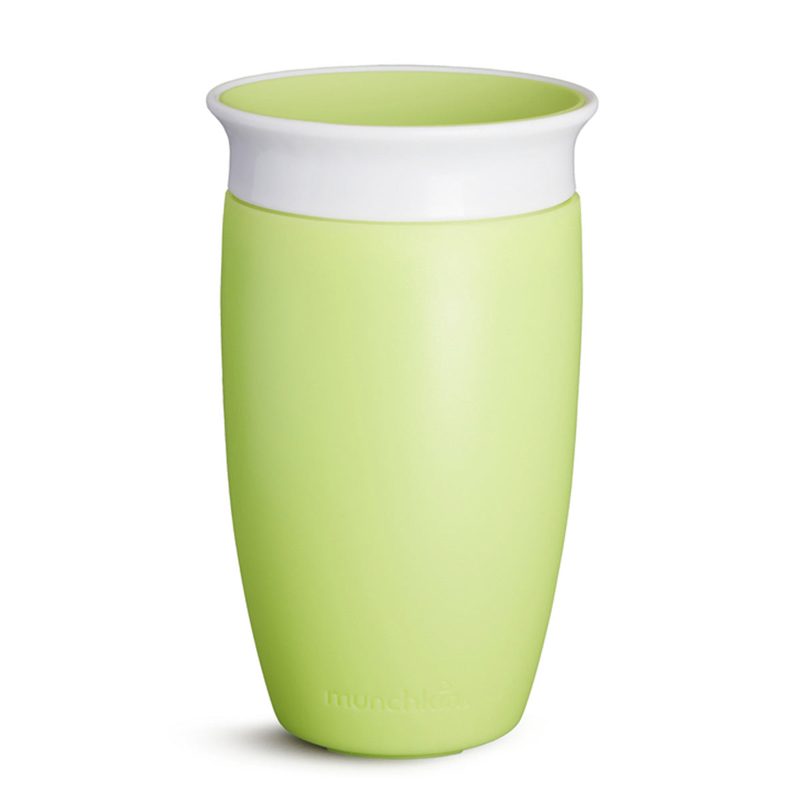 Image: Munchkin
The Miracle 360 has no spout. Your child drinks from anywhere around the rim, and the cup seals itself when they stop. Munchkin describes the spoutless design as dentist-recommended because it works more like a regular cup. With few parts, it's quick to clean.
Pros - Works like an open cup, with no spout or straw - Seals automatically, so it rarely leaks when tipped - Few parts to clean
Cons - Some toddlers take time to learn how to drink from it - Can still drip if it's held upside down and shaken
b.box Sippy Cup with Weighted Straw
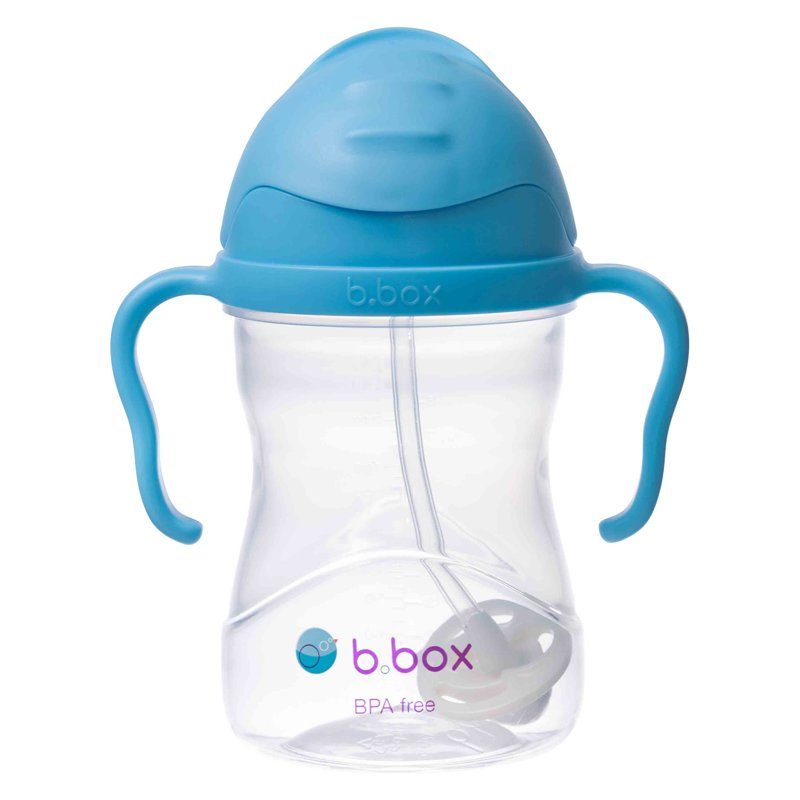 Image: b.box
The b.box cup has a weighted straw that stays in the liquid however the cup is tilted, so toddlers can drink sitting, standing or lying back. A two-way valve resists leaks, and a flip-top lid keeps the straw clean. It holds 8 oz, has easy-grip handles and volume markings, and is listed for 6 months and up.
Pros - Weighted straw reaches the last sip at any angle - Handles and volume markings - Dishwasher and sterilizer safe
Cons - Straws can wear out with chewing (replacements are sold separately) - The valve needs a firm lip seal, so some babies need practice
OXO Tot Transitions Straw Cup
OXO's 9 oz straw cup has an almond-shaped, spill-resistant silicone straw with a valve that opens when your child presses their lips on it. A hinged cap closes to seal the cup, and the cap and straw come off for thorough cleaning. It has a non-slip grip and measurement markings, and it's listed for 6 months and up.
Pros - Soft straw shape that's easy for new drinkers - Hinged cap seals it for the diaper bag - Comes apart fully and is dishwasher safe
Cons - No handles on the standard version - Not suitable for boiling, steaming or UV sterilizing, according to some retailer listings
Thermos FUNtainer 12 oz Straw Bottle
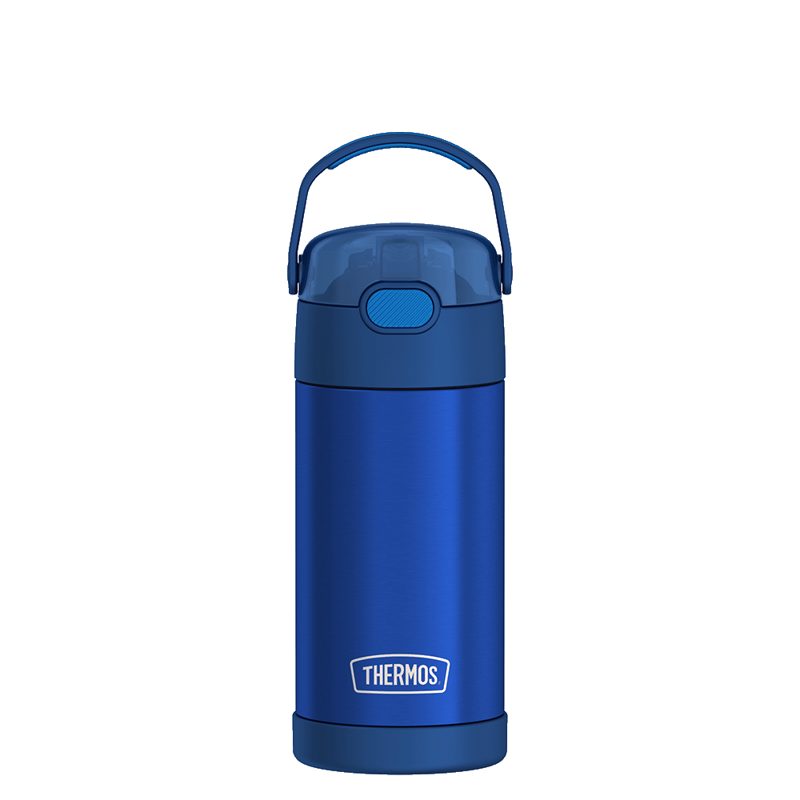 Image: Thermos
The FUNtainer is a vacuum-insulated stainless steel bottle that Thermos says keeps drinks cold for up to 12 hours. A push-button lid pops up a covered straw, and the bottle is leak-proof when closed. It's sturdy enough for drops, and the silicone straw is removable for cleaning.
Pros - Keeps water cold for hours - Durable stainless steel - Fits most cup holders and backpack pockets
Cons - Cold drinks only, not for hot liquids - Can drip from the straw when open, since it is not valved - Heavier than plastic cups for younger toddlers
Safety and care note
Take cups apart and clean every piece, including the valves and straws, after each use with milk. Check silicone straws and valves often, and replace them if they are torn or chewed, since small pieces can be a choking hazard. Follow each maker's age guidance, and ask your pediatrician or dentist about when to move to open cups.
Our guides on sippy cups and water bottles
- Sippy Cup vs Straw Cup: Which Is Better for Your Baby?
- Best Toddler Snack Cups
- Best Kids' Water Bottles
- Thermos Funtainer vs Owala Kids: Which School Bottle?
Part of our Feeding & Mealtime section. Our main guide covers high chairs for baby-led weaning.
FAQ
Straw cup or 360 cup: which is better? Both are popular. Straw cups help many babies learn to sip, and 360 cups work more like an open cup. Many families use both.
When can a baby start using a straw cup? Many straw cups are listed for 6 months and up. Ask your pediatrician what fits your child.
Are any cups 100% spill-proof? No. Most resist spills when closed or tipped, but throwing, biting or a loose lid can still cause leaks.
Why does my cup smell or have black spots? That's usually mold in the valve or straw. Take all parts apart, scrub, and dry them fully. Replace parts that won't come clean.
How many cups do I need? Many families keep two or three, so one is always clean.
Can I put milk in an insulated cup? Yes, but clean it right after use and don't leave milk sitting for long periods.
What is the best straw cup for a 1-year-old? The b.box cup's weighted straw stays in the liquid at any angle, which helps new drinkers who tip the cup back. The OXO Tot Transitions cup has a valve straw and comes apart for cleaning. Both are good first straw cups.
Sippy cup vs straw cup vs open cup: which comes first? Many parents start with a straw or 360 cup and practice with a small open cup at meals. Ask your pediatrician if you have feeding concerns.
Buying guide: sippy cup vs straw cup vs 360 cup
1. 360 cups vs. straw cups vs. spouts
360 cups mimic drinking from an open cup. Straw cups are easy for most babies to learn, and many feeding specialists like them for oral-motor development. Hard-spout sippy cups are the most spill-proof, but many pediatric dentists and feeding therapists suggest moving past them quickly.
2. Fewer parts = easier cleaning
Valves and straws are where mold and residue build up. Choose cups whose straws and valves come apart, and use a straw brush.
3. Spill-proof is relative
No cup survives every toss. Look for a lid that seals completely when closed for bags and car rides.
4. Handles and size
Handles help younger babies. Smaller capacities are lighter for little hands, and larger insulated bottles suit older toddlers.
5. Insulation
Stainless insulated bottles keep water cold and are tough, but they're heavier and not microwave safe.
6. Materials
Look for BPA-free plastic, silicone or stainless steel, and check which parts are dishwasher safe.
When and how to introduce a cup
- Around 6 months: The AAP suggests offering small sips of water from a cup once solids begin.
- Water before 12 months: Keep it to small amounts with meals. Breast milk or formula remains the main drink.
- Skip juice before age 1, per the AAP, and limit it afterward.
- Bottle weaning: The AAP encourages moving from bottles to cups around 12 to 18 months.
- Practice open cups too: Short practice sessions with a small open cup at meals build skills.
Which cup is right for your child?
To build open-cup skills with fewer spills, the Munchkin Miracle 360 is the classic pick, with a short learning curve. The b.box weighted straw cup lets babies drink at any angle, though straws get chewed. If easy cleaning is your top priority, the OXO Tot Transitions comes fully apart. For cold water at the park or school, the Thermos FUNtainer is durable and insulated.
Health and safety notes
- Protect teeth. Pediatric dentists advise against letting kids sip milk or juice from a cup all day or at bedtime. Between meals, offer water.
- Clean thoroughly and check straws and valves for mold. Replace parts that are cracked, chewed or discolored.
- Check for chewed pieces. Bitten-through silicone straws can tear off. Replace them promptly.
- No walking with cups for young toddlers, especially with hard spouts, to reduce mouth injuries from falls.
- Check for recalls at CPSC.gov/Recalls.
Related reviews
More in Feeding & Mealtime

Best Mesh and Silicone Teething Feeders (2026)
Best teething feeders for 2026: four mesh and silicone picks compared on age, cleaning and price, plus choking-hazard foods and FDA…
Best Formula Maker Machines (2026)
The best formula maker machines compared on accuracy, cleaning and price, plus CDC and WHO 70°C mixing advice, Cronobacter risk and the…
ezpz Happy Mat Review
ezpz Happy Mat review: suction on tables and high chair trays, silicone care, dishwasher and microwave use, toddler portions and the best…