
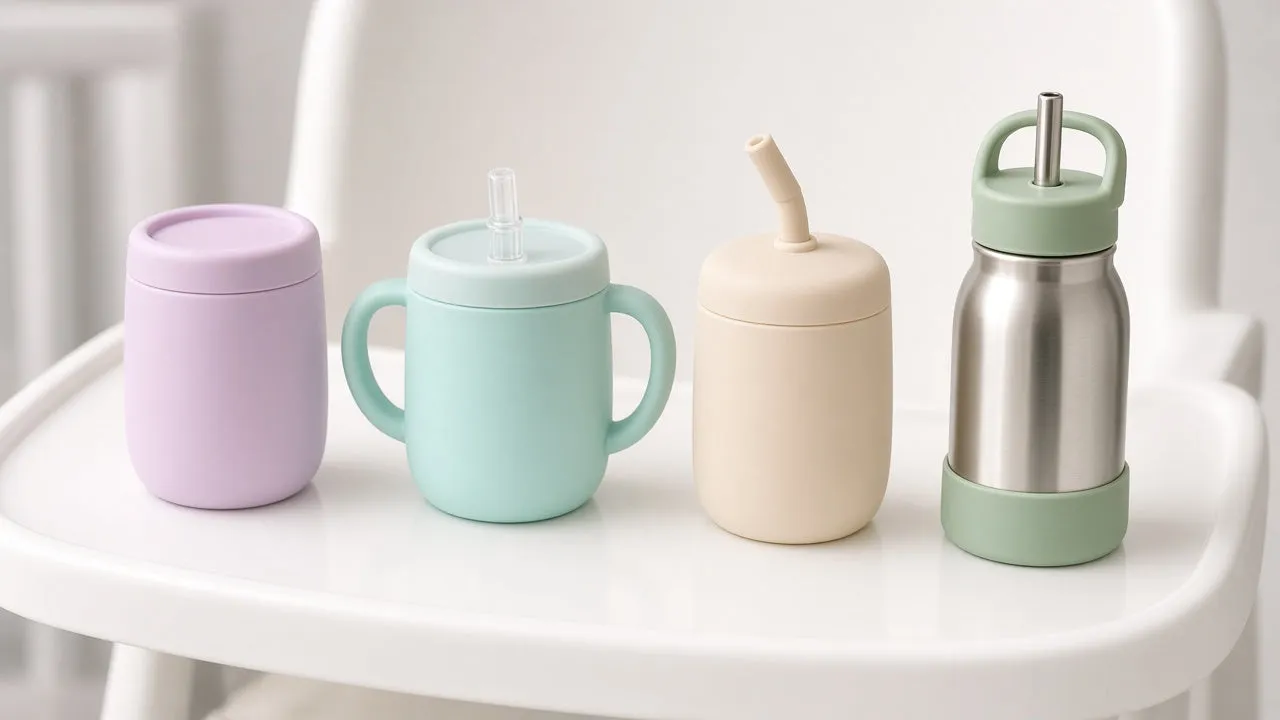
In this guide
Reader-supported: we may earn a commission from links on this page. Full disclosure
Updated: October 2026 · Researched from manufacturer specs, safety standards and public buyer reviews.
Sippy cup or straw cup? It is one of the first gear questions parents face once solids start, and the advice online can be confusing. The short version: there is no single "right" cup, but the American Academy of Pediatrics' parent site, HealthyChildren.org, is clear on the direction. Offer a cup around 6 months, finish weaning off the bottle between 12 and 18 months, and aim for an open cup by about age 2. Valved, spouted sippy cups are the least helpful step because kids have to suck on them just like a bottle.
The short answer: start with a straw cup (we like the b.box weighted straw cup) and a small open cup at meals. If you want a spill-resistant option for the car and stroller, a spoutless 360 cup like the Munchkin Miracle 360 is a better choice than a classic valved sippy. Move to a regular straw bottle like the Thermos FUNtainer once your toddler drinks well.
Note: This guide is general information, not medical advice. If your child has feeding difficulties, a developmental delay or a medical condition, ask your pediatrician about the right cup and timeline.
Quick picks
b.box Sippy Cup with Weighted Straw
- Style · size
- Weighted straw · 8 oz
Munchkin Miracle 360 Cup
- Style · size
- 360° rim · 7 oz
OXO Tot Transitions Straw Cup
- Style · size
- Valve straw · 9 oz
Thermos FUNtainer 12 oz Straw Bottle
- Style · size
- Insulated straw · 12 oz
Sippy vs straw vs 360 vs open cup
Here's how the four common cup types compare, based on maker designs and guidance from HealthyChildren.org (checked October 2026).
| Spouted sippy (valved) | Straw cup | 360 / spoutless cup | Open cup | |
|---|---|---|---|---|
| How it works | Child sucks through a hard or soft spout; a valve stops spills | Child sips through a straw, often with a valve | Child sips from the rim; a silicone seal opens with lip pressure | Child sips from the rim; no lid |
| Spills | Very few | Few (closed lid) | Very few | Lots at first |
| Drinking pattern | Similar to bottle sucking | Lip closure and sipping | Closer to cup drinking | Mature cup drinking |
| What AAP's parent site says | If used, choose one with no valve; optional step | Fine to offer from about 6 months | Not specifically covered | Goal by about age 2 |
| Best for | Short-term, if at all | First cup from about 6 months | Car, stroller, daycare | Meals and practice at home |
What the experts say
HealthyChildren.org, the AAP's parenting site, recommends offering a cup when your child starts solid foods, usually around 6 months. It says you can use a sippy cup with a spouted lid, a cup with a straw, or an open cup, and that some babies go straight to an open cup without any sippy step. It also warns that many sippy cups have a valve under the spout, so kids must suck to get liquid, "just like drinking from a baby bottle." If you choose a sippy cup, it suggests one with no valve, two handles and a simple spout.
The same guidance recommends finishing the move off bottles between 12 and 18 months and aiming for an open cup by about age 2. Long-term bottle and sippy use with milk or juice is linked to cavities, and prolonged bottle use can affect tooth alignment and the muscles used for speech.
Many pediatric speech-language pathologists and feeding therapists go a step further and favor straw cups and open cups over spouted sippy cups, because straws encourage lip closure and a more mature tongue position. That's why most of our picks are straw cups.
How we picked
We did not buy or test these cups. Here is how we chose them, following our research method:
- Started with expert guidance. We used HealthyChildren.org's bottle-to-cup advice to decide which cup styles to recommend.
- Looked at what parents buy. We shortlisted best-selling, well-reviewed cups in each style.
- Read the listings. Capacity, age labels, valve design and cleaning instructions come from each maker.
- Read the complaints. We looked for patterns about leaks, chewed straws, mold in valves and how hard each cup is to clean.
How we score: SproutPicks Scores are our own editorial ratings, based on published specs, safety certifications and standards, and patterns across verified owner reviews. We don't hands-on test every product, and these scores are not Amazon ratings. Feeding scores include sub-scores for Safety, Value and Ease of Use.
b.box Sippy Cup with Weighted Straw
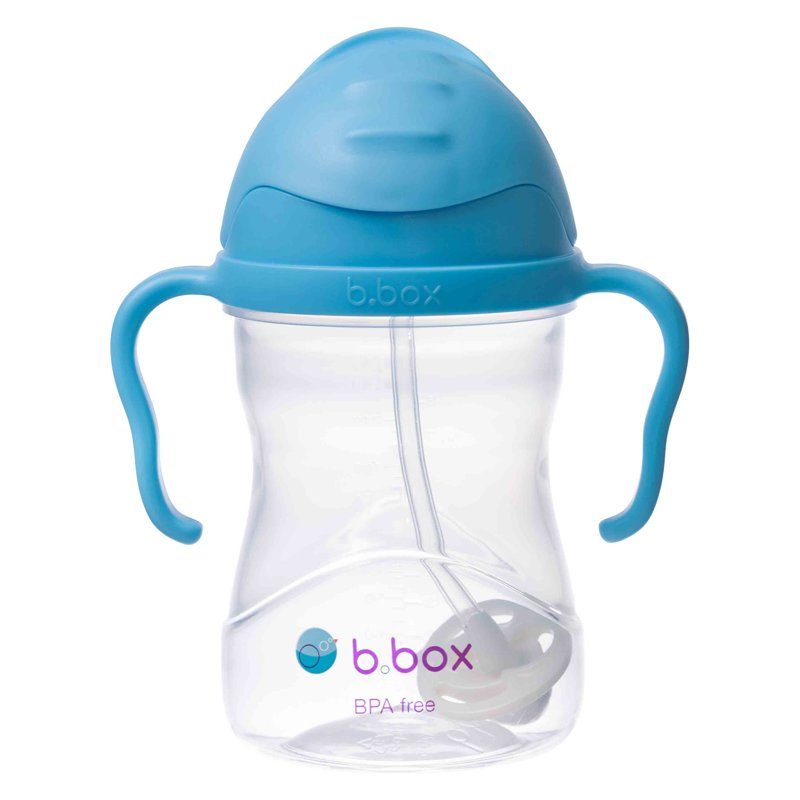 Image: b.box
The b.box cup is the straw cup we see recommended most often for beginners. Its weighted straw stays in the liquid however the cup is tilted, so a baby who tips it back like a bottle still gets a sip. It holds 8 oz, has two easy-grip handles, volume markings and a flip-top lid, and is listed for 6 months and up, per b.box.
Because the straw has a two-way valve, it resists leaks but asks babies to seal their lips firmly. Some babies get it on day one; others need a little practice.
- ✓Weighted straw reaches the last sip at any angle
- ✓Two handles for small hands
- ✓Dishwasher and sterilizer safe
- ✓Replacement straws sold separately
- ✕Straws wear out with chewing
- ✕Valve needs a good lip seal
- ✕Leaks if the lid isn't clicked fully closed
Munchkin Miracle 360 Cup
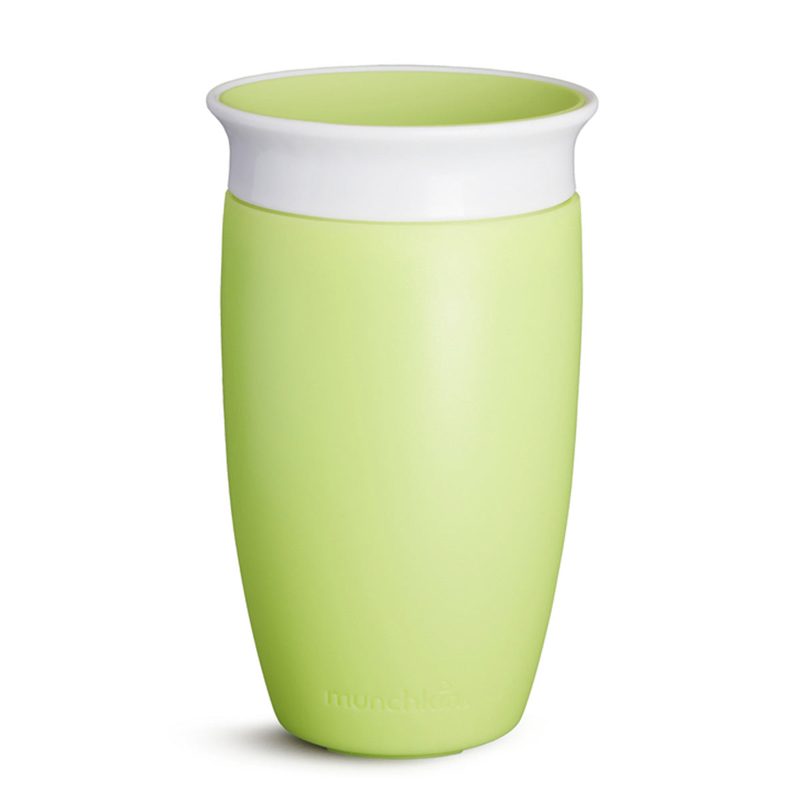 Image: Munchkin
The Miracle 360 has no spout at all. Your child drinks from anywhere around the rim, and the cup seals itself when they stop. That makes it work more like an open cup than a classic spouted sippy, which is why Munchkin describes it as dentist-recommended. With only a few parts, it is quick to clean.
The trade-off: the silicone seal still needs some suction to open, so it isn't a true open cup. Many parents use it for car rides and the stroller, and a small open cup at meals.
- ✓No spout or straw; drinks like a cup rim
- ✓Seals itself when tipped
- ✓Few parts, top-rack dishwasher safe
- ✕Learning curve for some toddlers
- ✕Seal needs suction to open, so not identical to an open cup
- ✕Can drip when shaken upside down
OXO Tot Transitions Straw Cup
OXO's 9 oz straw cup has a soft, almond-shaped silicone straw with a valve that opens when your child presses their lips on it. A hinged cap seals the cup for the diaper bag, and the cap and straw come off for thorough cleaning. It has a non-slip grip and measurement markings and is listed for 6 months and up.
- ✓Soft straw shape for new drinkers
- ✓Hinged cap seals for travel
- ✓Comes apart fully; dishwasher safe
- ✕No handles on the standard version
- ✕Valve can wear with heavy biting
Thermos FUNtainer 12 oz Straw Bottle
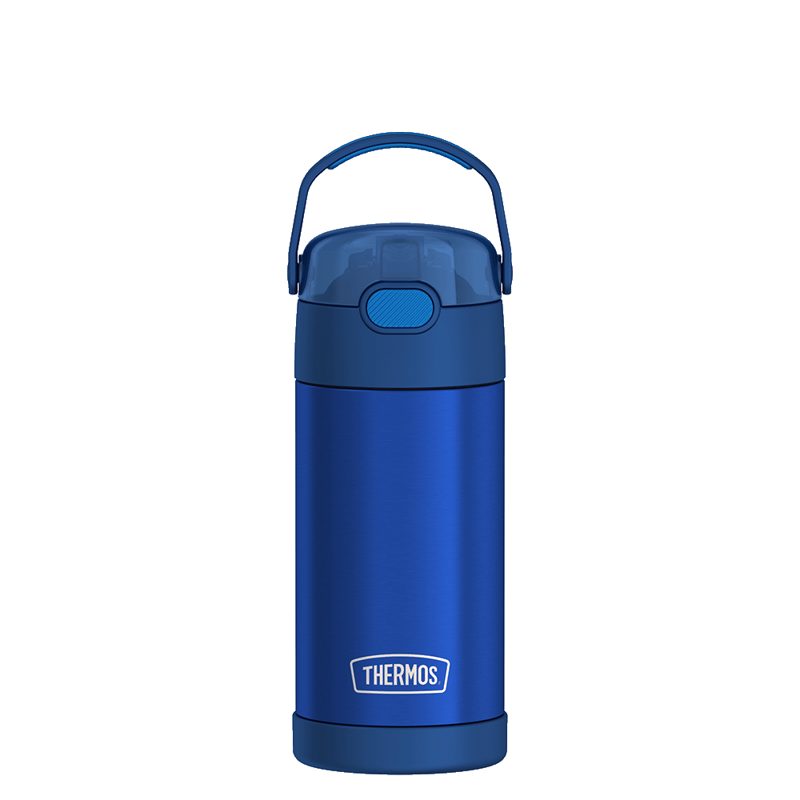 Image: Thermos
Once your child drinks well from a straw, an insulated bottle like the FUNtainer is the natural next step. Thermos says it keeps drinks cold for up to 12 hours. A push-button lid pops up a covered straw, and the bottle is leak-proof when closed. The straw isn't valved, so it flows freely like a regular straw.
- ✓Keeps water cold for hours
- ✓Durable stainless steel
- ✓Unvalved straw works like a "real" straw
- ✕Cold drinks only
- ✕Can drip when open
- ✕Heavy for young babies
Buying guide: choosing your child's first cups
A simple plan by age
- Around 6 months: offer a small open cup at meals (you hold it) and a straw cup. Put in a little breast milk, formula or water.
- 9 to 12 months: keep practicing both. Many babies handle a weighted straw cup on their own by now.
- 12 to 18 months: finish weaning off bottles. Keep cups mainly at meals and snacks rather than all day.
- By about 2 years: aim for most drinks from an open cup, with a straw bottle for outings.
Valve or no valve?
Valves stop spills but change how a child drinks. A valve-free straw or spoutless cup is closer to real cup drinking. If spills are the big concern (car seats, daycare), use a valved cup for outings and an open cup at the table.
Handles
Two handles help babies under about 12 months hold a cup independently. Toddlers usually manage without.
Cleaning
Straws and valves are where mold hides. Choose cups that come apart completely, use a straw brush, and let parts dry fully. Replace straws and seals when they're chewed or won't come clean.
What to put in the cup
Plain water is the best everyday drink, and fluoridated tap water helps prevent tooth decay. Offer milk at meals and keep juice small or skip it. Avoid letting a toddler carry a cup of milk or juice around all day.
Safety notes
- Check straws and valves often. Torn or chewed silicone can break off into small pieces. Replace parts as soon as they're damaged.
- Clean after milk. Take cups apart and wash every piece after milk or formula, and dry fully to prevent mold.
- No cups in bed. Don't put a child to bed with a cup or bottle of milk or juice; it raises cavity risk.
- Insulated bottles are for cold drinks for young children. Don't use them for hot liquids.
- Follow age labels and ask your pediatrician if your child has feeding concerns.
More on sippy cups and water bottles: see Thermos Funtainer vs Owala Kids: Which School Bottle? and Best Toddler Snack Cups.
Also useful: all our head-to-head comparisons.
Part of our Feeding & Mealtime section. Our main guide covers best high chairs.
FAQ
Sippy cup vs straw cup: which is better? Both can work, but many pediatric feeding and speech specialists prefer straw cups and open cups over spouted, valved sippy cups. HealthyChildren.org (from the American Academy of Pediatrics) notes that valved sippy cups make kids suck like they would on a bottle. Straw cups, open cups and spoutless 360 cups all help move a child toward mature drinking.
When should a baby start using a cup? The AAP recommends offering a cup when your baby starts solid foods, usually around 6 months. Start with small amounts of breast milk, formula or water at meals.
When should my baby stop using a bottle? HealthyChildren.org advises reducing bottle feedings gradually and completing the switch to a cup sometime between 12 and 18 months.
When should my child drink from an open cup? HealthyChildren.org says it is healthiest for kids to drink from an open cup by about 2 years of age. Practicing with a small open cup at meals from around 6 months helps.
Are sippy cups bad for teeth or speech? Constant sipping on milk or juice from any cup or bottle raises cavity risk. Hard, valved spouts also encourage a sucking pattern. If you use a sippy cup, choose a valve-free spout and fill it with plain water between meals. Ask your pediatrician or dentist if you have concerns.
What is the best straw cup for a 1-year-old? The b.box weighted straw cup is a popular first straw cup because the straw stays in the liquid at any angle. The OXO Tot Transitions straw cup is easy to clean and seals for travel.
Is a 360 cup a sippy cup? Sort of. A 360 cup like the Munchkin Miracle 360 is spoutless: kids drink from the rim like an open cup, but a silicone seal stops spills. It sits between a sippy cup and an open cup.
How do I teach my baby to drink from a straw? Many parents start with a squeezable straw cup or put a finger over the top of a regular straw to hold a little liquid, then let it release into the baby's mouth. Weighted straw cups help once the baby understands sucking through a straw.
How many cups does my toddler need? Many families keep two or three so one is always clean, plus a small open cup for meals.
Related reviews
More in Feeding & Mealtime
Stokke Tripp Trapp vs Abiie Beyond Junior: Which High Chair to Buy?
Stokke Tripp Trapp vs Abiie Beyond Junior Y on price, what's included, newborn use, adjusting, weight limits and warranty, and which…
Best Bottle Sterilizers and Dryers (2026)
Steam, microwave and UV bottle sterilizers compared on capacity, cycle time and trade-offs, plus CDC advice on when sanitizing is needed…
Natursutten Pacifier Review: One-Piece Natural Rubber Soother
Natursutten pacifier review: a one-piece natural rubber soother. Plastic-free pros, wear, and latex-allergy cautions. Research-based, not…