
In this guide
Reader-supported: SproutPicks may earn a commission from qualifying affiliate links, at no extra cost to you. Full disclosure.
Babyproofing is the job of finding and fixing the hazards in your home before your baby finds them. The biggest risks for babies and toddlers aren't sharp corners. They're furniture and TVs that tip over, window cords and window falls, poisons such as medicines and detergent pods, button batteries and magnets, hot tap water, water in tubs and pools, and unsafe sleep. This checklist goes room by room, based on guidance from the Consumer Product Safety Commission (CPSC), the American Academy of Pediatrics (AAP) and the CDC, with the federal rules that now apply to dressers, button batteries and window coverings. Save the Poison Help number first: 1-800-222-1222.
The top 10, if you only do a few things
- Safe sleep. Baby on their back, alone, in a crib, bassinet or play yard with only a fitted sheet.
- Anchor furniture and TVs to the wall: dressers, bookcases, shelves and TVs.
- Go cordless on window blinds and shades, or make cords unreachable.
- Stop window falls with window stops or guards. Screens don't hold a child.
- Lock up medicines, cleaners and detergent pods, up high and out of sight.
- Secure button batteries and magnets. Tape battery doors shut; remove magnet sets.
- Set your water heater to 120°F or lower.
- Install hardware-mounted gates at the top of stairs.
- Test smoke and CO alarms on every level.
- Save Poison Help, 1-800-222-1222, in every caregiver's phone.
When to start
When should I start babyproofing? Start before your baby starts rolling and crawling, ideally in the first few months. Get down on your hands and knees in each room to see hazards at your baby's level, and keep checking as your child learns to pull up, climb and open things.
CPSC's childproofing guide makes two points worth keeping in mind. Safety devices must be installed correctly and put back after each use, so a gate left open or a latch left undone doesn't help. And no device is completely childproof, so supervision still matters most.
Whole house
Furniture and TV tip-overs
CPSC says it knew of 234 deaths from tipping dressers and other clothing storage units from January 2000 through April 2022, and 199 were children. It also estimates about 5,300 tip-over injuries a year involving these units were treated in US emergency rooms from 2006 through 2021. CPSC's Anchor It! campaign says anchoring all furniture with drawers, doors and shelves to the wall prevents tip-over injuries and deaths.
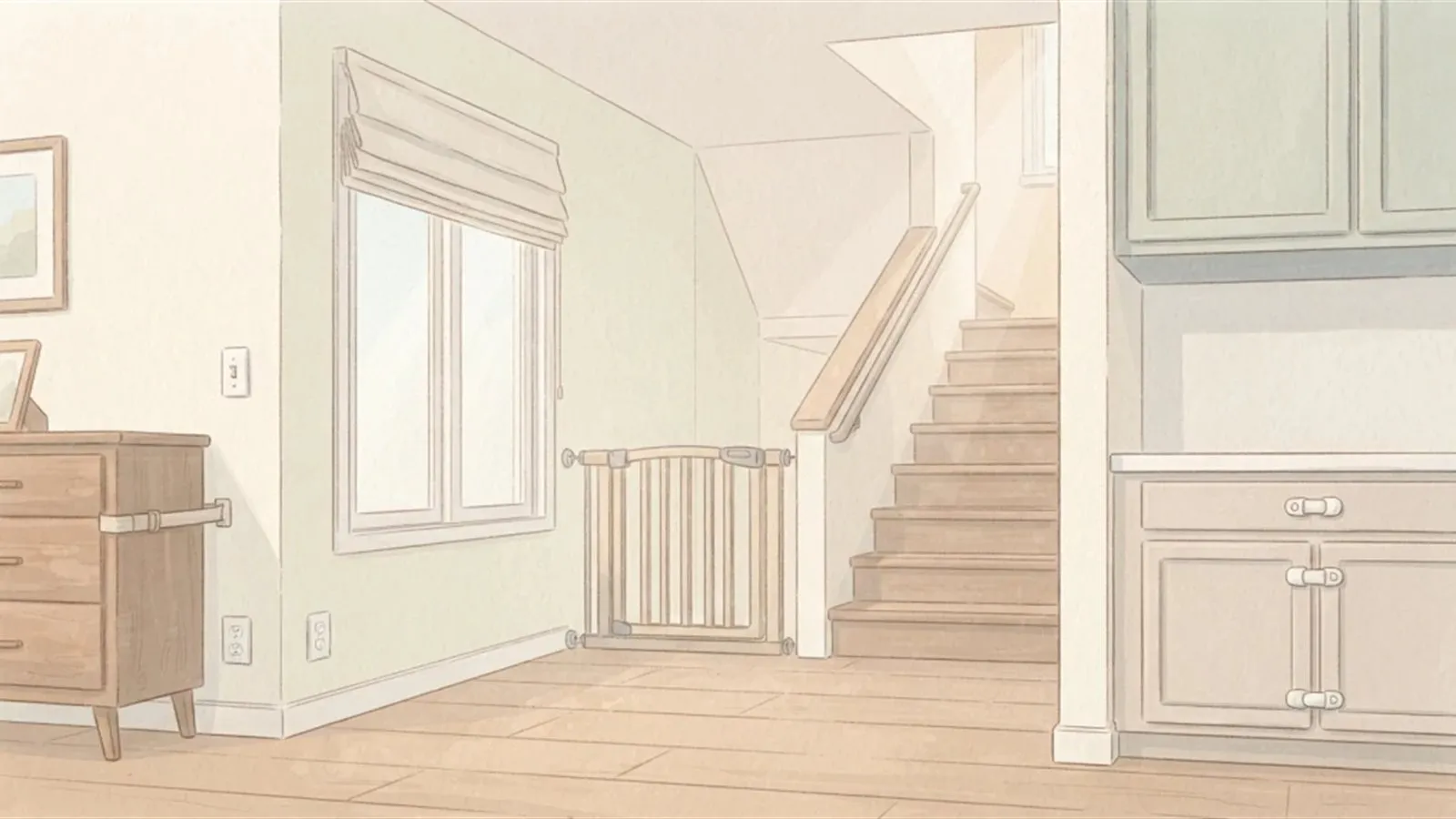
- Anchor dressers, bookcases, shelves and TVs with anti-tip kits, screwed into studs where you can. Tug the straps to check them.
- Know what the STURDY Act does. The 2022 STURDY Act led to CPSC's rule at 16 CFR part 1261, which adopts ASTM F2057-23. Clothing storage units made after September 1, 2023 must pass stability tests without the anti-tip kit installed. Furniture made earlier doesn't have to meet it.
- Install the anti-tip bracket on a freestanding range or stove, as CPSC advises.
- Don't tempt climbing. Keep toys and remotes off the tops of dressers and TV stands.
Do I need to anchor new furniture if it meets the STURDY Act? Yes, anchoring is still a good idea. Dressers and other clothing storage units made after September 1, 2023 must pass stability tests without the anti-tip kit, but CPSC still urges anchoring all furniture with drawers, doors and shelves, plus TVs. Older furniture in your home has none of the new protection.
Window cords
Young children can be strangled by the cords and loops on blinds and shades. CPSC recommends cordless window coverings wherever young children live or visit. If you can't replace corded blinds yet, CPSC suggests a free repair kit from the Window Covering Safety Council (800-506-4636), tension devices to anchor loops and bead chains to the wall, and shortened pull cords. Move cribs, beds and climbable furniture away from windows with cords.
A note on the rules: CPSC adopted a mandatory standard for custom window coverings in 2022, but a federal appeals court vacated it in September 2023. The industry's voluntary standard, ANSI/WCMA A100.1, still calls for stock products to be cordless or to have short or inaccessible cords. Older and custom blinds may still have long cords, so check every window. Our guide to blackout curtains for the nursery covers cord-free ways to darken a room.
Window falls
Are window screens enough to prevent falls? No. CPSC says screens are not strong enough to keep children from falling out. Use window stops that let windows open no more than 4 inches, or window guards, keep furniture away from windows, and make sure at least one window in each room can be opened by an adult in a fire.
- Guard bars should be no more than 4 inches apart, per CPSC.
- Open double-hung windows from the top, if your windows allow it.
- Keep beds, cribs, chairs and toy chests away from windows.
Outlets, alarms, doors and firearms
- Outlets. Use covers that children can't easily remove and that are too big to choke on. When replacing outlets, CPSC suggests tamper-resistant receptacles.
- Smoke alarms on every level, inside each bedroom and outside sleeping areas. Test monthly, and change batteries yearly or use sealed 10-year batteries, per CPSC.
- Carbon monoxide alarms outside bedrooms near each sleeping area, even in homes without fuel-burning appliances, per CPSC.
- Door knob covers and locks keep children out of rooms with hazards. Make sure adults can open them fast in an emergency.
- Firearms. The AAP says the safest home for a child is one without guns. If you keep guns, store them locked and unloaded, with ammunition locked separately. Ask about guns in homes your child visits.
Nursery and bedrooms
- Safe sleep every time. CPSC and the AAP say babies should sleep on their backs on a firm, flat surface in a crib, bassinet or play yard that meets federal standards, with nothing else in it: no bumpers, pillows, blankets or toys. Our guide to the ABCs of safe sleep explains the full AAP advice.
- Anchor the dresser and any changing table or bookshelf.
- Keep cords away from the crib. That includes window cords and baby monitor cords. Mount the monitor well out of reach and route its cord along the wall. Our guide to the best baby monitors covers placement.
- Changing table. Keep one hand on your baby, use the safety strap if there is one, and keep creams, powders and diaper pail supplies out of reach.
- Toy boxes. Choose one without a lid, or with a lid support that holds it open, and ventilation holes.
- Night lights and humidifiers should be out of reach, with cords tucked away.
Kitchen
- Latch lower cabinets that hold cleaners, dishwasher detergent, sharp knives, matches or lighters. CPSC says to lock these away even if they come in child-resistant packaging.
- Dishwasher pods belong in their original container, in a latched or high cabinet. Load them just before you run the machine.
- Cook on back burners and turn pot handles inward. Consider stove knob covers.
- Hot drinks stay out of reach and off tablecloths a toddler can pull.
- Fridge magnets should be large. Remove small or high-powered magnets.
- Kitchen scales, timers and thermometers often use coin batteries. Check that battery doors are screwed shut.
Bathroom
- Never leave a baby or toddler alone in the bath, even for a moment. The AAP says to keep a hand on your baby and take them with you if you need to leave. Bath seats and rings are not safety devices.
- Set the water heater to 120°F or lower. What temperature should my water heater be set to for a baby? 120 degrees Fahrenheit or lower. CPSC and the AAP both recommend that setting to help prevent scalds from hot tap water, and anti-scald devices on faucets and shower heads add protection.
- Medicines up and away. The CDC's Up and Away campaign asks families to put every medicine, vitamin and supplement, including gummies, up and out of children's reach and sight after every dose. Keep them in their original child-resistant containers.
- Toilet locks and a closed bathroom door help keep toddlers away from water.
- Razors, hair tools and mouthwash go in a latched drawer or high cabinet. Unplug curling irons and let them cool out of reach.
- Soften the spout. A spout cover helps with bumps once your baby uses the big tub; see our guide to the best bath spout covers.
Laundry room
- Liquid laundry packets are a real poisoning risk for young children. CPSC says to keep them in their original packaging, up and out of a child's reach and sight, and to call Poison Help right away if a child swallows or is exposed to one.
- Close the washer and dryer doors so toddlers can't climb in, and check inside before you start a load.
- Store bleach and stain removers high, in their original containers.
Living room and family areas
- Anchor the TV and the furniture it sits on.
- Button batteries. Remotes, key fobs, flameless candles, musical cards and many small gadgets use coin batteries. A swallowed coin battery can cause serious burns within 2 hours. Tape loose battery doors shut and keep spares locked away. Our button battery and magnet safety guide covers Reese's Law and what to do in an emergency.
- Magnets. Remove high-powered magnet sets from homes with young children, and check magnetic toys for cracks.
- Cords from lamps, chargers and electronics should be tucked behind furniture or in cord covers.
- Houseplants. The AAP suggests asking Poison Help for a list of plants to avoid, and keeping plants out of reach or skipping them for a while.
- Fireplaces and hard edges. Use corner and edge bumpers that stay firmly attached, and a screen or gate around a fireplace.
- Purses and bags. The CDC suggests asking guests to keep bags with medicines in them up and away. Grandparents' pill organizers are a common source of poisonings.
Stairs, doors and gates
- Top of stairs: hardware-mounted gates only. CPSC says to use only gates that screw into the wall at the top of stairs. Pressure-mounted gates can be pushed out.
- Use gates made for children. CPSC advises against pet gates for children and says to replace gates with V-shaped openings that could trap a head or neck.
- Bottom of stairs can use a sturdy gate too, so a crawler can't start climbing alone. Our Regalo Easy Step gate review looks at one popular option.
Pools, garage and outdoors
- Pools and spas need layers of protection, per CPSC: a fence with a self-closing, self-latching gate, door alarms, pool alarms and covers. Put barriers back after every use.
- Buckets, coolers and kiddie pools should be emptied and turned over after use.
- Garage chemicals such as antifreeze, windshield fluid, pesticides and paint go on high, locked shelves.
- Car keys and fobs stay out of reach, since fobs hold coin batteries and kids can get into cars.
Numbers to save
| Who | Number | When to use it |
|---|---|---|
| Emergency services | 911 | Your child is unconscious, not breathing, having a seizure or badly hurt |
| Poison Help | 1-800-222-1222 | Advice from your local poison center, 24 hours a day |
| Window Covering Safety Council | 800-506-4636 | Free repair kit for older corded window coverings, per CPSC |
What is the poison control number? Poison Help is 1-800-222-1222. It connects you to your local poison center 24 hours a day. If your child is unconscious, having trouble breathing or having a seizure, call 911 instead. For a swallowed button battery or magnets, go to the ER right away.
Our guides on babyproofing
- Best Baby Gates for Stairs: Top-of-Stairs Picks
- Regalo Easy Step Gate Review: Fit, Extensions and Install Rules
- Button Battery and Magnet Safety for Kids
- Why Pediatricians Say No to Baby Walkers (and Safer Options)
Part of our Bath, Health & Safety section. Our main guide covers Best Baby Shampoo and Body Wash (2026).
How we researched this
This is a research-based guide, not a professional home safety inspection, and we did not test any products. In November 2026 we read CPSC's Childproofing Your Home guide, its Anchor It! site, its clothing storage unit rule announcement and FAQ, its tap water scald alert, its laundry packet warning and its infant bath tub guidance, plus the AAP's HealthyChildren.org pages on bathing, home safety and firearm storage and the CDC's Up and Away medicine safety pages. For window coverings we checked news of the 2023 court decision that vacated CPSC's custom window covering rule. CPSC's window falls advice comes from its childproofing guide and older CPSC releases. Rules and recommendations can change, so check CPSC.gov and HealthyChildren.org for updates.
Sources
- CPSC, Childproofing Your Home
- CPSC, Anchor It!
- CPSC, final standard to prevent tip-overs of dressers and other clothing storage units (2023)
- CPSC, Clothing Storage Units FAQ
- Federal Register, Safety Standard for Clothing Storage Units (May 4, 2023)
- Window Covering Manufacturers Association v. CPSC (D.C. Cir. 2023)
- CPSC, Tap Water Scalds
- CPSC, global effort to prevent child poisonings (laundry packets)
- AAP / HealthyChildren.org, Bathing Your Baby
- AAP / HealthyChildren.org, Home Safety: Here's How
- AAP / HealthyChildren.org, Handguns in the Home
- AAP / HealthyChildren.org, Button Batteries and Lithium Coin Batteries
- CDC, PROTECT Initiative and Up and Away
Questions parents ask
When should I start babyproofing?
Start before your baby starts rolling and crawling, ideally in the first few months. Get down on your hands and knees in each room to see hazards at your baby's level, and keep checking as your child learns to pull up, climb and open things.
Do I need to anchor new furniture if it meets the STURDY Act?
Yes, anchoring is still a good idea. Dressers and other clothing storage units made after September 1, 2023 must pass stability tests without the anti-tip kit, but CPSC still urges anchoring all furniture with drawers, doors and shelves, plus TVs. Older furniture in your home has none of the new protection.
What temperature should my water heater be set to for a baby?
120 degrees Fahrenheit or lower. CPSC and the AAP both recommend that setting to help prevent scalds from hot tap water, and anti-scald devices on faucets and shower heads add protection.
What is the poison control number?
Poison Help is 1-800-222-1222. It connects you to your local poison center 24 hours a day. If your child is unconscious, having trouble breathing or having a seizure, call 911 instead. For a swallowed button battery or magnets, go to the ER right away.
Are window screens enough to prevent falls?
No. CPSC says screens are not strong enough to keep children from falling out. Use window stops that let windows open no more than 4 inches, or window guards, keep furniture away from windows, and make sure at least one window in each room can be opened by an adult in a fire.
More in Bath, Health & Safety
Skip Hop Moby Bath Spout Cover Review
Skip Hop Moby spout cover review: which tub spouts it fits, the heat indicator it doesn't have, how to keep mold away, and why 120°F water…
NoseFrida vs Braun Electric Nasal Aspirator
NoseFrida vs Braun Electric Nasal Aspirator: mouth suction vs battery suction, filters, cleaning, price, and AAP saline tips plus when to…
Boon Frog Pod Bath Toy Scoop Review
Boon Frog Pod review: how the draining scoop works, adhesive and screw mounting, what it can and can't do about bath toy mold, and why…