
In this guide
Reader-supported: SproutPicks may earn a commission from qualifying affiliate links, at no extra cost to you. Full disclosure.
Swaddling can help a newborn settle, but it has an end date, and that date usually comes sooner than parents expect. The American Academy of Pediatrics (AAP) says to stop as soon as a baby shows signs of trying to roll over, because a swaddled baby who rolls onto their stomach may not be able to push up or turn back. This guide explains how to spot those signs, how to move from swaddle to arms-free sleep step by step, which wearable blankets help, and why weighted sleep sacks aren't a safe shortcut, based on AAP and Consumer Product Safety Commission (CPSC) guidance.
The short answer
- Stop swaddling at the first signs of rolling, which the AAP says usually come at 3 to 4 months but can come earlier.
- Ease the change before rolling starts by freeing one arm, then both, over a few nights.
- Switch to a sleep sack that lets your baby move freely, not one that compresses the arms or chest.
- Never use weighted swaddles, sleep sacks or blankets.
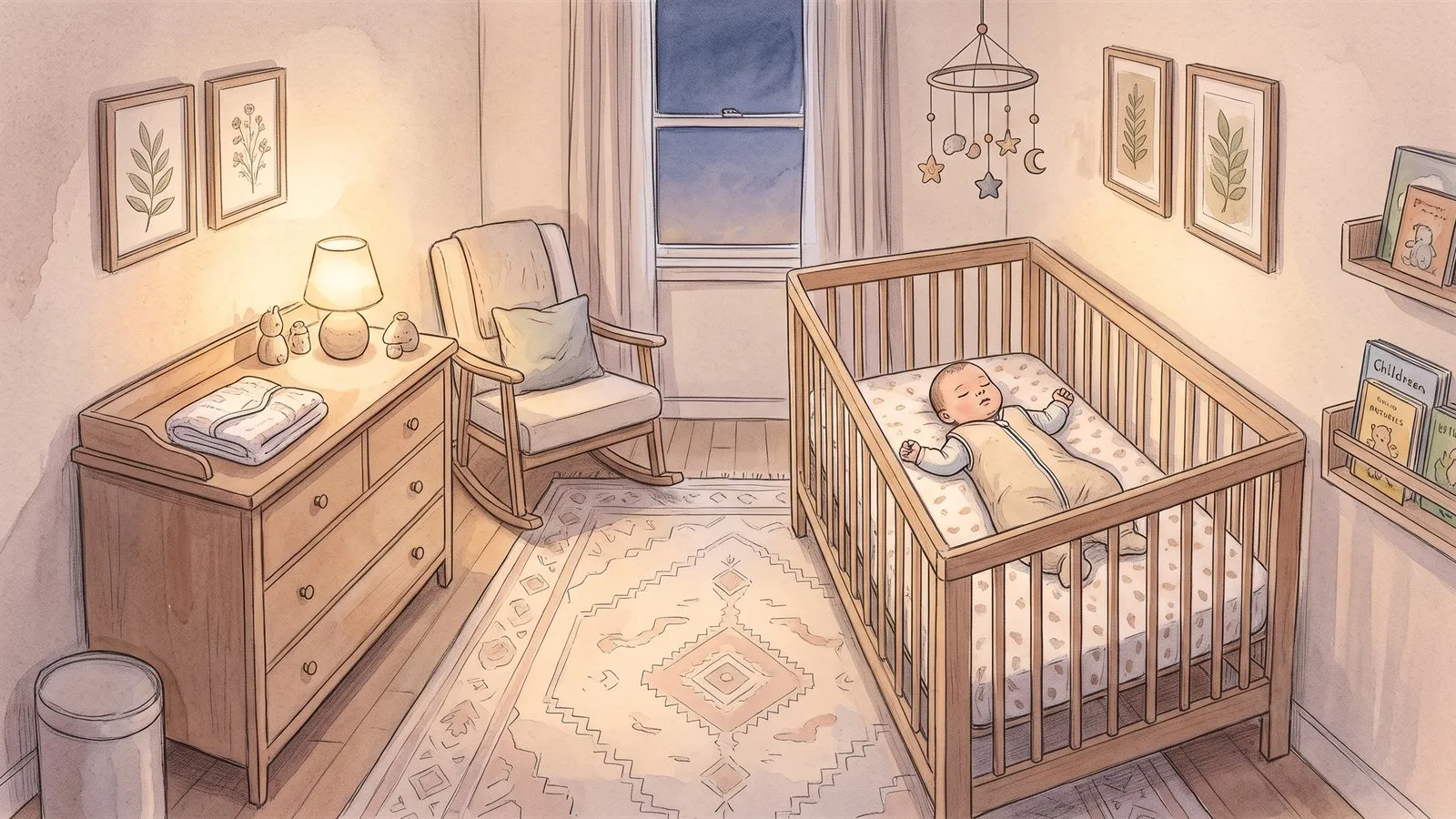
- Keep every other safe sleep rule: on the back, on a firm flat surface, with nothing else in the crib.
When to stop swaddling
When should I stop swaddling my baby? As soon as your baby shows any sign of trying to roll over. That's the AAP's advice on HealthyChildren.org, and its 2022 safe sleep policy notes that this usually happens at 3 to 4 months but can happen earlier. Some babies start working on rolling as early as 2 months.
The reason is suffocation risk. The AAP's policy explains that a swaddled baby who rolls to their stomach is at higher risk because their arms are wrapped and they can't push up or reposition. The AAP also notes that swaddling hasn't been shown to reduce the risk of SIDS. It's a soothing tool, not a safety device, so there's no reason to stretch it out once rolling is on the way.
Signs to watch for include:
- Rocking or tipping onto a side during sleep or floor play
- Lifting hips or kicking hard to turn during tummy time
- Pushing up strongly on the arms while on the tummy
- Regularly wriggling an arm, or both arms, out of the swaddle
If you see any of these, plan the switch now. If your baby has already rolled while swaddled, stop swaddling that night.
Before you start: two safety rules for the switch
Can I swaddle with one arm out after my baby starts rolling? No. Once a baby shows signs of trying to roll, the AAP says to stop swaddling and stop any wearable blanket that compresses the arms, chest and body. Arms-out swaddling is a way to ease the change before rolling starts. If your baby is already trying to roll, move straight to a regular sleep sack.
The second rule: a swaddled baby should only ever be placed on their back, and a swaddle should never be used in an adult bed or with loose bedding. HealthyChildren.org also says to keep a swaddle loose enough around the hips that the legs can bend up and out, and to leave room for two or three fingers between the chest and the wrap. Our safe sleep guide covers the full set of rules.
How to transition out of the swaddle, step by step
There are two common approaches. Some families stop all at once, which is simple and is the right choice if rolling has started. Others go gradually over about a week, which can be gentler for a baby who has relied on the swaddle, as long as they aren't rolling yet.
- Pick a calm week. Avoid starting during travel, illness or a big change such as a return to work or daycare.
- Start with naps. HALO and other makers suggest trying arms-out sleep at naps first, so if it goes badly the stakes are lower.
- Free one arm. For a few nights, swaddle with one arm out. AAP guidance notes there's no evidence that arm position in a swaddle affects SIDS risk, so this choice is about comfort and the transition. A swaddle with zip-off or adjustable wings makes this easier than a blanket.
- Free both arms. After a few nights, leave both arms out, so only the lower body is wrapped or zipped.
- Switch to a sleep sack. Move to a wearable blanket that doesn't compress the arms or chest and leaves the hips free to move. Size it by the maker's chart so your baby can't slip down inside.
- Keep the bedtime routine the same. Bath, feed, book, song and lights down in the same order give your baby the cues they used to get from the swaddle.
- Offer comfort without adding risk. White noise at a low volume and a dark room are fine. Don't add a blanket, pillow, positioner or stuffed toy to replace the swaddle's snugness.
How long does it take a baby to get used to sleeping without a swaddle? It varies. Some babies barely notice, and others sleep poorly for several nights while they learn to settle with their arms free. A steady bedtime routine helps, and starting with naps can make the first nights easier. Keep following safe sleep rules even when sleep is rough.
Handling startles and wake-ups
The main thing swaddling did was damp the startle reflex, the sudden flinging out of arms that can wake a young baby. Without the wrap, expect more of those flails at first. A few things help:
- Settle before sleep, not after. Put your baby down drowsy but calm, so they learn to fall asleep in the new position.
- Pause before rushing in. Brief fussing as a baby finds their hands often passes on its own.
- Let hands find the mouth. Many babies start to self-soothe by sucking on fingers once their arms are free.
- Check the room temperature. A sleep sack is usually warmer than a light swaddle. Dress for the room and use the TOG rating; our sleep sack guide has a TOG chart.
If sleep is still very rough after a couple of weeks, or your baby seems unwell, talk to your pediatrician.
Why weighted sleep sacks aren't the answer
Weighted sleep sacks and swaddles are marketed to parents as a way to keep the calming "hug" of a swaddle after the switch. Pediatric and safety groups say not to use them.
Are weighted sleep sacks safe? No. The AAP recommends against weighted swaddles, sleep sacks, blankets and other weighted objects on or near a sleeping baby, because they can put too much pressure on a baby's chest and lungs. CPSC's safe sleep advice also tells parents not to use weighted blankets or swaddles.
In 2024, a CPSC commissioner warned publicly that weighted infant swaddles and blankets are unsafe for sleep, and several major retailers, including Target, Walmart, Babylist and Amazon, said they would stop selling weighted infant sleep products. There's no mandatory federal ban as of November 2026, and some makers dispute the warnings, so you may still find these products online. Our guide to unsafe baby sleep products to avoid covers weighted products and others, such as inclined sleepers and crib bumpers.
Gear that helps
You don't need special gear to stop swaddling. A plain sleep sack in the right size and warmth does the job. Is a sleep sack safe once my baby can roll? Yes, if it lets your baby move freely. HealthyChildren.org says sleep sacks that don't swaddle or compress the body can be used as long as you like. Choose the right size so your baby can't slip down inside it, and keep the crib otherwise bare.
- For the arms-out stage, before rolling: swaddles with removable or adjustable wings let you free one arm at a time. Love to Dream's Swaddle UP Transition Bag has zip-off wings, and HALO's SleepSack Swaddle can be wrapped arms in or out. Stop using either once rolling signs appear. Our Love to Dream Swaddle UP review and HALO SleepSack Swaddle review cover sizing.
- For arms-free sleep: a classic wearable blanket such as the HALO SleepSack Wearable Blanket in cotton, the Burt's Bees Baby Beekeeper Wearable Blanket or the Kyte Baby Sleep Bag. Our Kyte Baby sleep bag review and Woolino 4 Season review go deeper.
- For babies who like a little resistance: some parents use a starfish-shaped sack such as the Zipadee-Zip, which isn't weighted. It's still a wearable blanket, so follow the sizing and safe sleep rules in our Zipadee-Zip review.
Whatever you choose, skip anything weighted, anything with a hood or loose parts near the face, and any add-on that attaches the sack to the crib or mattress.
Safe sleep doesn't change
The switch is a good moment to recheck the basics. The AAP's advice is the same with or without a swaddle: place your baby on their back for every sleep, on a firm, flat surface that isn't inclined, in a crib, bassinet or play yard with just a fitted sheet. Keep pillows, blankets, bumpers and soft toys out, share a room but not a bed for at least the first 6 months, and avoid overheating. Once your baby can roll both ways on their own, you don't need to turn them back if they roll during sleep, but always start them on their back. Our guides to swaddles and HALO SleepSack vs Love to Dream Swaddle Up cover the earlier stage.
More on swaddles and sleep sacks: see aden + anais Muslin Swaddle Review: Multi-Use Cotton Blankets and Ollie Swaddle Review: Moisture-Wicking Hook-and-Loop Swaddle.
Also useful: a cool-mist humidifier for the nursery.
Part of our Sleep & Nursery section. Our main guide covers best baby bassinets.
How we researched this
This guide is research-based. We did not test any products. In November 2026 we read the AAP's HealthyChildren.org page on swaddling, the AAP's 2022 policy statement on safe infant sleep and coverage of its swaddling guidance, CPSC statements and news coverage about weighted infant sleep products, and Consumer Reports' reporting on retailer decisions. Product details for transition swaddles and sleep sacks come from Love to Dream, HALO and retailer listings, and from our own sleep sack and swaddle reviews. This guide isn't medical advice; ask your pediatrician about your baby's sleep.
Sources
- HealthyChildren.org (AAP), Swaddling: Is it Safe?
- AAP, Sleep-Related Infant Deaths: Updated 2022 Recommendations for Reducing Infant Deaths in the Sleep Environment
- UVA Health, Summary of the AAP's updated safe sleep recommendations
- CPSC Commissioner statement, Beware: Weighted Infant Swaddles and Blankets Are Unsafe for Sleep (2024)
- CPSC Commissioner statement, Target, Walmart, Nordstrom and Babylist commit to stop selling weighted infant products
- Consumer Reports, Amazon and Target will stop sales of weighted baby sleep sacks and swaddles
- CPSC, Safe Sleep dos and don'ts
- Love to Dream, Swaddle UP Transition Bag
- HALO, SleepSack transition products
Questions parents ask
When should I stop swaddling my baby?
As soon as your baby shows any sign of trying to roll over. That's the AAP's advice on HealthyChildren.org, and its 2022 safe sleep policy notes that this usually happens at 3 to 4 months but can happen earlier. Some babies start working on rolling as early as 2 months.
Can I swaddle with one arm out after my baby starts rolling?
No. Once a baby shows signs of trying to roll, the AAP says to stop swaddling and stop any wearable blanket that compresses the arms, chest and body. Arms-out swaddling is a way to ease the change before rolling starts. If your baby is already trying to roll, move straight to a regular sleep sack.
Are weighted sleep sacks safe?
No. The AAP recommends against weighted swaddles, sleep sacks, blankets and other weighted objects on or near a sleeping baby, because they can put too much pressure on a baby's chest and lungs. CPSC's safe sleep advice also tells parents not to use weighted blankets or swaddles.
Is a sleep sack safe once my baby can roll?
Yes, if it lets your baby move freely. HealthyChildren.org says sleep sacks that don't swaddle or compress the body can be used as long as you like. Choose the right size so your baby can't slip down inside it, and keep the crib otherwise bare.
How long does it take a baby to get used to sleeping without a swaddle?
It varies. Some babies barely notice, and others sleep poorly for several nights while they learn to settle with their arms free. A steady bedtime routine helps, and starting with naps can make the first nights easier. Keep following safe sleep rules even when sleep is rough.
More in Sleep & Nursery
Halo BassiNest vs SNOO: Alternatives Compared
Halo BassiNest vs SNOO compared, plus Cradlewise and Newton: bedside swivel vs smart motion, FDA status, price bands and who should buy…
Yogasleep Dohm vs Hatch Rest: Which Sound Machine?
Dohm Classic vs Hatch Baby compared: fan white noise vs app night light, Rest+ discontinuation, prices and which to buy for your nursery.
Best Non-WiFi Baby Monitor for Two Kids (Split Screen Picks)
The best non-WiFi baby monitors for two kids: split screen vs scan mode, dual audio, screen size, range and price, from Infant Optics and…