
In this guide
- The short answer
- Where the 2-hour rule comes from
- Why time in a car seat matters for young babies
- Car seats are for travel, not for sleep
- How often to stop on a long drive
- Premature babies and newborns
- When the 2-hour rule stops applying
- Set the seat up so your baby rides safely
- Get your installation checked
- Never leave a baby in the car
- How we researched this
- Sources
- Questions parents ask
Reader-supported: SproutPicks may earn a commission from qualifying affiliate links, at no extra cost to you. Full disclosure.
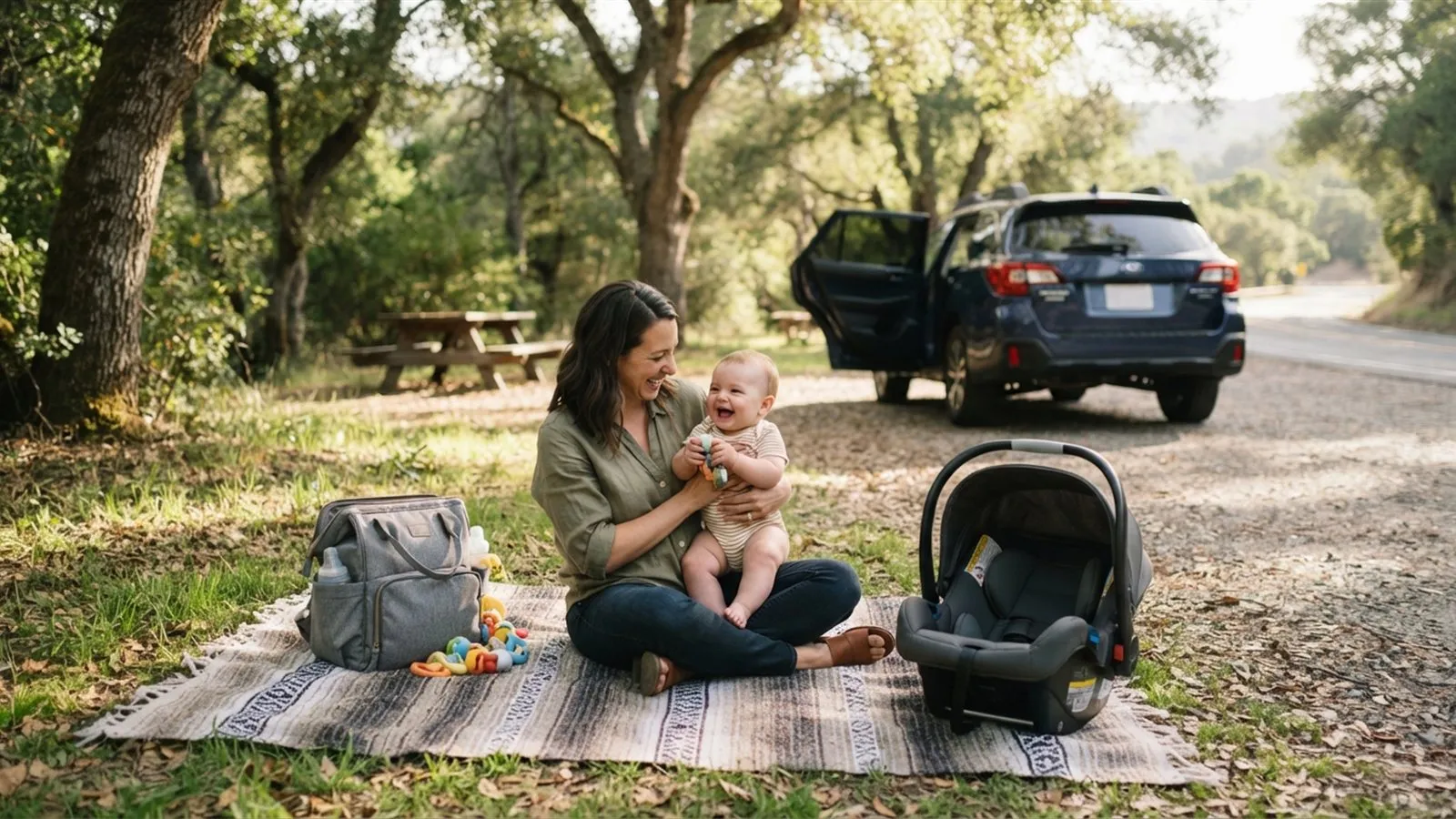
If you've searched for how long a baby can be in a car seat, you've probably met the "2-hour rule": the idea that a young baby shouldn't spend more than 2 hours in a car seat at a time, or in a day. It's repeated by parenting sites, retailers and some car seat makers, and it's a sensible rule of thumb. It is not a law, though, and the evidence behind the exact number is thinner than many articles suggest. Below we explain where the rule comes from, what the American Academy of Pediatrics (AAP) and the UK's Lullaby Trust actually say, why car seats are for travel and not for sleep, and how to plan a long drive with a baby. Always follow the manual for your car seat, and ask a certified Child Passenger Safety Technician (CPST) to check your installation.
The short answer
- There's no legal time limit. The 2-hour rule is guidance, mostly from car seat makers and parenting resources, not a federal rule.
- Take breaks. The AAP suggests stopping about every 2 to 3 hours on daytime drives. Stop sooner for a newborn or premature baby, or if your baby slumps.
- Car seats are for travel, not sleep. Dozing while the car moves is fine in a correctly installed seat. Once you arrive, move your baby to a firm, flat sleep space.
- Never leave a baby alone in a car seat, in the car or out of it, even for a few minutes.
Where the 2-hour rule comes from
Is the 2-hour car seat rule a law? No. There's no US law that limits how long a baby can ride in a car seat. The 2-hour rule is guidance that some car seat makers and parenting resources use, such as Chicco, which says newborns shouldn't spend more than 2 hours in a car seat in a 24-hour period. The UK's Lullaby Trust says there is no official time limit but that babies need regular breaks.
Chicco's parenting article states the rule plainly and links it to a University of Michigan health resource rather than to a study of its own. Chicco also suggests splitting very long trips over more than one day and having a second adult sit in the back to watch the baby's posture and breathing. Many UK sources once credited the rule to the Lullaby Trust, but the charity's current car seat page doesn't set a number. Instead, it says car seats are designed to keep babies safe while traveling, not to be a main sleeping place, and that babies shouldn't sleep in them for long periods.
Some articles say that Britax, Maxi-Cosi and "most manufacturers" endorse the 2-hour rule. We couldn't find that wording in the Maxi-Cosi materials we checked, and we didn't find a primary source for the other brands either, so we don't repeat that claim. Your own seat's manual is the document that counts. Read its sections on recline angle, harness fit and use outside the vehicle.
Why time in a car seat matters for young babies
Car seats are the safest way for a baby to ride in a vehicle, and nothing here is a reason to skip one or to take a baby out while the car is moving. The concern is narrower: long stretches in a semi-upright position can be hard on a young baby's breathing.
- Head slump and the airway. Newborns have weak neck muscles. If a baby's head falls forward so the chin rests on the chest, the airway can narrow. The AAP's HealthyChildren.org warns parents to watch for this chin-to-chest position.
- Oxygen levels in a moving car. In a 2016 pilot study, researchers at the University of Bristol placed newborns, both premature and full-term, in car seats on a rig that copied the angle of a car's back seat and the vibration of driving at about 30 mph. They reported higher heart and breathing rates and lower blood oxygen levels than when babies lay flat, and some of the babies with the largest drops had flopped forward. The authors called it a pilot study, and the Lullaby Trust, which funded it, said more research was needed.
- Sleep outside the car. The bigger, better-documented risk is using a car seat as a bed. We cover the research in the next section.
- Movement and comfort. Chicco also notes that babies need time to stretch, move and lie flat, and that long stretches in any seat can make them fussy.
Car seats are for travel, not for sleep
Can my baby sleep in the car seat once we get home? No. A baby can doze in a correctly installed car seat while you drive, but the AAP says car seats and other sitting devices are not recommended for routine sleep. Once you arrive, move your baby to a crib, bassinet or play yard, on their back on a firm, flat surface.
Two studies show why. A 2015 study in The Journal of Pediatrics by Batra, Midgett and Moon reviewed CPSC reports from 2004 to 2008 and found 47 deaths of children 2 and younger linked to sitting and carrying devices. Car seats accounted for 31 of them. About half of the car seat deaths involved strangulation by the straps and the rest involved positional suffocation, and many of the babies had been left to sleep in the seat outside the car.
A larger 2019 study in Pediatrics by Liaw and colleagues looked at 11,779 sleep-related infant deaths. Of those, 348, or about 3%, happened in sitting devices, and about 63% of those were in car seats. In fewer than 10% of the car seat deaths was the seat being used as directed, which usually means a baby buckled in a seat that's installed in a vehicle. The study also found these deaths were more likely when a child care provider or babysitter was in charge, so pass this rule on to everyone who looks after your baby.
The practical rules:
- Don't carry the car seat indoors as a bed. If your baby falls asleep on the way home, take them out and lay them down on their back in their crib or bassinet.
- Never put a car seat on a soft or raised surface, such as a bed, sofa or table, where it could tip.
- Don't leave a baby in a car seat with the straps unbuckled or loose. Partly buckled straps are a strangulation risk.
- Use a travel system with care. Clicking an infant seat into a stroller for a walk is fine while you're with your baby, but it isn't a substitute for a bassinet at nap time.
Our best infant car seats guide covers the seats themselves, and our best baby bassinets guide covers flat sleep spaces you can bring along.
How often to stop on a long drive
How often should I stop on a long drive with a baby? The AAP's HealthyChildren.org suggests stopping about every 2 to 3 hours during daytime drives to stretch, feed and change your baby, and roughly every 4 to 6 hours on night drives when your baby is likely to sleep. Stop sooner if your baby's head slumps forward or they seem unwell.
That advice, from pediatrician Dina DiMaggio, also covers what to do at each stop and on the road:
- Take your baby out of the seat at every stop. The Lullaby Trust says breaks should give babies a chance to stretch and move, not just a pause with the engine off.
- Feed only when parked. The AAP says never to breastfeed while the car is moving. Pull over, take your baby out and feed them upright, then buckle them back in before you drive on.
- Put an adult in the back seat if you can. A second adult can watch your baby's position and breathing, which both the AAP and the Lullaby Trust recommend. If you're driving alone, a mirror lets you glance at a rear-facing baby. See our guide to the best car seat mirrors for rear-facing seats, and use one only if your car seat maker allows it and it's mounted securely.
- Stop if your baby slumps. The Lullaby Trust says that if a baby slumps forward, you should stop as soon as it's safe, take them out and reposition them before you continue.
- Time drives around sleep. The AAP suggests early-morning or nap-time drives for short trips and evening drives for longer ones.
- Plan the overnight stop. If the trip runs into the night, book a stop where your baby can sleep flat in a bassinet or play yard.
Very long drives with a newborn are worth avoiding when you can. Chicco suggests breaking trips that run more than several hours over more than one day, and the Lullaby Trust advises avoiding long drives with young and premature babies. For a full holiday checklist, see our guide to holiday travel with a baby.
Premature babies and newborns
Does the 2-hour rule apply to premature babies? Premature and young babies need extra care. The AAP says preterm babies should be screened in the hospital to check that they can ride safely in a semi-reclined car seat, and the Lullaby Trust advises avoiding long drives with premature and young babies. Ask your baby's doctor how long your baby can ride and how often to stop.
The hospital screening is often called a car seat challenge or car seat tolerance screen. Staff watch the baby's breathing, heart rate and oxygen level while they sit in their own car seat. If your baby had trouble, the care team may recommend a car bed or other special restraint for a while and will tell you how long rides can safely be. Follow that advice over any general rule, including this one.
When the 2-hour rule stops applying
When does the 2-hour rule stop applying? No official source sets an age. Chicco frames its rule around newborns, and the concern is greatest for young babies who can't hold their heads up well. As your baby grows, regular breaks remain sensible on long drives at any age, and the car seat still isn't a place for sleep once you arrive.
Some sites give a specific age, such as 6 months, for when long drives become fine. We didn't find a pediatric or government source that sets one, so we don't. Older babies and toddlers still need breaks to move, eat and use the toilet or get a diaper change, and most children are happier with them.
Set the seat up so your baby rides safely
How long your baby can comfortably ride depends a lot on how well the seat fits them and the car. The AAP's car seat guidance for families, updated in April 2026, covers the basics:
- Recline angle. Rear-facing seats must be installed at the angle shown in the manual, usually with a level indicator on the seat or base. Too upright and a newborn's head can fall forward.
- Snug harness. The AAP's pinch test: once buckled, you shouldn't be able to pinch any slack in the strap at your baby's shoulder. For rear-facing seats, the harness slots should be at or below your baby's shoulders.
- No puffy coats. Bulky coats and snowsuits compress in a crash and leave the straps too loose. Dress your baby in thin layers and put a blanket or coat over the buckled harness. Our guide to stroller footmuffs covers cozy options for the walk to the car.
- No unapproved add-ons. The AAP says not to use products that didn't come with the seat or aren't approved by the seat's maker. That includes most head positioners, inserts and strap covers sold separately.
- Rear-facing as long as possible. The AAP recommends keeping children rear-facing until they reach the highest weight or height their seat allows for rear-facing.
- Use the infant inserts that came with the seat, following the manual's weight limits for them.
Shade helps on sunny drives too, as long as it doesn't block the driver's view. Our guide to the best car window shades for babies covers the options.
Get your installation checked
Car seats are easy to install slightly wrong, and a seat that's too upright or too loose can affect both crash protection and how your baby breathes on a long ride. A certified Child Passenger Safety Technician can check your installation and show you how to adjust the harness and recline. Checks are often free. You can find a technician through Safe Kids Worldwide's search tool or through NHTSA's car seat pages. Bring your car seat manual and your vehicle owner's manual.
Never leave a baby in the car
NHTSA and the AAP both warn that a car can heat up quickly, even on a mild day, and that children left in vehicles can die of heatstroke. Never leave your baby alone in the car, even for a quick stop or with the windows cracked. Make a habit of checking the back seat every time you get out, and keep your car locked when it's parked so children can't climb in.
More on car seat safety rules: start with our guide to road-trip gear for kids, then How Long Are Car Seats Good For? Expiration by Brand and Best Winter Car Seat Covers (Shower-Cap Style).
Also useful: our car seat stage checker.
How we researched this
This is a research-based guide, not medical advice, and we did not test car seats or measure anything ourselves. In November 2026 we read Chicco's article on the 2-hour rule, the Lullaby Trust's car seat page, the University of Bristol's announcement of its 2016 car seat study, the AAP's HealthyChildren.org pages on car seats for families (updated April 2026) and on long car trips with a baby, NHTSA's car seat and heatstroke pages, and published summaries of the Batra (2015) and Liaw (2019) studies on deaths in sitting devices. We looked for car seat makers' own statements on time limits and note above where we couldn't find a primary source. If your baby's doctor gives you different advice, follow it.
Sources
- Chicco, Car Seat Safety for Newborns
- The Lullaby Trust, Car seats and reducing the risk of SIDS
- University of Bristol, Motion tests suggest car seats not necessarily safe for infants (2016)
- AAP HealthyChildren.org, Is it safe for my baby to travel in a car seat a few hours at a time?
- AAP HealthyChildren.org, Car Seats: Information for Families
- ScienceDaily, summary of Batra et al., Hazards Associated with Sitting and Carrying Devices (2015)
- Liaw et al., Infant Deaths in Sitting Devices, Pediatrics (2019)
- NHTSA, Car Seats and Booster Seats
- NHTSA, Child Heatstroke Prevention
- Safe Kids Worldwide, Get Your Car Seat Checked
Questions parents ask
Is the 2-hour car seat rule a law?
No. There's no US law that limits how long a baby can ride in a car seat. The 2-hour rule is guidance that some car seat makers and parenting resources use, such as Chicco, which says newborns shouldn't spend more than 2 hours in a car seat in a 24-hour period. The UK's Lullaby Trust says there is no official time limit but that babies need regular breaks.
How often should I stop on a long drive with a baby?
The AAP's HealthyChildren.org suggests stopping about every 2 to 3 hours during daytime drives to stretch, feed and change your baby, and roughly every 4 to 6 hours on night drives when your baby is likely to sleep. Stop sooner if your baby's head slumps forward or they seem unwell.
Can my baby sleep in the car seat once we get home?
No. A baby can doze in a correctly installed car seat while you drive, but the AAP says car seats and other sitting devices are not recommended for routine sleep. Once you arrive, move your baby to a crib, bassinet or play yard, on their back on a firm, flat surface.
Does the 2-hour rule apply to premature babies?
Premature and young babies need extra care. The AAP says preterm babies should be screened in the hospital to check that they can ride safely in a semi-reclined car seat, and the Lullaby Trust advises avoiding long drives with premature and young babies. Ask your baby's doctor how long your baby can ride and how often to stop.
When does the 2-hour rule stop applying?
No official source sets an age. Chicco frames its rule around newborns, and the concern is greatest for young babies who can't hold their heads up well. As your baby grows, regular breaks remain sensible on long drives at any age, and the car seat still isn't a place for sleep once you arrive.
More in Car & Road-Trip Gear
JLab JBuddies Studio 2 vs Puro BT2200-Plus Kids' Headphones
JLab JBuddies Studio 2 vs Puro BT2200-Plus kids' headphones on volume limits, battery, fit, wired backup and price, plus how to keep…
Best Kids' Headphones (Volume-Limited)
The best volume-limited kids' headphones compared on 75 and 85 dB caps, battery and noise canceling, plus WHO safe listening advice and…
Best Car Seat Gap Fillers for Parents (2026): Stop Losing Pacifiers, Snacks & Phones
Stop losing phones, snacks and pacifiers down the seat gap. Five car seat gap fillers compared on fit, grip and owner feedback.