
In this guide
Reader-supported: SproutPicks may earn a commission from qualifying affiliate links, at no extra cost to you. Full disclosure.
Car seats have a shelf life. Every seat sold in the US comes with a manufacturer-set "useful life," usually somewhere between 6 and 10 years from the day it was made, and after that the maker says to stop using it. If you are reusing a seat from an older sibling, accepting a hand-me-down, or just found a date stamp you didn't know was there, this guide explains why seats expire, where to find the date, what nine major brands say about their own seats, when a crash ends a seat's life early, and how to get rid of an old one responsibly.
The short answer
- Typical lifespan: 6 to 10 years from the date of manufacture (DOM), depending on the brand and model.
- The clock starts at manufacture, not at purchase. A seat that sat in a warehouse for a year has a year less of use left.
- Your manual and label win. Brand averages are useful for planning, but the exact number for your seat is printed on it or in its instructions.
- A crash can end a seat's life early. NHTSA says to replace a seat after a moderate or severe crash, and several makers say to replace it after any crash.
Why car seats expire
Manufacturers give a few overlapping reasons. Chicco's explanation is typical: straps stretch and loosen with use, sun and heat weather the plastics, designs improve, and safety standards change over time. Car seats spend years in hot and cold cars, get buckled thousands of times, and are cleaned with whatever is handy. The expiration date is the manufacturer's statement of how long it is willing to stand behind the seat's crash performance.
Standards really do move. NHTSA's side-impact standard for child restraints, FMVSS No. 213a, has a compliance date of December 5, 2026, according to the final rule NHTSA published in September 2026. Seats designed a decade ago were never tested to it. An older seat isn't automatically unsafe the day a new rule takes effect, but this is one reason makers don't promise indefinite use.
We also want to be straight about the evidence: we did not find published research that pins down exactly when car seat plastics become unsafe. Expiration dates are set by each manufacturer, which is why they differ from brand to brand. That uncertainty is a reason to follow the date, not to ignore it, because you have no way to inspect a shell for hidden fatigue at home.
Where to find the date on your seat
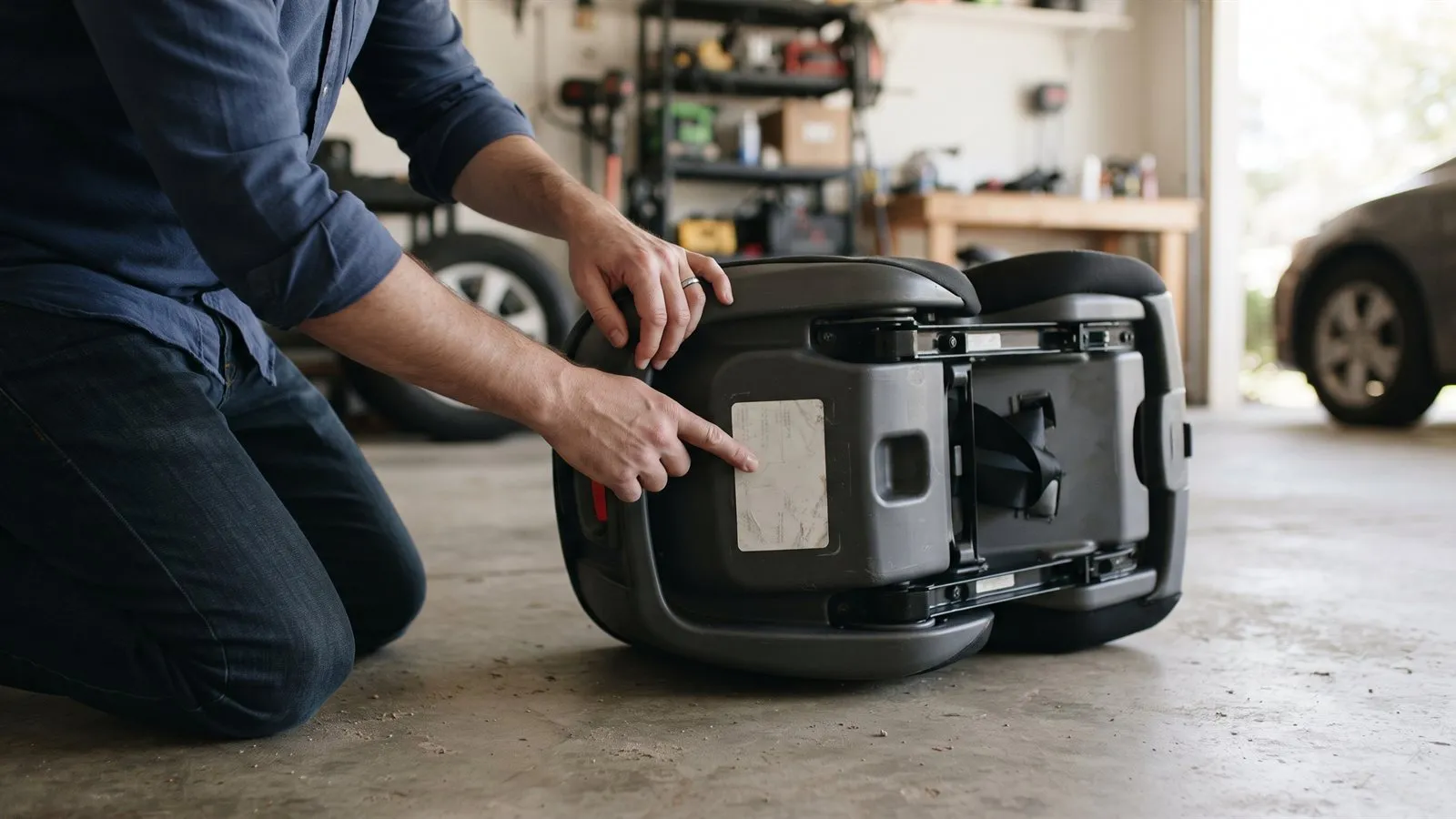
- Flip the seat over. Most brands put a white label on the bottom or back of the shell with the model number and date of manufacture. Chicco, Cybex and UPPAbaby all point to the underside; Maxi-Cosi says its sticker is on the back of the seat; Evenflo says bottom, side or back.
- Look for a molded stamp. Some seats also have the date or an expiration notice molded into the plastic. Clek notes the date may be on a sticker or stamped into the shell.
- Check the base separately. Infant seat bases carry their own labels and dates. UPPAbaby's Mesa V3 manual, for example, refers you to labels on the bottom of both the carrier and the base.
- Read the wording. Some labels say "Do not use this child restraint after [date]." Others list only the DOM, so you add the useful life from the manual. Britax says models made after 2018 show an expiration date on the serial label; older ones may show only the DOM.
If the label is missing or unreadable and you cannot confirm the date with the manufacturer, don't use the seat. Evenflo puts it plainly: never use a car seat if you cannot confirm its expiration date.
Car seat lifespan by brand
This table summarizes what each maker says on its own site or in its manuals. Where a brand publishes only a range, or where we couldn't confirm a number from the manufacturer, we say so instead of repeating figures from third-party lists.
| Brand | What the maker says | Where to look |
|---|---|---|
| Graco | 7 years for seats with a plastic-reinforced belt path; 10 years for steel-reinforced belt path seats and belt-positioning boosters | DOM on a seat label; useful life in the manual or on the seat |
| Chicco | 6 to 10 years from manufacture, depending on the seat | Underside of the seat or base, on the manufacturer label |
| Britax | Generally 6 to 10 years from manufacture, depending on the model | Serial label; post-2018 seats print the expiration date |
| Evenflo | 10 years from manufacture for current seats and boosters; seats made before January 2025 may differ | DOM label on the bottom, side or back |
| Clek | 9 years from manufacture for all Clek seats, including Liing, Foonf, Fllo and Oobr | Sticker or stamp on the shell |
| UPPAbaby | Mesa V3 manual: 10 years from manufacture or after a crash; check your model's manual | Labels on the bottom of carrier and base |
| Cybex | Dates printed on the seat; Cybex lists 8 years from manufacture for its boosters | Sticker on the bottom showing DOM and expiration |
| Nuna | We couldn't confirm a brand-wide figure on Nuna's US site; check your manual | White serial label, usually on the bottom, lists the DOM |
| Maxi-Cosi | Varies by product; the lifespan is in each manual | Sticker on the back of the seat with the DOM |
Two practical takeaways. First, an all-in-one seat with a 10-year life can genuinely take one child from birth to booster, while a 6- or 7-year seat may not last for a second child. Second, if you are planning to reuse an infant seat for a sibling, do the math now: DOM plus useful life, compared with your new baby's due date plus about a year of use.
If you are shopping for a seat that will last, our reviews of the Graco 4Ever DLX Grad 5-in-1 and the Clek Foonf cover modes and limits in more detail, and our UPPAbaby Mesa Max review covers an infant seat with a load leg.
What to do after a crash
NHTSA recommends replacing a car seat after a moderate or severe crash. It says a seat does not automatically need replacing after a minor crash, but only if all of these are true:
- The vehicle could be driven away from the crash site.
- The vehicle door nearest the car seat was not damaged.
- No one in the vehicle was injured.
- The air bags did not deploy.
- There is no visible damage to the car seat.
Here is the catch: your manufacturer's rule overrides NHTSA's general guidance when it is stricter. Chicco says to replace a car seat or booster after a crash of any level, including minor ones. UPPAbaby's Mesa V3 manual says to discontinue use after a crash and not to use the seat if it has been in a vehicle accident. Read the crash section of your manual before deciding. If your seat was in the car during a crash, even unoccupied, check the manual too, because some makers count that as well.
After a crash, ask your auto insurer whether it covers a replacement seat. Keep the old seat until the claim is settled, then dispose of it as described below so nobody else uses it.
How to dispose of or recycle an expired seat
Never sell, donate or pass along an expired or crashed seat. Chicco tells parents directly not to donate or give an expired seat to anyone. Your options:
Retailer trade-in events
Target runs a car seat trade-in event at stores. In fall 2026 it ran from September 20 to October 3. Target took car seats in any condition, including infant seats, bases, boosters, and expired or damaged seats, and gave a 20% Target Circle bonus toward eligible baby gear such as car seats, strollers and high chairs. Target says the plastic is recycled into products such as buckets, carpet padding and construction materials. Dates change each year and are not guaranteed, so check the Target app before you haul a seat to the store.
Manufacturer and local programs
Clek runs its own recycling program for Clek seats. Some cities and counties also accept car seats at recycling centers or special collection days. Maxi-Cosi notes that most programs require you to strip the seat first: remove the cover and soft goods, the harness and buckles, and the metal pieces, leaving the plastic shell.
If you have to put it in the trash
Evenflo, Chicco and Maxi-Cosi describe similar steps so no one pulls the seat out of the trash and reuses it:
- Remove the fabric cover and padding.
- Cut the harness straps.
- Write "EXPIRED - DO NOT USE" (or "UNSAFE") on the shell in permanent marker.
- Chicco suggests bagging it in a black garbage bag before putting it out.
If you are offered a used seat
A free seat from a trusted friend can be fine, but only if you can answer yes to every question: Do you know its full history, including that it has never been in a crash? Is the label readable, with plenty of time left before expiration? Does it have all its parts and the manual? Is it free of open recalls? You can check recalls by model number and DOM on NHTSA's recall lookup or the manufacturer's site. If any answer is no or "not sure," pass. Evenflo's used-seat checklist includes the same "never been in any type of crash" test.
More on car seat safety rules: start with our guide to which convertible car seat to buy, then How Long Can a Baby Stay in a Car Seat? The 2-Hour Rule and Winter Coats and Car Seats: The Puffy Coat Rule.
Also useful: our car seat stage checker.
How we researched this
This is a research-based guide. We did not crash-test or inspect any car seats. We read each brand's own expiration and FAQ pages and owner's manuals, NHTSA's crash-replacement criteria (as republished by Indiana University's child passenger safety program), the Federal Register notice for FMVSS No. 213a, Target's trade-in details as reported in 2026, and manufacturer disposal instructions. Where a brand's own site did not give a number we could confirm, we left it out rather than repeat figures from retailer blogs, which often disagree with each other.
Sources
- Graco, "Why do car seats expire?"
- Chicco, car seat lifespan
- Chicco, "Why do car seats expire?"
- Britax, expiration dates FAQ
- Evenflo, "When do car seats expire?"
- Clek, product FAQs
- Clek, "Did you know car seats expire?"
- UPPAbaby Mesa V3 manual (US)
- Cybex, Eternis S product page and FAQ
- Nuna, product warranty and serial label
- Maxi-Cosi, car seat expiration and recycling
- NHTSA, car seat use after a crash
- Indiana University Automotive Safety Program, car seats involved in a crash
- Federal Register, FMVSS No. 213a final rule (2026-18380)
- FOX 5 San Diego, Target's 2026 car seat trade-in
Questions parents ask
Do car seats really expire?
Yes. Manufacturers set a useful life for each seat, usually 6 to 10 years from the date of manufacture. The clock starts when the seat was made, not when you bought it, and the exact number is in your manual or on the seat's label.
Where is the expiration date on a car seat?
Look for a label or a date stamped into the plastic on the bottom, back or side of the shell, and on the base if your seat has one. Some labels give an expiration date directly; others give only the date of manufacture, and you add the useful life from the manual.
Can I use a car seat after a minor fender bender?
Only if the crash meets all five of NHTSA's minor-crash criteria and your seat's manufacturer allows reuse. Some brands, including Chicco and UPPAbaby, say to replace the seat after any crash, so check your manual first.
Is it illegal to use an expired car seat?
We found no federal law that makes it illegal for parents to use one, but the manufacturers whose guidance we read all say to stop using a seat once it expires. Treat the date as a firm limit.
What should I do with an expired car seat?
Do not sell or donate it. Trade it in if Target or another retailer is running a car seat event, use a local recycling program that takes car seats, or cut the harness straps, remove the cover, mark the shell EXPIRED - DO NOT USE and put it out with the trash.
More in Car Seats & Boosters
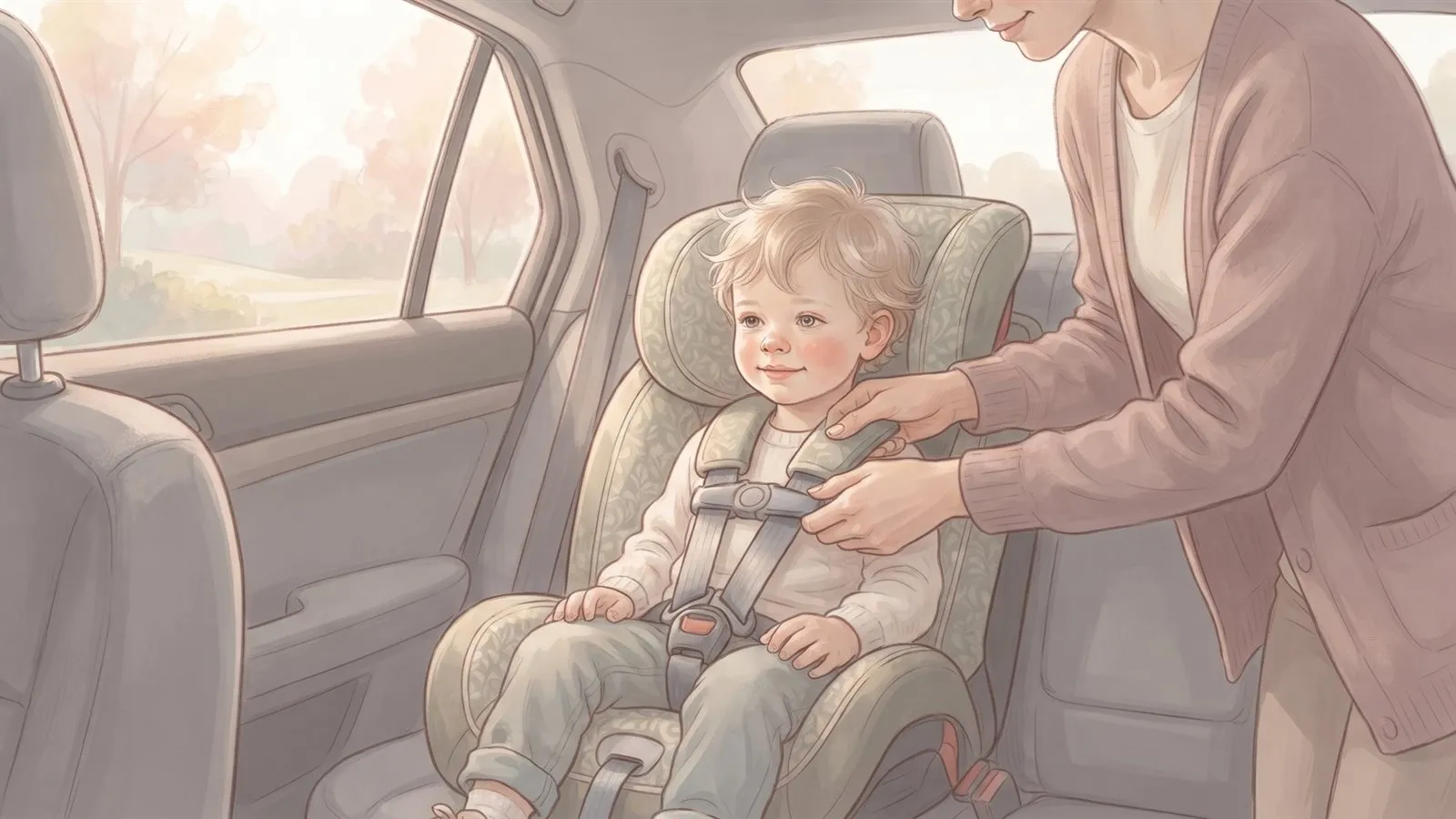
Best Combination Car Seats (Harness-to-Booster) for 2026
The best harness to booster car seats, with verified harness and booster limits, prices and NHTSA recalls, plus the Chicco MyFit Zip Air…
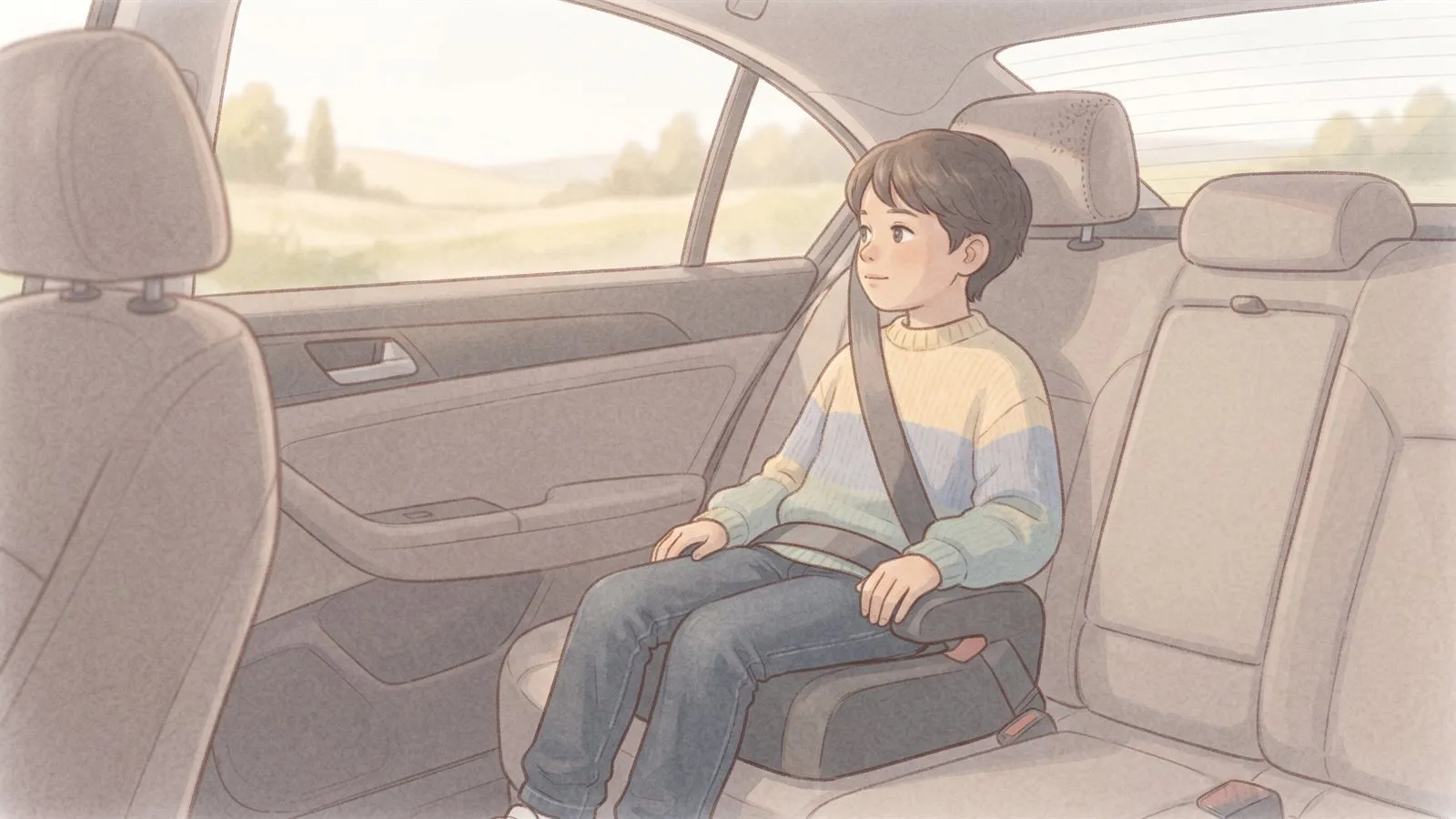
Best Backless Booster Seats for Big Kids (2026)
The best backless booster seats for big kids, with verified limits and prices, plus NHTSA and AAP booster rules, the 5-step test and when…

Chicco NextFit Max ClearTex Convertible Car Seat Review
Chicco NextFit Max ClearTex review: verified 50 lb rear-facing limit, 26.5 lb seat weight, ClearTex fabric facts, install notes, recalls…