
In this guide
Reader-supported: SproutPicks may earn a commission from qualifying affiliate links, at no extra cost to you. Full disclosure.
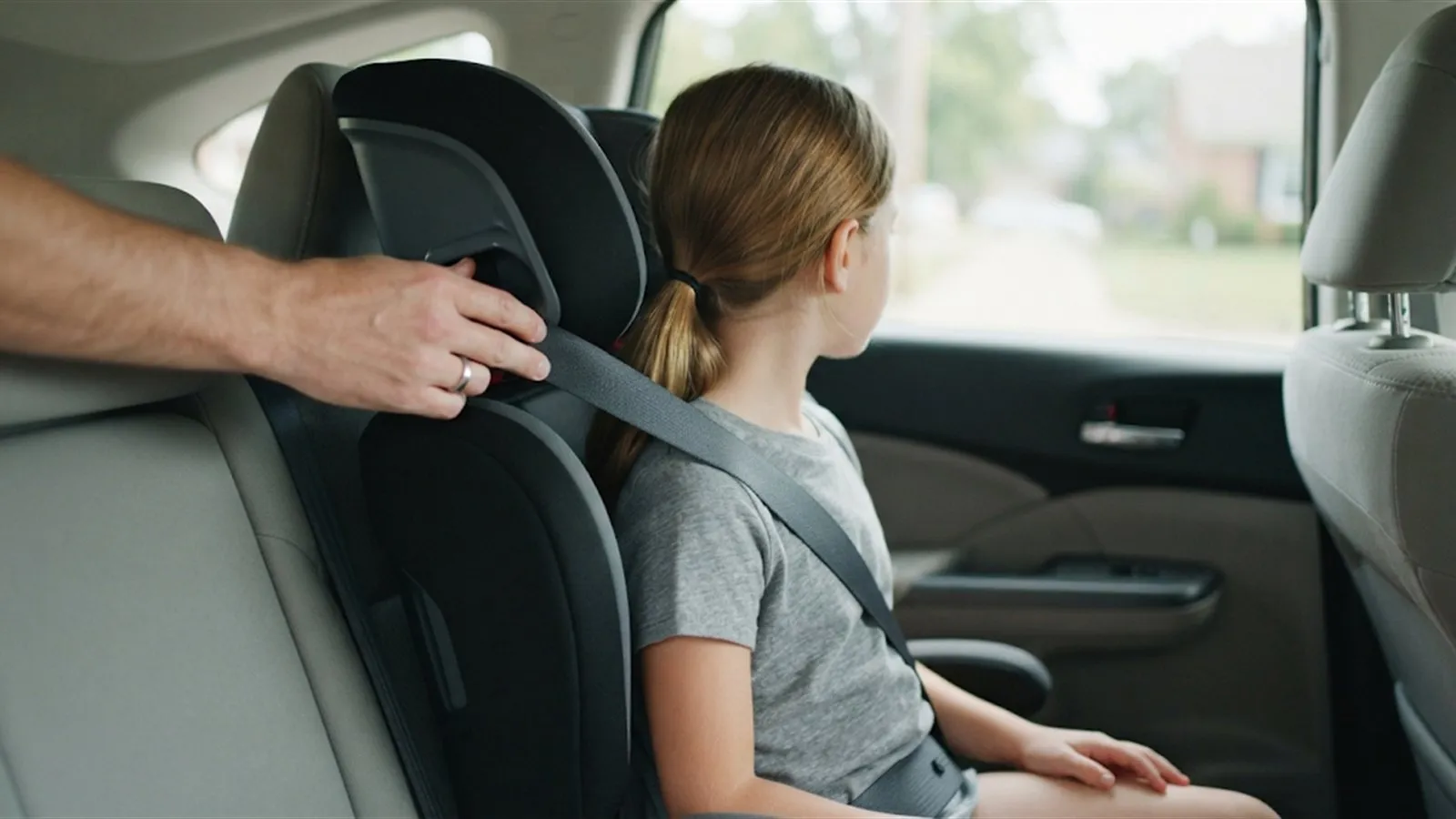
A high-back booster is the step after a harnessed car seat. It has no harness of its own. It raises your child and guides the car's lap and shoulder belt so the belt sits on the strong parts of the body. Most kids need one for years, usually until somewhere between 8 and 12. Below are five high-back boosters with their verified limits, plus how to tell when your child is ready for a booster and when they can stop using one.
Quick picks
Chicco KidFit 2-in-1
Britax Highpoint 2-Stage
Graco TurboBooster 2.0
Clek Oobr
Evenflo GoTime LX
How we score: SproutPicks Scores are our own editorial ratings out of 10. They weigh child size limits, belt-guide range, LATCH and stability features, width, ease of daily use and value, using maker specifications, AAP guidance and independent car-seat technician reviews. They are not Amazon ratings, and we did not install or crash-test these seats.
Is your child ready for a booster?
The American Academy of Pediatrics (AAP) says children should move to a belt-positioning booster once they outgrow the weight or height limit of their forward-facing harness seat. Signs include shoulders above the top harness slots or the tops of the ears reaching the top of the seat. Moving early is a step down in protection, so don't switch just because a child turns 4.
Check three things:
- Size. Every booster below requires at least 40 lb. Most also require a minimum height of 43 to 44 inches.
- Age. Makers list minimum ages of 4 (Graco, Chicco, Clek) or 5 (Evenflo).
- Maturity. A booster only works if your child sits upright, with the belt in place, for the whole trip. Chicco's usage note puts it plainly: the seat is for children who can sit relatively still in the same position throughout the ride. A child who leans forward, slips the shoulder belt behind their back or falls asleep slumped over is safer in a harness for now.
High-back vs backless boosters
The AAP says both types raise a child so the belt fits and both reduce injury risk. The difference is what the car provides:
- High-back boosters suit vehicles without headrests or with low seat backs. They have a shoulder-belt guide near the head that keeps the belt off the neck, and side wings that help a sleeping child stay upright. They are the usual starting point for younger booster riders.
- Backless boosters cost less and move easily between cars, but they need a vehicle headrest that reaches at least the tops of your child's ears. Many high-back boosters, including all five below, convert to backless later. For carpool and travel options, see our mifold review and BubbleBum review.
LATCH on a booster: what it does and doesn't do
Some boosters attach to the car's lower anchors (LATCH). On a booster, the anchors do not hold your child. The vehicle belt does that. The AAP notes that most boosters simply rest on the vehicle seat and are held in place by the buckled belt, and that some models can also be secured with the lower anchors. LATCH keeps an empty booster from flying around in a crash, and it makes the seat steadier when a child climbs in and buckles. Without LATCH, buckle the belt over an empty booster every time you park.
What "IIHS Best Bet" means now
The Insurance Institute for Highway Safety (IIHS) rated how well boosters position the lap and shoulder belt from 2008 to 2024, and its top rating was "Best Bet." IIHS has since ended the program. By the end, most boosters on the market had earned Best Bet, so the label no longer separates good seats from great ones. Chicco and Clek still cite Best Bet ratings for the KidFit and Oobr. For current comparisons, IIHS points parents to Consumer Reports, whose booster ratings also include ease of use.
The picks
1. Chicco KidFit 2-in-1: best overall
Chicco's listing for the original KidFit 2-in-1 (item 79014) gives 40 to 100 lb in high-back mode and 40 to 110 lb backless, for children 38 to 57 inches tall and at least 4 years old. The seat weighs about 10 lb. It has premium LATCH connectors with a SuperCinch one-pull tightener, a 10-position headrest, a 2-position backrest and side-impact protection Chicco calls DuoGuard. Chicco now sells several KidFit versions. The KidFit Adapt Plus, for example, lists a 44-inch minimum height, adds a quick-release LATCH and was $149.99 on Chicco's site at the time of writing. The KidFit ClearTex Plus was listed at $109.99. Our Chicco KidFit review covers the original model in more detail.
Trade-offs: it's heavier and bulkier than basic boosters, and the version names can be confusing, so check the height minimum on the exact model. Skip it if you need three seats across a narrow back row.
2. Britax Highpoint 2-Stage: best for tall kids
Britax lists the Highpoint for 40 to 120 lb and 44 to 63 inches in high-back mode, and 48 to 120 lb and 46 to 63 inches backless. That 63-inch top limit is the highest here, which matters because many kids still fail the seat belt fit test at 57 inches. It has a SecureGuard clip that helps keep the lap belt low on the hips, quick-push lower connectors, a 10-year expiration and a 12 lb seat weight. Britax listed it at $219.99 at the time of writing.
Trade-offs: it costs about three times as much as the Graco, and the backless mode starts at 48 lb, not 40. Skip it if your child is small and you mainly need a seat for the next couple of years.
3. Graco TurboBooster 2.0: best value
Graco lists the TurboBooster 2.0 Highback for 40 to 100 lb and 43 to 57 inches, at least 4 years old, in both high-back and backless modes. The seat itself weighs 9 lb, and Graco listed it at $69.99 at the time of writing. The standard model has no LATCH. If you want LATCH, the TurboBooster 2.0 LX adds a one-hand front-adjust LATCH system with the same child limits, for $109.99 on Graco's site at the time of writing.
Trade-offs: the 57-inch height limit is lower than the Britax and Evenflo limits, so a tall child may outgrow it before the belt fits on its own. Without LATCH, you have to buckle it when empty. Skip it if your child is already near 57 inches.
4. Clek Oobr: best premium pick
Clek lists the Oobr for 40 to 100 lb and 43.3 to 57 inches in both modes, with age 4 and up recommended. It has a metal base subframe with Rigid-LATCH, a reclining back, an adjustable headrest with deep side wings, a shoulder-belt guide range of 14 to 21 inches and a 9-year expiration. It weighs 20 lb in high-back mode (10 lb backless) and is 18 inches wide at the rear of the seat, or 20 inches with the cup holder. Clek listed it at $369.99 to $419.99, depending on fabric, at the time of writing. See our Clek Oobr review for more.
Trade-offs: it's heavy to move between cars and expensive for a seat with the same 57-inch limit as the Graco. Skip it if you switch the booster between cars often or your budget is under $200.
5. Evenflo GoTime LX: best budget pick
Evenflo's current listing gives 40 to 120 lb and 44 to 60 inches in both high-back and no-back modes, with a minimum age of 5. It weighs 7.1 lb and measures 19.49 inches wide. Evenflo listed it at $55.99 at the time of writing. Car Seats for the Littles, a site run by certified child passenger safety technicians, lists a 6-year expiration and notes it is not FAA-approved.
Trade-offs: in that technician review, the seat was wider than some rivals, the inside was narrow at the hips, and the shoulder belt didn't retract smoothly in some cars. Skip it if you need to fit three across, or your child is on the broad side.
When to stop: the 5-step test
The AAP says a booster is needed until the adult belt fits, typically around 4 feet 9 inches tall and 8 to 12 years old, and that most children need one until 10 to 12. Child-passenger-safety groups use a 5-step test, done in each car your child rides in:
- Your child sits with their back flat against the vehicle seat.
- Their knees bend naturally over the front edge of the seat.
- The lap belt lies low across the hips and upper thighs, not the stomach.
- The shoulder belt crosses the middle of the shoulder and chest, not the neck or face.
- Your child can stay seated this way for the entire trip.
If any answer is no, keep using the booster. The AAP also says all children under 13 should ride in the back seat.
Recalls and safe use
Booster seats are federal motor vehicle equipment, so recalls go through NHTSA rather than the CPSC. We did not find an open recall for the five models above while researching, but recalls are tied to model numbers and manufacture dates. Register your seat with the maker, and look up your model at nhtsa.gov/recalls. Other basics:
- Use a booster only with a lap and shoulder belt, never with a lap-only belt.
- Replace a booster after a crash, and respect its expiration date (6 to 10 years for these seats).
- Avoid secondhand boosters unless you know the full history.
- Ask a certified child passenger safety technician to check belt fit if you're unsure.
Our guides on booster seats
- Best Backless Booster Seats for Big Kids (2026)
- BubbleBum Review: Inflatable Travel Booster, Fit and Limits
- Chicco KidFit Review: 2-in-1 Belt-Positioning Booster
- Clek Oobr Review: Rigid-LATCH High-Back Booster Seat
- mifold Review: Pocket-Size Backless Booster for Carpools
- Best Combination Car Seats (Harness-to-Booster) for 2026
Also useful: our car seat stage checker.
Part of our Car Seats & Boosters section. Our main guide covers best convertible car seats.
How we researched this
These picks are research-based. We did not install or hands-on test these seats. We checked each weight, height, age, width and LATCH spec against the maker's own product page (Chicco, Britax, Graco, Clek and Evenflo) in November 2026, and used Car Seats for the Littles for independent fit notes on the Evenflo. Readiness, booster type, LATCH and belt-fit guidance comes from the AAP's HealthyChildren.org pages. The 5-step test wording follows Britax's published version. We wanted to include a Diono Monterey booster, but Diono's US store was offline when we checked, and we could only find its specs on retailer pages, so we left it out. Prices are maker list prices at the time of writing and change often.
Sources
- AAP HealthyChildren.org, Car Seats: Information for Families
- AAP HealthyChildren.org, Booster Seats for School-Aged Children
- IIHS, Booster ratings (program ended)
- Britax, Does your child pass the 5-step test?
- Chicco, KidFit 2-in-1 Belt-Positioning Booster
- Chicco, KidFit Adapt Plus
- Britax, Highpoint 2-Stage Belt-Positioning Booster
- Graco, TurboBooster 2.0 Highback Booster
- Graco, TurboBooster 2.0 LX with LATCH
- Clek, Oobr High Back Booster
- Evenflo, GoTime LX Booster Car Seat
- Car Seats for the Littles, Evenflo GoTime Sport/LX review
Questions parents ask
How do I know my child is ready for a booster seat?
Your child has outgrown the weight or height limit of their forward-facing harness seat, meets the booster's own minimums (usually at least 40 lb and age 4 or 5), and can sit upright with the belt in place for the whole ride. If they slouch, lean out of the belt or unbuckle, keep them in a harness a while longer.
Is a high-back booster safer than a backless booster?
Both raise a child so the adult belt fits, and the AAP says both reduce injury risk. A high-back booster is the better choice in a seat with no headrest or a low seat back, and its shoulder belt guide and side wings help younger or sleepy kids stay in position.
Does LATCH on a booster hold my child in?
No. On a belt-positioning booster, the vehicle's lap and shoulder belt holds your child. LATCH connectors only keep the booster in place, so it doesn't become a loose object in a crash when nobody is sitting in it, and they make it steadier to climb into.
When can my child stop using a booster?
When the adult seat belt fits without one. That is typically around 4 feet 9 inches tall and between 8 and 12 years old, according to the AAP. Use the 5-step test in each car, because belt fit varies from vehicle to vehicle.
Does IIHS still rate booster seats?
No. IIHS rated boosters for belt fit from 2008 to 2024 and then ended the program. Many boosters still carry the Best Bet label from those years. IIHS now points parents to Consumer Reports for current booster ratings.
More in Car Seats & Boosters

Chicco NextFit Max ClearTex Convertible Car Seat Review
Chicco NextFit Max ClearTex review: verified 50 lb rear-facing limit, 26.5 lb seat weight, ClearTex fabric facts, install notes, recalls…
Graco SlimFit3 LX 3-in-1 Car Seat Review
Graco SlimFit3 LX review: verified limits, 16.7-inch width for three across, install notes, recalls checked, AAP rear-facing advice and…
WAYB Pico Review: 8 lb Travel Car Seat, Fit and Limits
WAYB Pico review: an 8 lb travel car seat for flights, rideshares and rentals. Fit, age limits and who it is for. Research-based, not…