
In this guide
Reader-supported: SproutPicks may earn a commission from qualifying affiliate links, at no extra cost to you. Full disclosure.
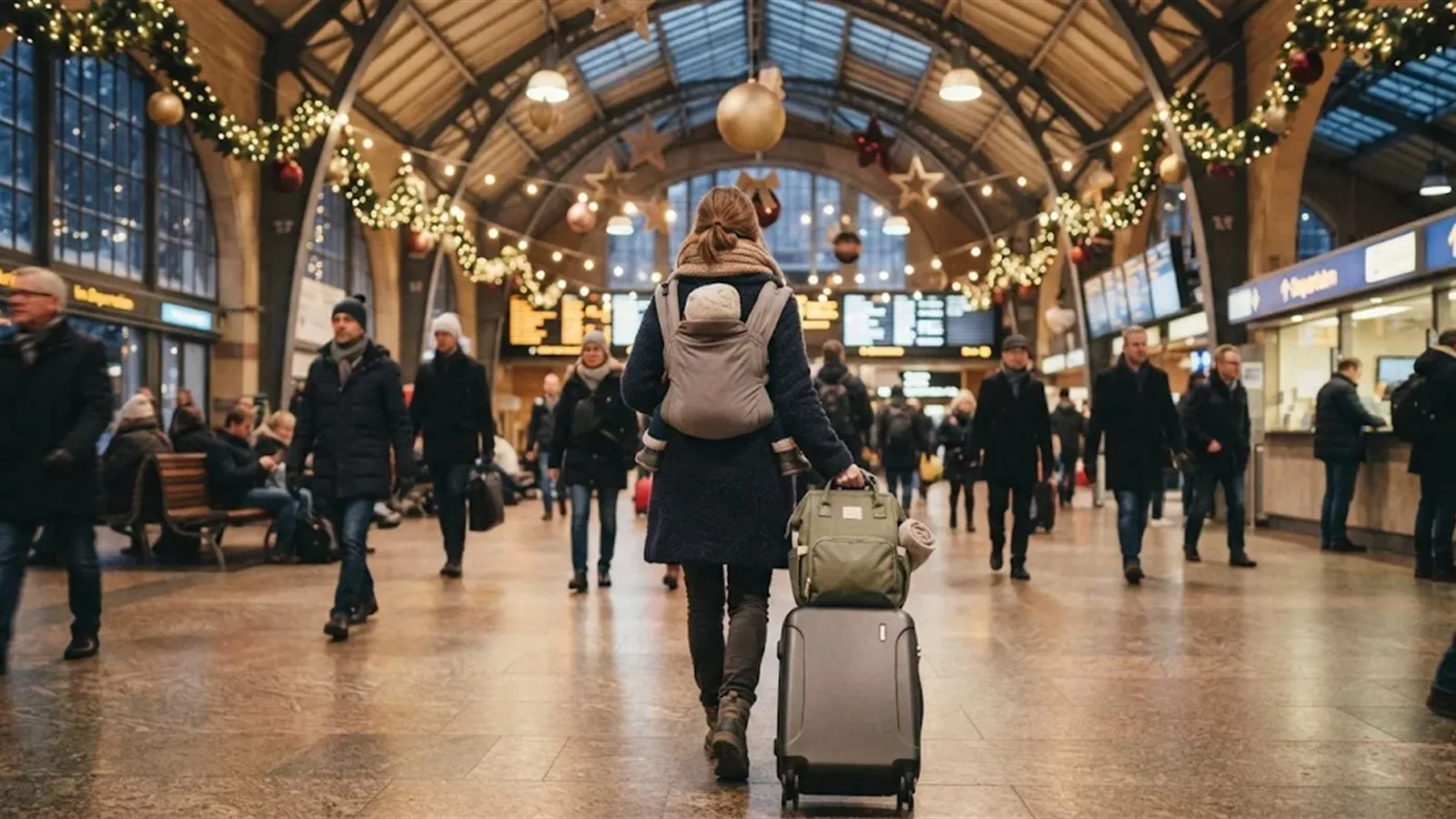
Holiday trips with a baby tend to combine everything that makes travel hard: cold weather, crowded airports, long drives, other people's houses and a baby's routine turned upside down. Most of the risk, though, comes down to a handful of rules. Keep winter coats out from under the car seat harness. Take regular breaks on long drives. Know what the FAA and TSA allow on planes, and what Amtrak charges for babies on trains. And keep safe sleep rules in place at Grandma's house or the hotel. This guide covers each one, with the primary source for each rule.
How we put this together: this is a research-based guide, not a personal travel diary. We used the American Academy of Pediatrics' (AAP) HealthyChildren.org guidance on travel, winter car seat safety and safe sleep, along with guidance from the FAA, TSA, NHTSA and Amtrak, all checked in November 2026. Airline and rail policies change, so confirm anything carrier-specific before you book.
Before you go
- Book early and plan around naps. Holiday flights and trains fill up. A departure during your baby's usual nap or bedtime can make the trip easier, but leave room for delays.
- Check the car seat. NHTSA recommends registering your car seat with the maker so you get recall notices. Look at the expiration date on the label, and make sure your baby is still within the seat's rear-facing limits. NHTSA says a child should stay rear-facing until reaching the top height or weight limit allowed by the seat's maker.
- Plan where your baby will sleep. Ask your host or hotel what they have, or bring your own travel crib or play yard (more on this below).
- Pack medicines and paperwork in your carry-on. Bring your pediatrician's phone number, your baby's insurance card and any medicines in their original containers.
Winter car seat safety: no puffy coats under the harness
This is the most important cold-weather rule, and one many families don't know. The AAP says bulky clothing, including winter coats and snowsuits, should not be worn underneath the harness of a car seat. In a crash, the padding flattens out, which leaves extra space under the straps, and a child can slip through the harness.
How to keep your baby warm instead:
- Dress in thin layers. The AAP suggests close-fitting layers, such as a base layer, a warmer top and a thin fleece jacket. A good rule from the AAP is one more layer than an adult would wear.
- Tighten the harness, then check it. If you can pinch the harness strap at your baby's shoulder, the AAP says it needs to be tightened so it fits snugly against your child's chest.
- Put the warmth on top. Buckle your baby in, then lay a blanket over the harness or put their coat on backward over the straps. Remove the top layer once the car warms up so your baby doesn't overheat.
- Use hats, mittens and booties. They keep a baby warm without getting in the way of the straps.
- Bring an infant seat inside. The AAP suggests keeping an infant carrier indoors when you're not using it, so it doesn't start cold.
- Be careful with add-ons. The AAP says nothing bulky should ever go under your child's body or between your child and the harness. Only use a cover that has no layer underneath the baby, and keep your baby's face uncovered. Products that didn't come with the seat haven't been crash tested with it.
Long drives
Road trips give you the most control: your own car seat, your own schedule and room for gear. They also mean hours in a car seat.
Take regular breaks
The AAP's family travel tips suggest planning to stop and give yourself and your child a break about every two hours. Its pediatrician Q&A on long rides in a car seat suggests a break every 2 to 3 hours on a day trip and every 4 to 6 hours at night, for diaper changes, clothing changes and feeding. The same Q&A says never to try to breastfeed in a moving car. Stop the car and take your baby out of the seat instead.
Sleeping in the car seat
The AAP says babies can sleep in a properly installed car seat while you're on the move, but that car seats aren't ideal for very long stretches when no one is closely watching a sleeping baby. If you can, have an adult or responsible older child ride in the back seat with the baby. When you arrive, move your baby to a safe sleep space. The AAP says it's not safe for your baby to sleep in the car seat once you arrive.
Other road-trip rules
- Never leave your baby alone in the car, even for a minute, as the AAP puts it.
- Keep everyone buckled. NHTSA recommends that children ride in the back seat at least through age 12. If you're using a rental car or a ride-share at your destination, the AAP notes that most rental car companies can arrange a car seat, but bringing your own means you know its history.
- Secure loose items. Gifts, bags and coolers can fly forward in a sudden stop. Pack heavy items in the trunk, and use a backseat organizer for small things. Our guide to the best backseat car organizers for kids covers options.
- Block low winter sun carefully. Window shades can help, but they shouldn't block the driver's view. See our guide to the best car window shades for babies.
- A mirror can help you check on a rear-facing baby. Choose a crash-tested one, mounted securely. Our guide to the best car seat mirrors for rear-facing seats explains what to look for.
Flying
Lap baby or own seat?
The FAA allows children who haven't reached their second birthday to travel as lap children, but it strongly discourages the practice. The FAA says the safest place for a child under 2 on a US plane is in an approved child restraint system or device, not on your lap, because your arms can't hold a child securely during unexpected turbulence. It also says buying a ticket for your child is the only way to guarantee you can use a car seat on board.
Using a car seat on the plane
- Check the label. The FAA says a car seat must be certified for use in aircraft, with the words "This restraint is certified for use in motor vehicles and aircraft" printed on it.
- Install it as the manual says, facing the right direction for your child's size.
- Boosters and carriers aren't allowed for takeoff and landing. The FAA prohibits baby carriers, booster seats and backless car seats during taxi, takeoff and landing.
- If the seat doesn't fit: the FAA says that if an approved car seat you bought a ticket for doesn't fit a particular seat, the airline is responsible for finding another seat for it in the same class of service.
- If you're checking the seat, a padded bag protects it. Our guide to the best car seat travel bags and carts covers ways to get a seat through the airport.
Getting through security
- Baby liquids are exempt from the 3.4-ounce limit. TSA allows formula, breast milk, toddler drinks and baby food in carry-ons in amounts over 3.4 ounces, and they don't have to fit in a quart-size bag. Tell the officer at the start of screening, and take these items out to be screened separately. You can ask that they not be X-rayed or opened, and request private screening at any time.
- Ice packs are allowed. TSA allows ice packs, freezer packs, gel packs and liquid-filled teethers in carry-ons.
- Strollers and car seats go through the X-ray. Take your baby out and carry them through the walk-through metal detector. TSA says you can't be screened by the body scanner while carrying an infant.
- ID: TSA doesn't require children under 18 to show ID on domestic flights. Adults need a REAL ID-compliant license or another accepted ID such as a passport. Since February 1, 2026, adults without acceptable ID can pay a $45 fee to use TSA ConfirmID, which lets TSA try to verify their identity.
During the flight
The AAP suggests nursing, a bottle or a pacifier during takeoff and landing to help with ear pressure, and soft earmuffs can help with cabin noise; our Banz kids earmuffs review covers one option. If you'll need a stroller at your destination, see our guide to the best travel strollers for toddlers.
Taking the train
Train travel lets you get up, walk the aisle and change diapers without pulling over, which makes it a good option on busy holiday routes. Here's what Amtrak's own pages say about babies and young children:
- Infants under 2 ride free on a lap. Amtrak lets one infant under 2 ride free with each passenger paying an adult fare, on the adult's lap. Each additional infant pays the child fare.
- An infant in their own seat pays the child fare. Amtrak charges an infant who occupies a separate coach seat the fare for children 2 to 12.
- Children 2 to 12 travel at 50% off. Amtrak says children 2 to 12 may travel at 50% off the adult fare, on the same booking as an adult 18 or older. Children 2 to 12 can't travel alone.
- Sleeper rooms aren't discounted. The child and infant discounts don't apply to sleeping accommodation charges.
- Strollers and diaper bags don't count against your carry-on limit when you're traveling with an infant under 2, according to Amtrak's tips for traveling with kids. The same page says most cars have a diaper station, and that parents can ask in the dining car for help preparing bottles.
Amtrak's family pages don't say how car seats should be used on board, so if you'll need one at your destination, check Amtrak's baggage rules or ask when you book. Holiday trains can be crowded, so reserve early.
Safe sleep away from home
New places, late nights and well-meaning relatives make it easy to let safe sleep rules slip. They matter just as much on a trip:
- Same rules as home. The AAP recommends placing your baby on their back on a firm, flat surface, with a fitted sheet only and no soft objects or loose bedding. Share a room, not a bed.
- Check any crib you're given. The AAP warns that cribs or play yards provided by hotels may not meet current safety standards, and says to ask for a replacement or consider other options if you have any doubt. Skip drop-side and vintage cribs at relatives' homes.
- Bring your own if needed. A travel crib or play yard means you know exactly what your baby is sleeping on. Our Guava Lotus Everywhere travel crib review covers a popular backpack-style crib. Use only the mattress that came with it, and don't add extra padding.
- No sleeping in the car seat, swing or lounger after you arrive. The AAP says any surface inclined more than 10 degrees isn't safe for sleep, and that a baby who falls asleep in a car seat, stroller, swing or carrier should be moved to a firm sleep surface on their back as soon as possible.
- Do a quick safety sweep. The AAP suggests checking lodging for exposed wiring, pest poisons, paint chips and unsafe stairs or balcony railings. Keep the crib away from cords, and watch for holiday hazards such as small ornaments and button-battery decorations within reach.
- Bring sleep cues from home. A familiar sleep sack and white noise can help a baby settle. See our guide to the best white noise machines for babies.
A short holiday travel packing list
- Car seat that's in date and fits your baby, plus a travel bag if you're flying
- Thin layers, a hat, mittens, socks and a blanket for over the harness
- Diapers (about one per hour of travel, plus extra), wipes and diaper cream
- Formula or pumped milk, bottles and a small cooler bag with ice packs
- A travel crib or play yard and fitted sheets, if your destination doesn't have a safe one
- Wearable blankets for sleep
- Thermometer, saline and any medicines your pediatrician approves
- A few small toys and board books
- A change of clothes for you and two or three for your baby in your carry-on
Our guides on flying and travel with a baby
- Best Car Seat Travel Bags & Carts for Flying (2026)
- Best Travel Cribs and Play Yards for Flying and Visits
- Guava Lotus Travel Crib Review: Backpack Carry and Side Door
- SlumberPod Review: Blackout Sleep Tent for Playards
- Best Kids' Luggage and Ride-On Suitcases (2026)
How we researched this
This guide is research-based. We didn't road-test these routes or products. In November 2026 we read the AAP's HealthyChildren.org pages on winter car seat safety, family travel, long car rides, safe sleep and hotel safety; the FAA's pages on flying with children and child restraint systems; TSA's pages on traveling with children and identification; NHTSA's car seat guidance; and Amtrak's pages on child discounts and train travel with kids. Gear suggestions link to our own research-based guides. Carrier policies can change at any time, so check with your airline or Amtrak before you travel.
Sources
- AAP HealthyChildren.org, Winter Car Seat Safety Tips
- AAP HealthyChildren.org, Tips for Safe and Stress-Free Family Travel
- AAP HealthyChildren.org, Is it safe for my baby to travel in a car seat for hours at a time?
- AAP HealthyChildren.org, How to Keep Your Sleeping Baby Safe: AAP Policy Explained
- AAP HealthyChildren.org, Hotel Safety Tips for Parents of Young Children
- AAP HealthyChildren.org, Flying With Baby
- FAA, Child Safety in Flight
- FAA, About Child Restraint Systems
- TSA, Traveling with Children
- TSA, Identification
- NHTSA, Car Seats and Booster Seats
- Amtrak, Passenger Discount for Children
- Amtrak, 7 Smart Tips for Traveling by Train with Kids
Questions parents ask
Can my baby wear a winter coat in the car seat?
No. The AAP says bulky clothing, including winter coats and snowsuits, should not be worn under the harness of a car seat, because the padding flattens in a crash and leaves the straps too loose. Dress your baby in thin layers, buckle the harness snugly, then put a coat or blanket over the straps.
How often should I stop on a long drive with a baby?
The AAP's family travel tips suggest stopping for a break about every two hours. Its pediatrician Q&A on long car seat rides suggests a break every 2 to 3 hours on a day trip and every 4 to 6 hours at night, for feeding and diaper changes. Never breastfeed in a moving car.
Do babies ride free on Amtrak?
Yes, with limits. Amtrak lets one infant under 2 ride free on the lap of each adult paying an adult fare. Additional infants, or an infant who takes their own coach seat, pay the child fare, which is 50% off the adult fare for children 2 to 12. The discounts don't apply to sleeping accommodation charges.
Can I bring formula and breast milk through airport security?
Yes. TSA allows formula, breast milk, toddler drinks and baby food in carry-on bags in amounts over 3.4 ounces, and they don't have to fit in a quart-size bag. Tell the officer at the start of screening and take them out to be screened separately. Ice packs and gel packs are allowed too.
Where should my baby sleep at a relative's house or hotel?
In a crib or play yard that meets current safety standards, with a firm, flat mattress and a fitted sheet only. The AAP warns that cribs and play yards supplied by hotels may not meet current standards, so inspect them, and it says it's not safe for your baby to sleep in the car seat once you arrive.
More in Car & Road-Trip Gear
Best Kids' Headphones (Volume-Limited)
The best volume-limited kids' headphones compared on 75 and 85 dB caps, battery and noise canceling, plus WHO safe listening advice and…
Best Car Seat Gap Fillers for Parents (2026): Stop Losing Pacifiers, Snacks & Phones
Stop losing phones, snacks and pacifiers down the seat gap. Five car seat gap fillers compared on fit, grip and owner feedback.
Best Winter Car Seat Covers (Shower-Cap Style)
Shower-cap winter covers that go over an infant car seat, never behind baby or under the harness, plus AAP and NHTSA rules on coats and…