
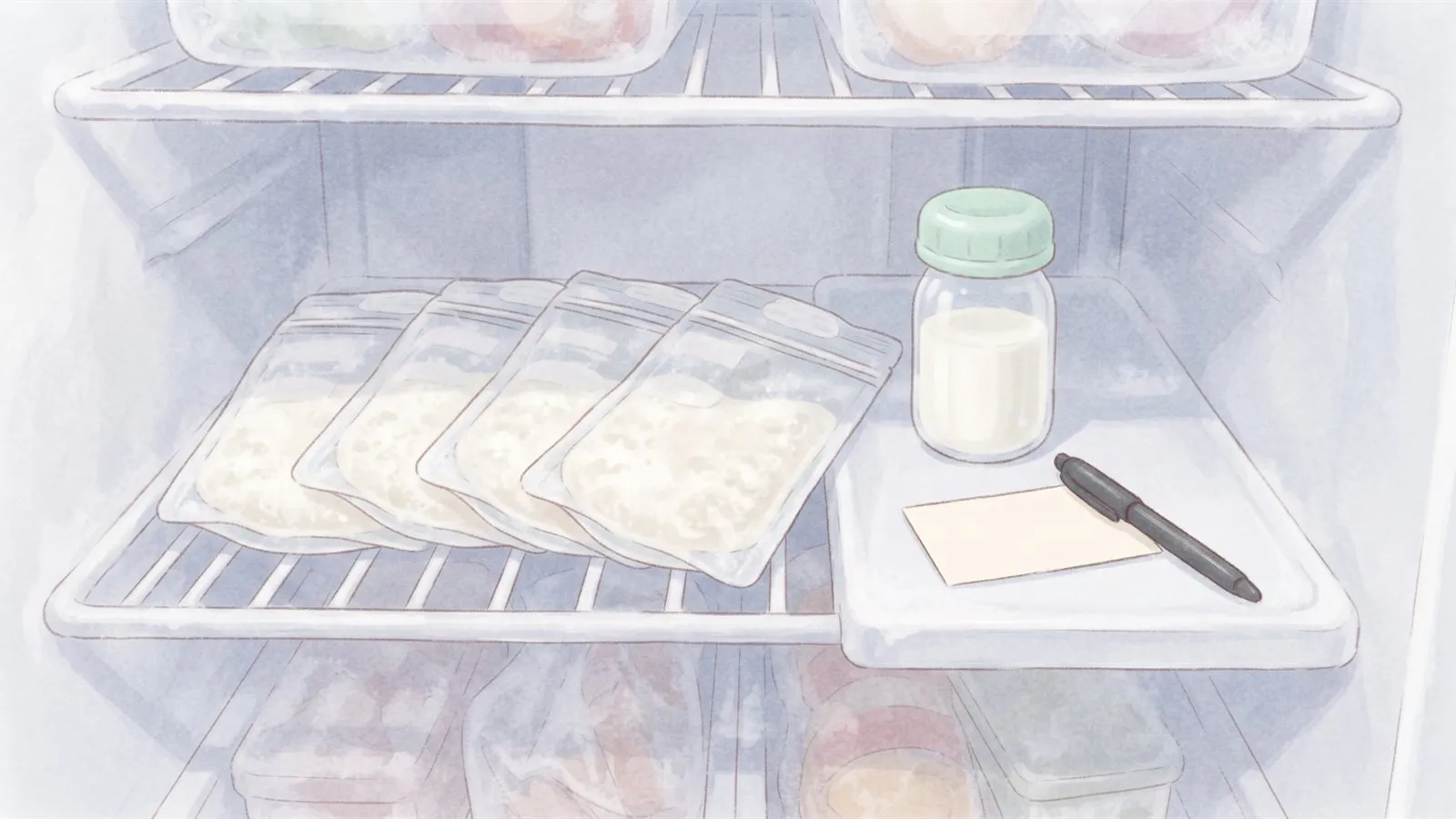
In this guide
- Breast milk storage guidelines chart
- How long breast milk lasts at room temperature
- How long breast milk lasts in the fridge
- How long frozen breast milk is good for
- Containers, storage bags and labeling
- Combining milk from different sessions
- Thawing and warming
- Leftover milk after a feeding
- Traveling with breast milk
- Clean pump parts matter too
- How we researched this
- Sources
- Questions parents ask
Reader-supported: SproutPicks may earn a commission from qualifying affiliate links, at no extra cost to you. Full disclosure.
Pumped milk is precious, and the rules for storing it are easy to forget at 3 a.m. These breast milk storage guidelines put the CDC's numbers in one chart: how long freshly pumped milk lasts at room temperature, in the fridge and in the freezer, how long thawed milk is good for, and what to do with leftovers. Below the chart we cover containers and bags, labeling, thawing and warming, travel, and a few products that make storage easier. Every number here comes from the CDC's guidance as of November 2026.
Breast milk storage guidelines chart
| Type of milk | Countertop (77°F or colder) | Refrigerator (40°F or colder) | Freezer (0°F or colder) |
|---|---|---|---|
| Freshly expressed or pumped | Up to 4 hours | Up to 4 days | About 6 months is best; up to 12 months is acceptable |
| Thawed, previously frozen | 1 to 2 hours | Up to 1 day (24 hours), counted from when it's completely thawed | Never refreeze |
| Left over from a feeding | Use within 2 hours after the baby finishes, then throw it away | ||
The CDC says its guidelines are adapted from the Academy of Breastfeeding Medicine's storage protocol for full-term infants. If your baby was born early, is in the hospital or has a medical condition, follow your care team's rules, which may be stricter. A cooler bag with frozen ice packs keeps milk safe for up to 24 hours when you're away from a fridge.
How long breast milk lasts at room temperature
How long can breast milk sit out? Freshly pumped breast milk can stay at room temperature, 77°F or colder, for up to 4 hours, according to the CDC. Thawed milk is different: use it within 1 to 2 hours once it's at room temperature or warmed. If you won't use fresh milk within a few hours, put it in the fridge.
The 4-hour window assumes a normal room. On a hot day, in a car or near a heater, chill milk sooner. If you're pumping at work, the CDC says breast milk is food and can go in any refrigerator used for food; it doesn't need to be treated as a biohazard.
How long breast milk lasts in the fridge
How long does breast milk last in the fridge? Up to 4 days for freshly expressed milk in a refrigerator at 40°F or colder, according to the CDC. Store it toward the back, not in the door. Thawed milk keeps for up to 24 hours in the fridge, counted from when it's completely thawed.
The CDC says your refrigerator should be at 40°F or below, and suggests a freestanding appliance thermometer if yours doesn't show the temperature. If you won't use refrigerated milk within a few days, freeze it as soon as possible rather than waiting until day 4. Milk that has been refrigerated for 4 days should be used or thrown away.
How long frozen breast milk is good for
How long is frozen breast milk good for? The CDC says frozen breast milk is best used within about 6 months, and up to 12 months is acceptable, in a freezer at 0°F or colder. Count from the day it was first frozen, label every bag with the date, and use the oldest milk first.
Any freezer that holds 0°F or colder works, and the CDC notes that deep freezers and chest freezers may run colder. Freeze milk in portions of 2 to 4 ounces, or about what your baby takes at one feeding, so you don't thaw more than you need. Leave about an inch of space at the top of a container, because milk expands as it freezes. Lay storage bags flat to freeze, then stand them upright like files once they're solid.
If the power goes out, the CDC says a full, closed freezer keeps food frozen for about 48 hours, or about 24 hours if it's half full. Milk that still has ice crystals can be refrozen. Milk that has fully thawed but still feels cold should go in the fridge and be used within the next day, or thrown away.
Containers, storage bags and labeling
The CDC says to store milk in breast milk storage bags or in clean glass or plastic containers with tight lids, and never to use disposable bottle liners or plastic bags that weren't made for breast milk. Label each bag or container with the date the milk was expressed. If your baby goes to childcare, add your baby's name too.
A few widely sold options, as of November 2026:
- Lansinoh Breastmilk Storage Bags. The best-known freezer bag, sold in 6 oz sizes in large counts, with a double zipper seal. Some parents find them hard to keep upright while filling.
- Medela Breast Milk Storage Bags. A sturdy bag that stands up on its own, a natural fit if you already use a Medela pump such as the one in our Medela Pump in Style MaxFlow review.
- Kiinde Twist Pouches. Pouches with threaded caps that can go from pump to freezer to feeding with Kiinde's adapters and bottles. They cost more per pouch but cut down on pouring. Kiinde also makes a bottle warmer designed for its pouches.
Check Lansinoh bags price on Amazon
Check Medela bags price on Amazon
Check Kiinde Twist pouches price on Amazon
To carry milk from work to home, a pump bag with an insulated cooler section helps; see our best breast pump bags. If you're still choosing a pump, our best electric breast pumps guide compares the main options, and a silicone collector like the one in our Haakaa silicone breast pump review catches letdown milk you can store the same way.
Combining milk from different sessions
You can add milk from different pumping sessions to the same container, but cool it first. The CDC advises against mixing freshly expressed milk with milk that's already cooled or frozen. Chill the fresh milk in the fridge, then combine it. When you combine cooled milk from different days, go by the date of the oldest milk for the storage time.
Thawing and warming
Can you refreeze thawed breast milk? No. The CDC says never to refreeze breast milk after it has thawed. Once milk is completely thawed, keep it in the fridge and use it within 24 hours, or within 1 to 2 hours if it's at room temperature or warmed.
Thaw the oldest milk first. The CDC lists three ways to thaw: in the refrigerator overnight, in a bowl of warm or lukewarm water, or under lukewarm running water. Never thaw or heat milk in the microwave, which can destroy nutrients and create hot spots that burn a baby's mouth.
Breast milk doesn't have to be warmed; some babies take it cold or at room temperature. If you warm it, keep the container sealed, set it in warm (not hot) water for a few minutes, swirl to mix the fat back in, and test a few drops on your wrist. Don't heat it on the stove. A bottle warmer makes this easier at night; see our best bottle warmers.
Leftover milk after a feeding
Can you reuse breast milk after a feeding? Only for a short time. The CDC says leftover milk from a feeding should be used within 2 hours after the baby finishes and then thrown away. Don't put leftovers back in the fridge for later. Storing milk in smaller portions helps cut waste.
Once a baby drinks from a bottle, bacteria from their mouth mix into the milk, which is why the window is short. If your baby often leaves an ounce or two, freeze some 1 to 2 ounce portions to top up a feed instead of warming a full bag.
Traveling with breast milk
The CDC says breast milk can stay in an insulated cooler with frozen ice packs for up to 24 hours, and that you can carry more than 3.4 ounces of breast milk in your carry-on bag, along with ice packs and gel packs. Tell the security officer you're carrying breast milk. Once you arrive, use the milk, refrigerate it or freeze it. Frozen milk should be moved quickly and packed with ice packs so it stays frozen.
Clean pump parts matter too
Safe storage starts with clean equipment. The CDC recommends washing your hands before pumping and cleaning pump parts after every use, then letting them air-dry fully. A sterilizer and drying rack help when you're pumping several times a day; our best bottle sterilizers and dryers guide compares options.
How we researched this
This guide is research-based. In November 2026 we checked every storage time against the CDC's Breast Milk Storage and Preparation page (updated August 2026) and its storage questions and answers page, plus the CDC's printable storage chart, which gives 1 to 2 hours for thawed milk at room temperature where the main page says 2 hours; we used the shorter range. We read the CDC's guidance on cleaning pump parts. Product notes on storage bags come from maker information and retailer listings; we did not test them. Talk to your pediatrician or a lactation consultant about your own situation.
Sources
- CDC, Breast Milk Storage and Preparation
- CDC, Breast Milk Storage Questions and Answers
- CDC, Storage and Preparation of Breast Milk (printable chart)
- CDC, How to Clean and Sanitize Breast Pumps
- TSA, Breast milk
Questions parents ask
How long can breast milk sit out?
Freshly pumped breast milk can stay at room temperature, 77°F or colder, for up to 4 hours, according to the CDC. Thawed milk is different: use it within 1 to 2 hours once it's at room temperature or warmed. If you won't use fresh milk within a few hours, put it in the fridge.
How long does breast milk last in the fridge?
Up to 4 days for freshly expressed milk in a refrigerator at 40°F or colder, according to the CDC. Store it toward the back, not in the door. Thawed milk keeps for up to 24 hours in the fridge, counted from when it's completely thawed.
How long is frozen breast milk good for?
The CDC says frozen breast milk is best used within about 6 months, and up to 12 months is acceptable, in a freezer at 0°F or colder. Count from the day it was first frozen, label every bag with the date, and use the oldest milk first.
Can you refreeze thawed breast milk?
No. The CDC says never to refreeze breast milk after it has thawed. Once milk is completely thawed, keep it in the fridge and use it within 24 hours, or within 1 to 2 hours if it's at room temperature or warmed.
Can you reuse breast milk after a feeding?
Only for a short time. The CDC says leftover milk from a feeding should be used within 2 hours after the baby finishes and then thrown away. Don't put leftovers back in the fridge for later. Storing milk in smaller portions helps cut waste.
More in Nursing & Pumping

Best Wearable Breast Pumps (2026): In-Bra Pumps Compared
Elvie, Willow, Momcozy, Medela and Lansinoh wearable pumps compared by suction, cup size, battery, app and flange sizes, plus insurance…
Best Nursing Pads (2026): Disposable and Reusable
The best nursing pads for leaks day and night: disposables from Lansinoh and Medela, washable pads from Kindred Bravely and Bamboobies,…
Best Nipple Creams (2026)
Six nipple creams and balms, lanolin vs plant-based, with La Leche League and AAP advice and why ongoing pain means it's time to check the…