
In this guide
- Quick picks
- The picks side by side
- Disposable vs reusable nursing pads
- What to look for
- Nursing pads and sore nipples
- Lansinoh Stay Dry Disposable Nursing Pads
- Medela Ultra-Breathable Disposable Nursing Pads
- Kindred Bravely Organic Bamboo Reusable Nursing Pads
- Bamboobies Washable Overnight Nursing Pads
- How many do you need?
- Caring for washable pads
- Safety notes and recalls
- How we researched this
- Sources
- Questions parents ask
Reader-supported: SproutPicks may earn a commission from qualifying affiliate links, at no extra cost to you. Full disclosure.
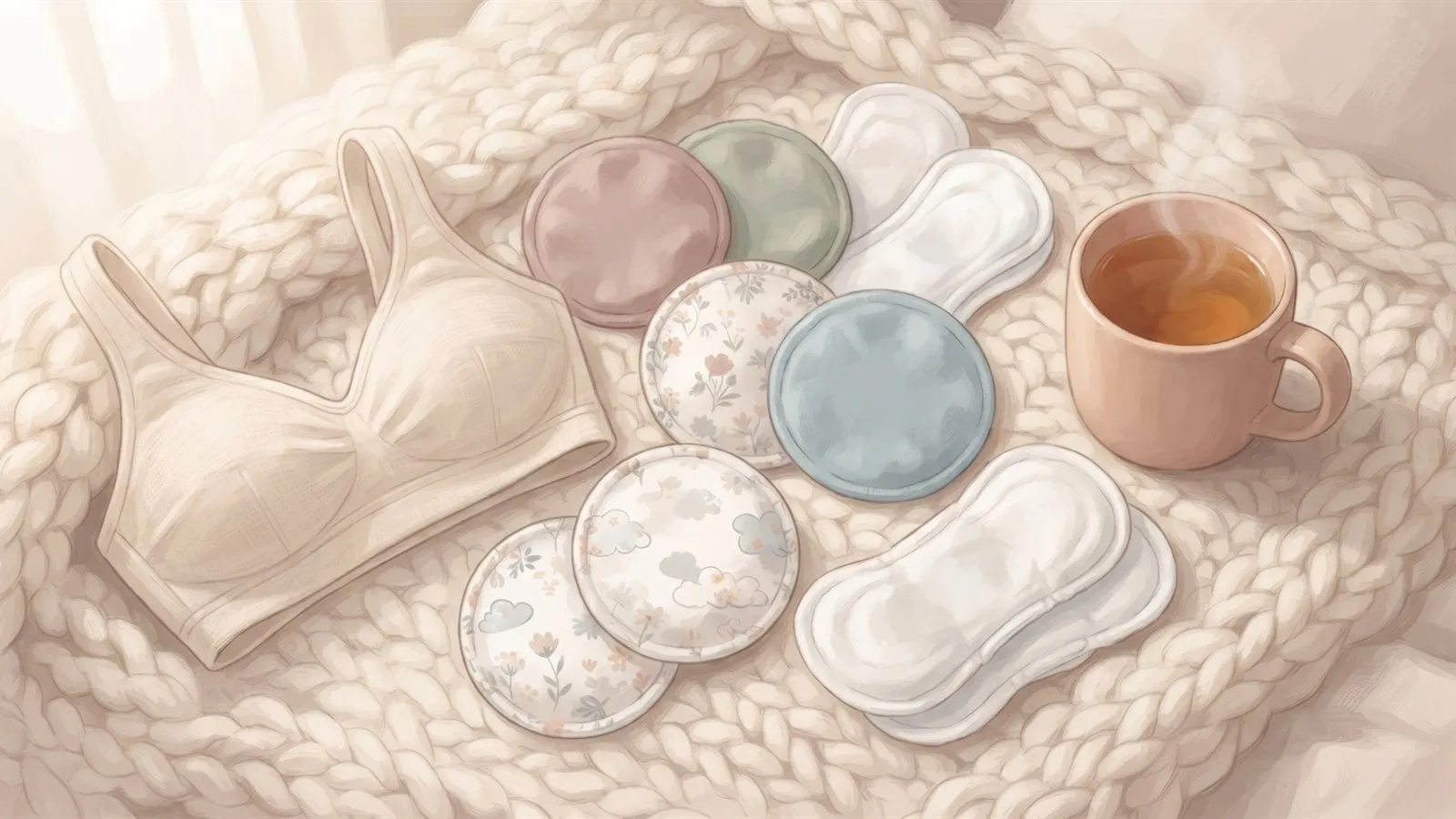
Leaking is one of the least talked-about parts of feeding a new baby. Milk can let down when your baby cries, when you're late for a feed or pump, or in the middle of the night, and it soaks through bras and shirts fast. Nursing pads (also called breast pads) sit inside your bra and catch those leaks.
There are two main types. Disposable pads are thin, individually wrapped and stick to your bra. Reusable pads are washable cloth, usually bamboo or cotton, with a leak-resistant layer. Below are the best nursing pads we found in November 2026, with maker specs and prices, plus advice on changing them, caring for sore nipples and when to use which type. We compared specs, materials, owner feedback and breastfeeding guidance. We didn't test these pads.
Quick picks
Lansinoh Stay Dry Disposable Nursing Pads
Medela Ultra-Breathable Disposable Nursing Pads
Kindred Bravely Organic Bamboo Reusable Nursing Pads
Bamboobies Washable Overnight Nursing Pads
How we score: SproutPicks Scores are our own editorial ratings out of 10. For nursing pads they weigh absorbency and leak protection, comfort and breathability against sore skin, how well the pad stays in place and hides under clothes, ease of care, and cost over months of use. They are based on maker and retailer listings, breastfeeding guidance and patterns in owner reviews. They are editorial ratings from research, and we did not test these pads.
The picks side by side
| Pad | Type | Key specs | Pack | Typical price (Nov 2026) |
|---|---|---|---|---|
| Lansinoh Stay Dry | Disposable | Quilted honeycomb lining, breathable waterproof layer, 2 adhesive strips, contoured | 36, 60 or 100 | About $11.50 for 100 at Walmart |
| Medela Ultra-Breathable | Disposable | 1.6 mm thin, triple-layer core, side leak guards, wide adhesive strip | 30, 60, 120 or 200, per Medela | Varies by pack and store |
| Kindred Bravely Organic Bamboo | Washable | 4.5 in, four thin layers per Kindred Bravely, contoured | 10 pads (5 pairs) with bag | About $16 to $17 |
| Bamboobies Overnight | Washable | Thick bamboo velour with a leak-proof backing | Pairs; sold in 2-pair and multipacks | About $10 to $13 for 2 pairs |
Specs are from Medela's product page, Kindred Bravely's listing, and Walmart, Target, Babylist and other US retailer listings for Lansinoh and Bamboobies, checked in November 2026. Lansinoh, Kindred Bravely and Bamboobies limited our automated access to their sites, so some details come from retailers. Prices change often.
Disposable vs reusable nursing pads
Are reusable or disposable nursing pads better? Neither is better for everyone. Disposable pads are thin, sticky-backed and easy to toss on the go, but you keep buying them. Washable pads cost more up front, feel softer and save money and waste over months of nursing. Many parents keep both: washables at home and disposables in the diaper bag.
| Disposable | Reusable | |
|---|---|---|
| Absorbency | High for their thickness, thanks to an absorbent polymer core | Good; overnight styles are thicker |
| Staying in place | Adhesive strips stick to the bra | No adhesive; contoured shape and bra hold them |
| Feel | Thin, a little crinkly | Soft cloth, can show more under thin bras |
| Cost | Ongoing | One-time, plus laundry |
| Best for | Outings, work, early heavy leaking | Home, nights, sensitive skin |
What to look for
- Thin vs thick. Thin pads disappear under a T-shirt. Thicker pads hold more but can show through. Many parents use thin pads in the day and a thicker one at night.
- A breathable layer. Moisture held against the skin can irritate sore nipples. Look for a breathable backing and change pads as soon as they feel damp.
- Contoured shape. A cup-shaped pad follows the breast and is less likely to fold or show a ridge.
- Adhesive or not. Sticky strips keep disposables from shifting. Washables rely on a snug bra. If you wear a loose sleep bra, a pad may slide.
- Soft, simple materials. If your skin is sensitive, look for unscented pads and a soft top layer.
- Enough to rotate. With washables, plan on several pairs so you aren't doing laundry every day.
A good bra makes any pad work better. A pad can't stay put in a bra that's too loose, and a bra that's too tight can press on milk ducts. The Office on Women's Health advises a well-fitting, supportive bra that isn't too tight.
Nursing pads and sore nipples
How often should I change nursing pads? As soon as they feel damp. The Office on Women's Health says to change pads often so moisture isn't trapped against the nipple, which can lead to cracked nipples. Medela suggests changing its disposable pads every 3 to 4 hours or when damp.
Can nursing pads cause thrush or sore nipples? Damp pads left on too long can make sore or cracked nipples worse. The Office on Women's Health says to change disposable pads often during thrush treatment and to wash anything that touches the yeast, including washable pads, in very hot water above 122°F. Call your provider about burning pain, cracks that won't heal or signs of infection.
Other tips from the Office on Women's Health include letting nipples air dry after a feed or wearing a soft cotton shirt, and wearing a clean bra every day if you're treating thrush. If you use a nipple balm, let it soak in before putting a pad on. Our best nipple creams guide and our Lansinoh lanolin nipple cream review cover the options. Pain that doesn't ease after the first week or two is worth a call to a lactation consultant, since a shallow latch is a common cause.
Lansinoh Stay Dry Disposable Nursing Pads
Lansinoh's Stay Dry pads are a go-to disposable for many parents, and they're sold almost everywhere. Retail listings describe a quilted honeycomb lining that pulls moisture away from the skin, a breathable waterproof layer to protect clothes, a contoured shape and two adhesive strips to hold the pad in place. Each pad is individually wrapped, which makes it easy to tuck a few into a diaper bag. They come in 36, 60 and 100 counts. Walmart listed the 100-count box at about $11.50 when we checked in November 2026, and the 60-count was about $9 to $10.50 at grocery stores. Owner reviews mostly praise the absorbency for the price. They're not the thinnest disposable, so if you want a pad that disappears under a fitted top, look at the Medela.
- ✓Low cost per pad in larger boxes
- ✓Two adhesive strips keep it from shifting
- ✓Individually wrapped for outings
- ✓Easy to find at drugstores and grocery stores
- ✕Ongoing cost and waste
- ✕A little thicker than ultra-thin styles
Medela Ultra-Breathable Disposable Nursing Pads
Medela's disposable pads are the pick if thinness matters most. Medela's product page (the one that used to carry the Safe & Dry Ultra Thin name) says they're just 1.6 mm thin and contoured to the breast, with a triple-layer core and side leak guards. Medela says they absorb 50 times their own weight and hold more than 40 ml of breast milk, and that the outer layer is more breathable than leading competitors. Each pad is individually wrapped, with a wide adhesive strip on the back. Medela lists packs of 30, 60, 120 and 200, though it notes sizes vary by country. US retail packaging may still say Safe & Dry Ultra Thin, and some stores now list Ultra-Breathable. We couldn't confirm a current Medela US list price, so check a few stores.
- ✓Very thin at 1.6 mm, per Medela
- ✓Side leak guards
- ✓Individually wrapped
- ✕Thin pads can fill faster on heavy-leak nights
- ✕Product names differ between packaging and listings
- ✕Usually costs more per pad than Lansinoh
Kindred Bravely Organic Bamboo Reusable Nursing Pads
Kindred Bravely's washable pads come as a 10-pack, or 5 pairs, with a carry bag for clean or used pads. Kindred Bravely says they're contoured and built from four ultra-thin layers, and retailers list them at 4.5 inches across. Babylist describes the fabric as organic viscose made from bamboo with a polyurethane laminate layer to stop leaks. They're machine washable. Kindred Bravely's site listed them at $16, and Target, Babylist and Pump Station had them at about $16.90 to $17.58 in November 2026. Owners like the softness and how flat they sit for a cloth pad. Some find them less absorbent than a thick overnight pad, so heavy leakers may want a thicker option for nights.
- ✓Soft, contoured and fairly thin for cloth
- ✓Five pairs plus a bag for a fair price
- ✓Machine washable and reusable for months
- ✕No adhesive, so they can shift in loose bras
- ✕May not be enough for heavy overnight leaks
- ✕Laundry adds up if you only own one set
Bamboobies Washable Overnight Nursing Pads
Bamboobies makes two washable styles. The Regular pad is heart-shaped and ultra-thin, and the Overnight pad is thicker and aimed at heavy leaking and the newborn weeks, according to retailer listings. Both use a soft bamboo velour against the skin with a leak-proof backing. Retailers say to wash them before first use, machine wash warm, dry on medium heat and skip fabric softener, which can reduce absorbency. Target listed an Overnight pack at $9.99 on sale and $12.99 regular, and a combo of one Regular and one Overnight pair was about $17 elsewhere. Owners say the Overnight pads hold far more than thin disposables but are too bulky to hide under fitted tops.
- ✓Thick and absorbent for nights
- ✓Soft bamboo velour face
- ✓Regular and Overnight styles to mix
- ✕Bulky under fitted clothes
- ✕Small packs mean buying more for rotation
- ✕We couldn't confirm specs on Bamboobies' own site
How many do you need?
How long will I need nursing pads? It varies a lot. Many parents leak most in the early weeks while supply settles, and some leak for months, especially overnight or when a feed is missed. Start with one box of disposables or one set of washables and buy more once you know how much you leak.
For washables, a common setup is enough pairs to change several times a day, with a second set in the wash. For disposables, plan on several pairs a day while leaking is heavy. Medela's guidance of changing every 3 to 4 hours works out to roughly a dozen pads a day.
Do I need nursing pads if I'm exclusively pumping? Often, yes. Leaking happens between pumping sessions just as it does between feeds, especially early on or if a session is late. A thin disposable or washable pad in your bra protects clothes between sessions.
If you're pumping, our best electric breast pumps guide covers pumps for every schedule. For comfortable feeds at home, see our best nursing pillows.
Caring for washable pads
- Wash before first use. Cloth absorbs better after a wash or two.
- Follow the label. Bamboobies' retailers list warm wash and medium dry. Other brands differ, so check the tag.
- Skip fabric softener. It can coat the fibers and reduce absorbency.
- Use a mesh laundry bag. Small pads get lost in the wash.
- Wash hot during thrush. The Office on Women's Health says to wash anything that touches the yeast in water above 122°F.
Safety notes and recalls
- Lansinoh Stay Dry Disposable Nursing Pads: No CPSC recall found as of November 20, 2026.
- Medela Ultra-Breathable Disposable Nursing Pads: No CPSC recall found as of November 20, 2026.
- Kindred Bravely Organic Bamboo Reusable Nursing Pads: No CPSC recall found as of November 20, 2026. (Kindred Bravely's bamboo nursing hoodies were recalled in March 2023 because small plastic caps on the drawcord could be swallowed by a nursing baby; that recall didn't involve the pads.)
- Bamboobies Washable Overnight Nursing Pads: No CPSC recall found as of November 20, 2026.
More on nursing comfort: see Best Nursing Covers (2026) and My Brest Friend Review: Wraparound Nursing Pillow with Backrest.
How we researched this
This guide is research-based. We did not test these pads. In November 2026 we checked Medela's product page, Kindred Bravely's listing, and Walmart, Target, Babylist, HEB, Pump Station and other US retailer listings for materials, pack sizes and prices. Lansinoh's, Kindred Bravely's and Bamboobies' sites limited our automated access, so some specs come from retailer listings. For guidance we used the Office on Women's Health's breastfeeding challenges page. We searched the CPSC recall database for each brand. Prices change often.
Sources
- Office on Women's Health, Common breastfeeding challenges
- Medela, Ultra-breathable disposable nursing pads
- Kindred Bravely, Organic Bamboo Reusable Nursing Pads
- Walmart, Lansinoh Stay Dry Disposable Nursing Pads, 100 count
- Babylist, Kindred Bravely Organic Bamboo Breast Pads 10-pack
- Carewell, Bamboobies Washable Nursing Pads
- CPSC, Kindred Bravely Bamboo Nursing Hoodies recall (2023)
Questions parents ask
How often should I change nursing pads?
As soon as they feel damp. The Office on Women's Health says to change pads often so moisture isn't trapped against the nipple, which can lead to cracked nipples. Medela suggests changing its disposable pads every 3 to 4 hours or when damp.
Are reusable or disposable nursing pads better?
Neither is better for everyone. Disposable pads are thin, sticky-backed and easy to toss on the go, but you keep buying them. Washable pads cost more up front, feel softer and save money and waste over months of nursing. Many parents keep both: washables at home and disposables in the diaper bag.
How long will I need nursing pads?
It varies a lot. Many parents leak most in the early weeks while supply settles, and some leak for months, especially overnight or when a feed is missed. Start with one box of disposables or one set of washables and buy more once you know how much you leak.
Can nursing pads cause thrush or sore nipples?
Damp pads left on too long can make sore or cracked nipples worse. The Office on Women's Health says to change disposable pads often during thrush treatment and to wash anything that touches the yeast, including washable pads, in very hot water above 122°F. Call your provider about burning pain, cracks that won't heal or signs of infection.
Do I need nursing pads if I'm exclusively pumping?
Often, yes. Leaking happens between pumping sessions just as it does between feeds, especially early on or if a session is late. A thin disposable or washable pad in your bra protects clothes between sessions.
More in Nursing & Pumping

Best Wearable Breast Pumps (2026): In-Bra Pumps Compared
Elvie, Willow, Momcozy, Medela and Lansinoh wearable pumps compared by suction, cup size, battery, app and flange sizes, plus insurance…
Best Breast Pump Bags (2026)
Five breast pump bags compared on cooler pockets, laptop room and fit for Spectra, Medela and wearable pumps, plus CDC milk storage times…
How to Find Your Breast Pump Flange Size
How to measure your nipple, use Medela and Spectra sizing rules, spot a flange that's too big or too small, and know when inserts help,…