
In this guide
- Quick picks
- Personal-use vs hospital-grade pumps
- What matters in a double electric pump
- Getting a pump through insurance
- Cleaning an electric pump: what the CDC says
- Spectra S1 Plus
- Medela Symphony PLUS (rental)
- Medela Pump In Style Pro
- Spectra S2 Plus
- Motif Luna with Battery
- BabyBuddha 3.0
- Lansinoh SignaturePro
- What we'd skip
- What about wearable pumps?
- Tips for pumping with an electric pump
- Our guides on breast pumps
- More Nursing & Pumping guides
- How we researched this
- Sources
- Recall and spec check
- Questions parents ask
Reader-supported: SproutPicks may earn a commission from qualifying affiliate links, at no extra cost to you. Full disclosure.
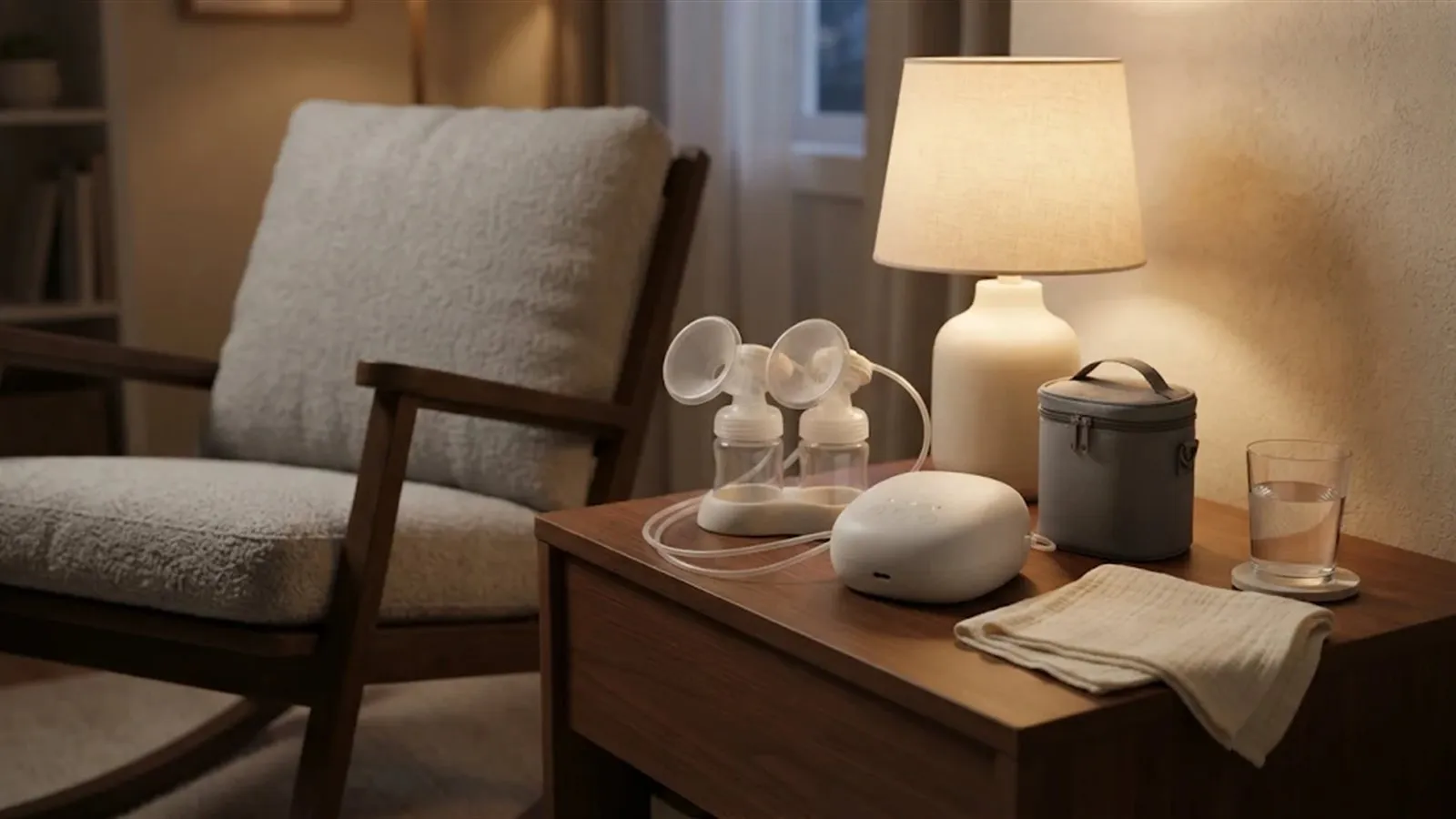
A double electric breast pump is the workhorse of the pumping world. It pumps both breasts at once, sets its own rhythm and lets you change suction with a button, which matters when you pump several times a day for work, for a baby who can't latch, or to build a freezer stash. This guide explains the difference between personal-use and hospital-grade pumps, how to get one through insurance, how to keep the parts clean, and compares seven electric pumps that are widely available in the US in November 2026.
Quick answer
The Spectra S1 Plus is the best electric breast pump for most parents. The Medela Pump In Style with MaxFlow is the easiest to find parts for, the Motif Luna with Battery has the longest battery life, and the Medela Symphony PLUS is the hospital-grade rental option.
Quick picks
Spectra S1 Plus
Medela Symphony PLUS (rental)
Medela Pump In Style Pro
Spectra S2 Plus
Motif Luna with Battery
BabyBuddha 3.0
Lansinoh SignaturePro
How we score: SproutPicks Scores are our own editorial ratings out of 10. They weigh suction range and control, power options, how easy parts and flange sizes are to find, insurance availability, value, and patterns in owner reviews. We did not test these pumps ourselves, and the scores are not Amazon ratings.
Personal-use vs hospital-grade pumps
Almost every pump you can buy is a personal-use, single-user pump. The FDA treats these as single-user devices because there is no way to guarantee they can be cleaned and disinfected between different people, even with new parts. That is why it advises against buying or borrowing a used one.
A multi-user pump, often called "hospital grade," is different. It is built so milk can't reach the motor, it is designed for many users over its life, and each renter gets a new personal kit. Hospitals use these pumps, and you can rent one for home. They are usually suggested when a baby is premature or in the NICU, when you are exclusively pumping from birth, or when supply is slow to come in. Note that the FDA does not recognize "hospital grade" as an official term, so marketing that uses it on a personal pump tells you little.
So, is a hospital-grade pump better than a personal-use pump? Not for most parents. A multi-user rental such as the Medela Symphony PLUS is built for heavy, round-the-clock use and is often suggested when a baby is in the NICU or supply is hard to establish. For a healthy, nursing baby, a good personal double electric pump is usually enough. The FDA does not recognize hospital grade as an official term, so ask your IBCLC what you actually need.
What matters in a double electric pump
- Closed system. A backflow protector or membrane keeps milk out of the tubing and motor. Every pump on this list is described as a closed system.
- Two phases. Most pumps start with a fast, light "let-down" or "stimulation" rhythm, then switch to slower, deeper "expression" cycles. More adjustable modes help if you respond best to a specific pattern.
- Suction strength. Makers list maximum suction in mmHg, usually 250 to 320. Higher is not automatically better. Most parents pump at well below the maximum, and pumping should never hurt.
- Power. A built-in rechargeable battery lets you pump on the couch, in the car or at a desk without an outlet. Plug-in pumps cost less but tie you to the wall.
- Flange fit. The wrong shield size is one of the most common causes of pain and low output. Check which sizes come in the box and whether the maker sells others.
- Parts. Valves and membranes wear out. Pick a brand whose spares you can buy easily.
Getting a pump through insurance
Most US health plans must cover a breast pump under the Affordable Care Act. HealthCare.gov says the plan can decide whether you get a rental or a pump to keep, whether it is manual or electric, and whether you get it before or after birth. Call your insurer or a breast pump supplier before you buy one yourself.
In practice, many insurers work through durable medical equipment (DME) suppliers that offer a short list of covered pumps, with "upgrade" models available for an extra fee. Several pumps below, including the Spectra, Medela, Motif and BabyBuddha models, are commonly offered this way. If you need a multi-user rental for medical reasons, ask your doctor for a prescription, because some plans cover rentals only with one. Pumps and parts are also generally HSA and FSA eligible.
If you pump at work, the federal PUMP for Nursing Mothers Act gives most employees reasonable break time and a private space, other than a bathroom, to express milk for up to one year after the baby's birth.
Cleaning an electric pump: what the CDC says
The CDC's guidance covers every part that touches milk, such as the shields, valves, membranes, connectors and bottles:
- Wash your hands before pumping. Check the kit and tubing for mold or soiling, and wipe the dials and switch if the pump is shared.
- After every session, take the kit apart, rinse each part under running water, and clean it as soon as possible, by hand in a basin used only for feeding items or in the dishwasher if the maker allows it.
- Sanitize at least once a day by steaming, boiling for 5 minutes, or using a dishwasher's sanitize or hot-dry cycle. This matters most for babies under 2 months, babies born early and babies with weakened immune systems.
- Air-dry parts on a clean towel without rubbing them, then store them in a clean, sealed bag or covered container.
Do I need to clean the pump tubing every time? No. The CDC says tubing does not touch milk when the pump is used correctly, so it does not need routine cleaning. If you see water droplets, run the pump with the tubing attached until it is dry. Throw tubing away if milk or mold gets inside.
Spectra S1 Plus
The S1 Plus is the battery version of Spectra's S2 Plus and one of the most popular insurance pumps in the US. Spectra lists up to 270 mmHg of suction, adjustable suction and cycle speed in both let-down and expression modes, a closed system with backflow protectors, a timer and a night light. The built-in rechargeable battery means you can carry it between rooms or pump in the car. Spectra's own store listed it at $225.99 when we checked in November 2026, and many insurers cover it outright or for a small upgrade fee. Our Spectra S1 Plus review goes deeper into its features and limits.
- ✓Rechargeable battery with no separate pack to buy.
- ✓Fine control over suction and speed in both phases.
- ✓Owners often describe it as quiet and comfortable.
- ✕Still a tabletop pump with tubing, not hands-free.
- ✕Shield sizes in the kit vary by seller, so you may need to buy others.
Medela Symphony PLUS (rental)
The Symphony PLUS is the multi-user pump many US hospitals use, and Medela rents it for home use. Its INITIATE program is meant for the first days after birth, when there is no baby feeding at the breast to start supply, and its MAINTAIN program uses 2-Phase Expression once milk is in. Medela's rental site describes it as "hospital grade (multi-user)" with a membrane that keeps milk away from the pump. In November 2026, Medela listed rentals at $139 for one month, $289 for three months or $535 for six months, or $109 a month pay-as-you-go with a two-month minimum. The required personal kit was $52. Hospitals and local lactation centers often rent it too, sometimes for less.
- ✓Designed for frequent, round-the-clock pumping.
- ✓Program aimed at starting supply in the first days.
- ✓Rent only for the weeks you need it.
- ✕Heavy and corded; not a pump for the office bag.
- ✕Months of rental can cost more than buying a personal pump.
Medela Pump In Style Pro
Medela replaced the Pump In Style with MaxFlow with the Pump In Style Pro in June 2025. The Pro is a closed-system double electric pump that weighs 1.23 lb, with 16 suction levels, two modes and a peak of 295 mmHg. Medela says its pumping pattern is modeled on the hospital Symphony. The base Pro is plug-in only; the Pro+ adds a built-in rechargeable battery, and a Pro+ Hands-free version is also sold. The kit includes 21 mm and 24 mm PersonalFit Plus shields, with 18 mm and 27 mm sold separately. Medela offers it through insurance and WIC and publishes no list price; Babylist listed the Pro+ Hands-free at $189.99 in November 2026. If you already have a MaxFlow, our Pump In Style with MaxFlow review still applies.
- ✓Two shield sizes in the box, more sold separately.
- ✓Medela parts are sold almost everywhere.
- ✓Light, simple controls with 16 levels.
- ✕The base Pro is plug-in only; you need the Pro+ for a built-in battery.
- ✕No published list price, so prices vary by supplier.
Spectra S2 Plus
The S2 Plus is the same pump as the S1 Plus without the battery, so it must be plugged in. You get the same Spectra controls, the same closed system and the same parts. Spectra's store listed it at $177.99 when we checked, about $48 less than the S1 Plus, and it is one of the pumps insurers most often cover in full. If you always pump in the same spot, the battery is the only thing you give up.
- ✓Spectra's controls at a lower price.
- ✓Shares parts with the S1 Plus.
- ✓Often free through insurance.
- ✕Needs a wall outlet for every session.
- ✕Bulkier to carry than newer compact pumps.
Motif Luna with Battery
Motif Medical sells the Luna mainly through insurance suppliers. Aeroflow's listing gives up to 280 mmHg of suction, expression and massage modes, a closed system with backflow protection, auto shut-off after 30 minutes and a weight of about 2 lb. The battery is rated for 4 or more hours of pumping per charge and takes about 2.5 hours to recharge. The kit includes two each of 21 mm and 24 mm shields. We could not check Motif's own store, so these specs come from retailer listings: Aeroflow showed $289.99 as an insurance upgrade, and Babylist showed $189.
- ✓Long battery life for a tabletop pump.
- ✓Two shield sizes, two of each.
- ✓Widely offered through insurance.
- ✕Fewer adjustment options than Spectra.
- ✕Harder to find in regular stores.
BabyBuddha 3.0
The BabyBuddha 3.0, launched in August 2026, replaced the 2.0. It is a palm-sized rechargeable motor that runs a full double kit, with suction from 53 to 315 mmHg and 30 settings across four modes: soft stimulation, classic stimulation, classic expression and the new "double drop" expression. It charges over USB-C in about 4 hours and is a closed system. The kit includes two 24 mm EasyFit flanges plus inserts from 13 mm to 21 mm and a flange ruler, which helps if you need a small size; 28 mm and 32 mm kits are sold separately. BabyBuddha's own store listed it at $159.99 on sale (from $229.99) in November 2026, and Babylist at $179.99.
- ✓Very compact for a double pump.
- ✓Small flange inserts included.
- ✓Lots of fine adjustment.
- ✕Strong suction can be too much; start low.
- ✕Battery life is not clearly published.
Lansinoh SignaturePro
The SignaturePro is Lansinoh's budget double electric pump. Retail listings describe three pumping styles, eight suction levels, an LCD screen with a timer, and two 25 mm ComfortFit flanges with 5 oz bottles. It runs from a wall adapter or 6 AA batteries, according to one retailer. Lansinoh's site did not load for us, so these details come from Walmart and pharmacy listings, which showed prices from about $82 to $150 in November 2026.
- ✓Low price for a double pump.
- ✓Three pumping styles to try.
- ✓Wall or battery power.
- ✕Only one flange size in most kits.
- ✕Retail listings disagree on details, so check the box.
What we'd skip
- A used or borrowed personal-use pump, even a good brand. A secondhand Spectra or Medela Pump In Style can look like a bargain, but the FDA treats most pumps as single-user devices and says only pumps designed for multiple users should be shared, because a reused pump can carry infectious particles. It adds that buying or sharing a used pump may void the maker's warranty. We'd skip it and rent a multi-user pump, such as the Symphony PLUS, with your own new kit instead. Read the FDA's advice.
- Off-brand pumps sold mainly on the strength of a "hospital grade" label. The FDA says the term "hospital-grade pump" is not one it recognizes, and it advises buying online only from a reputable source and checking the return policy first, since most stores won't take back health products. We'd skip a no-name pump whose listing leans on that phrase or on very high suction numbers, and pick a brand that publishes its specs, sells spare parts and works with insurance suppliers.
- A single electric pump if you'll pump several times a day. A single pump empties one breast at a time, so each session takes far longer than with a double pump that does both sides at once. Every pick on this list is a double pump, and several of them are commonly offered through insurance suppliers. We'd skip a single pump unless you only pump now and then.
What about wearable pumps?
Wearable pumps sit inside your bra with no tubing, so you can pump while you drive, cook or take a call. They usually have lower suction and smaller cups than a tabletop pump, and output varies a lot from person to person. Many parents use a double electric pump for main sessions and a wearable for the ones that are hard to fit in. Our reviews of the Momcozy S12 Pro and the Willow Go cover two popular options. For catching let-down on the other side while nursing, see our Haakaa review.
Tips for pumping with an electric pump
- Get your flange size checked. An IBCLC can measure you, and sizes can change over the first weeks.
- Start in let-down mode, switch to expression when milk flows, and use the highest suction that is still comfortable, not the highest the pump allows.
- Keep a spare set of valves and membranes. Lost suction is often a worn membrane, not a broken motor.
- Label milk with the date. The CDC says fresh milk keeps up to 4 hours at room temperature, up to 4 days in the fridge, and is best used within about 6 months frozen.
- Don't buy or borrow a used personal pump.
Our guides on breast pumps
- Spectra S1 Plus Review: Rechargeable Pump Features and Limits
- Spectra S1 vs Medela Pump In Style
- Medela Pump In Style with MaxFlow Review: Daily Pumping
- Haakaa Silicone Breast Pump Review: One-Piece Suction Collector
- How to Find Your Breast Pump Flange Size
- Best Breast Pump Bags (2026)
More Nursing & Pumping guides
- Best Wearable Breast Pumps (2026): In-Bra Pumps Compared
- Breast Milk Storage Guidelines: How Long Milk Lasts
- Best Nursing Pillows (2026)
How we researched this
These picks are research-based; we did not hands-on test them. We read the CDC's guidance on cleaning breast pumps and storing milk, the FDA's advice on buying and renting pumps, HealthCare.gov's page on breastfeeding benefits and the Department of Labor's guide to the PUMP Act. We checked each pump's suction, modes, power, kit contents and US prices in November 2026 on maker pages where we could reach them (Spectra's US store and Medela's rental site). Motif, BabyBuddha and Lansinoh pages blocked or did not load for us, so for those we used major retailer and supplier listings, which sometimes disagree, and we say so above. Owner-review patterns informed the trade-offs, not the specifications.
Sources
- CDC, How to Clean and Sanitize Breast Pumps
- CDC, Breast Milk Storage and Preparation
- FDA, Buying and Renting a Breast Pump
- HealthCare.gov, Breastfeeding benefits
- US Department of Labor, FLSA Protections to Pump at Work
- Spectra Baby USA, S1 Plus and S2 Plus listings
- Medela, Symphony PLUS rental
- Medela, Pump In Style Pro
- Aeroflow, Motif Luna with Battery listing
- BabyBuddha, BabyBuddha 3.0
- Walmart, Lansinoh SignaturePro listing
Recall and spec check
On November 19, 2026 we searched the CPSC and FDA recall records for every pick in this guide and linked each maker’s own product page so you can confirm current specs and limits. Recalls can be announced at any time, so check CPSC and register your product with the maker to get notices.
- Spectra S1 Plus · maker’s product page · no recall found
- Medela Symphony PLUS (rental) · maker’s product page · no recall found
- Medela Pump In Style Pro · maker’s product page · no recall found · Replaced the Pump In Style with MaxFlow (June 2025).
- Spectra S2 Plus · maker’s product page · no recall found
- Motif Luna with Battery · maker’s product page · no recall found
- BabyBuddha 3.0 · maker’s product page · no recall found · Replaced the BabyBuddha 2.0 (August 2026).
Questions parents ask
Is a hospital-grade pump better than a personal-use pump?
Not for most parents. A multi-user rental such as the Medela Symphony PLUS mainly helps in the NICU, with exclusive pumping from birth or when supply is slow, as the personal-use vs hospital-grade section above explains.
Will my insurance pay for an electric breast pump?
Most US health plans must cover a breast pump under the Affordable Care Act. HealthCare.gov says the plan can decide whether you get a rental or a pump to keep, whether it is manual or electric, and whether you get it before or after birth. Call your insurer or a breast pump supplier before you buy one yourself.
Do I need to clean the pump tubing every time?
No. The CDC says tubing doesn't need routine cleaning when the pump is used correctly; the cleaning section above covers what to do about droplets, milk or mold.
Can I buy a used electric breast pump?
We wouldn't. The FDA treats personal-use pumps as single-user devices, so rent a multi-user pump with your own new kit instead, as the personal-use vs hospital-grade section above explains.
What's the best electric pump for exclusive pumping?
For the first weeks, ask about renting a multi-user pump such as the Medela Symphony PLUS, whose INITIATE program is meant to help start supply when no baby is feeding at the breast. After that, a durable double pump with fine controls, such as the Spectra S1 Plus or S2 Plus, suits many sessions a day. We'd keep the Lansinoh SignaturePro as a backup, and keep spare valves and membranes on hand.
Which electric pump is best for travel or pumping in the car?
Pick one with a built-in rechargeable battery. Aeroflow lists the Motif Luna at 4 or more hours of pumping per charge, the Spectra S1 Plus has a built-in battery, and the palm-sized BabyBuddha 3.0 charges over USB-C. The Medela Pump In Style runs on 8 AA batteries for up to about 2 hours, and the Spectra S2 Plus needs an outlet.
Do I get pumping breaks when I go back to work?
Most employees do. The federal PUMP for Nursing Mothers Act gives reasonable break time and a private space, other than a bathroom, to express milk for up to one year after the baby's birth. A battery pump such as the Spectra S1 Plus or Motif Luna helps if that space has no outlet.
More in Nursing & Pumping

Best Nursing Pads (2026): Disposable and Reusable
The best nursing pads for leaks day and night: disposables from Lansinoh and Medela, washable pads from Kindred Bravely and Bamboobies,…
My Brest Friend Review: Wraparound Nursing Pillow with Backrest
My Brest Friend review: a wraparound nursing pillow with a backrest, compared with C-shaped pillows for newborn weeks. Research-based, not…
Elvie Pump Review: Quiet In-Bra Pumping and App Tracking
Elvie Pump review: a quiet in-bra wearable pump with app tracking. Fit, output and limits for exclusive pumpers. Research-based, not tested.