
In this guide
Reader-supported: SproutPicks may earn a commission from qualifying affiliate links. The manufacturer and editorial reference links in this review are not affiliate links. Full disclosure.
Created and fact-checked (America/Chicago). Source-based editorial review; not a hands-on test.
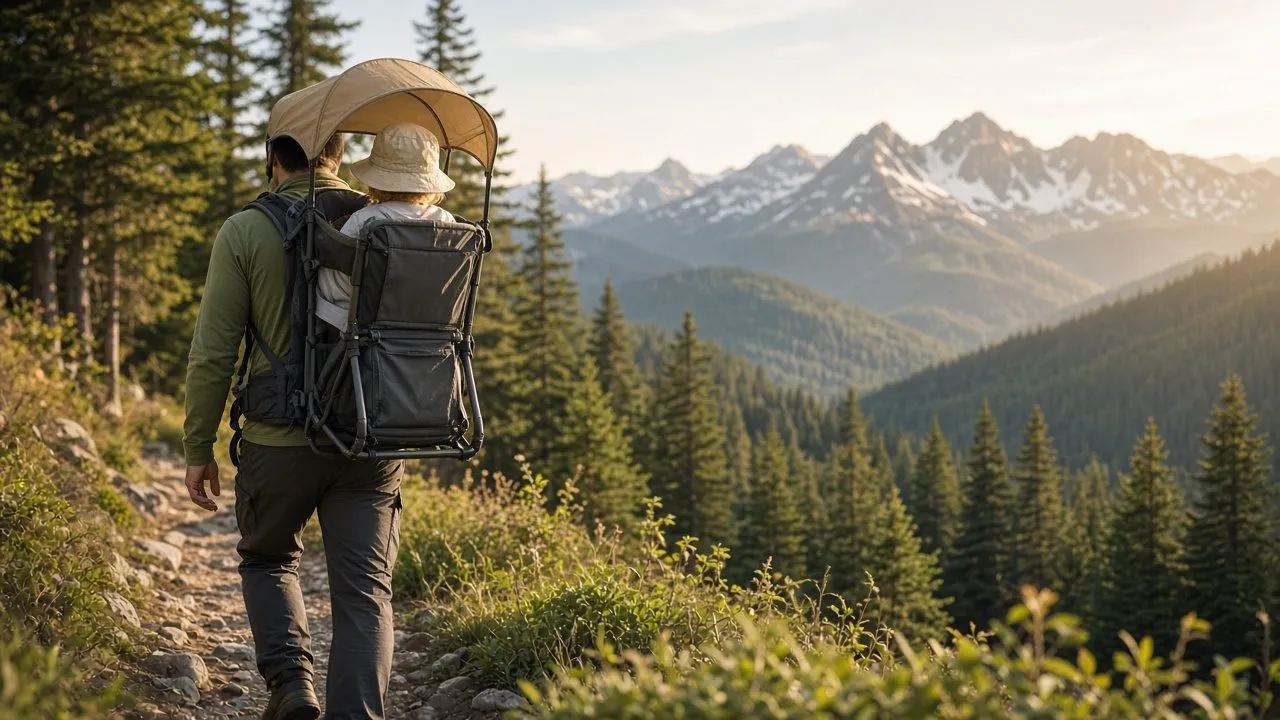
Osprey entered child carriers with the Poco series for 2012, and later redesigned the line. An Osprey release on SNEWS described the Spring 2020 lineup, including the Poco Plus ($330) and Poco ($290). [1] Osprey's site listed the Poco child carrier at $400 in November 2026. [2]
Our source-based verdict: a well-known framed carrier for real trails rather than neighborhood walks. It is big, so it makes the most sense if you hike regularly. We have not tested it ourselves.
At a glance
Osprey Poco Child Carrier
- Main limit
- Heavy (7.69 lb) and bulky for short walks
A single-model review, not a ranked or scored roundup.
Load limits
Osprey lists a load range of 10.75–22 kg (23.7–48.5 lb) and a carrier weight of 3.48 kg (7.69 lb). [2] Osprey's manuals state the maximum load as child plus gear plus pack combined, so pack light. [3]
Features
Osprey lists a full-wrap aluminum frame, 6 inches (15 cm) of torso adjustment, an adjustable hipbelt, adjustable stirrups and child seat height, and a Double Halo harness with arm loops. [2] It also describes a built-in UPF 50 sunshade that stores in a zippered pocket, a removable, machine-washable drool pad, a collapsible foot bar and a folding frame. [2]
Fit both people
Adjust the torso length for the adult first, then the child's seat height so their chin is at or above the cockpit edge. Practice getting a child in and out on the ground before your first trail day.
Pros and trade-offs
What looks useful on the evidence
- High load limit (48.5 lb total). [2]
- Built-in UPF 50 sunshade. [2]
- 6 inches of torso adjustment. [2]
- Folding frame for storage. [2]
Where expectations need restraint
Who it suits—and who should skip it
Consider it if: you hike often and your child can sit upright unaided.
Look elsewhere if: you mostly walk on pavement; a soft carrier or stroller is simpler.
Alternatives and related reading
- A rival framed carrier: Deuter Kid Comfort Pro review.
- Soft carriers for older kids: Best Baby Carriers for Toddlers (2026).
- Kids' packs for later: Best Toddler Backpack for Daycare and Preschool.
More on hiking carriers: start with our guide to best hiking baby carriers.
Part of our Carriers & Baby Gear section. Our main guide covers best baby carriers for newborns.
Questions parents ask
What is the maximum load?
Osprey lists 22 kg / 48.5 lb. [2]
Is there a sunshade?
Yes, a built-in UPF 50 sunshade. [2]
Sources and research method
We compared dated launch or availability evidence with current manufacturer information checked on November 9, 2026. This is desk research, not a purchased-product test, a lab measurement or an owner survey. We have not verified current store stock, prices or reuse rights for product photography; official photos can be viewed through the manufacturer link.
- SNEWS / Osprey: kids packs and child carriers for Spring 2020, June 17, 2019.
- Osprey: Poco Child Carrier, checked November 9, 2026.
- Osprey: Poco series owner's manual (S20), checked November 9, 2026.
More in Carriers & Baby Gear

Best Babywearing Covers for Winter (2026)
Four baby carrier winter covers compared on warmth, fit and price, plus how to layer safely, keep the face clear and avoid overheating…
BabyBjorn Harmony vs Ergobaby Omni Breeze: Which Mesh Carrier to Buy?
BabyBjorn Harmony vs Ergobaby Omni Breeze on price, weight range, carry positions, mesh, fit and warranty, plus which parents should buy…
Best Ring Slings (2026)
Five ring slings compared on fabric, weight range and price, plus CPSC sling warnings, the federal sling standard, T.I.C.K.S. and…