
In this guide
- Quick picks
- Lotion vs cream vs ointment
- Eczema basics from the AAP and AAD
- How to patch test a new product
- Vanicream Moisturizing Cream
- CeraVe Baby Moisturizing Lotion
- Aveeno Baby Eczema Therapy Moisturizing Cream
- Aquaphor Baby Healing Ointment
- Eucerin Baby Eczema Relief Cream
- Baby Dove Fragrance Free Moisture Hypoallergenic Lotion
- Aquaphor Baby Sensitive Lotion
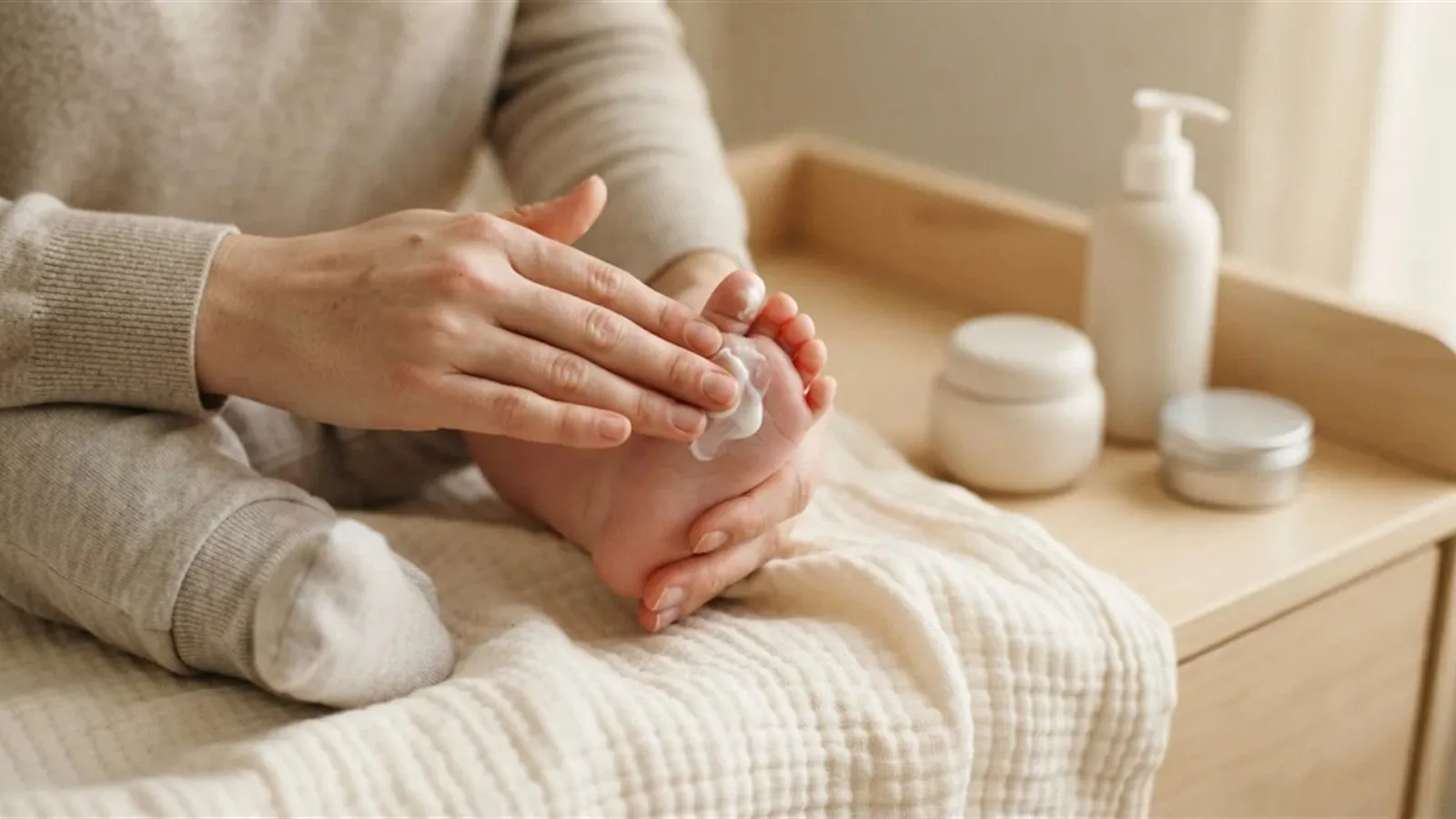
- How to apply moisturizer
- How we researched this
- Sources
- Questions parents ask
Reader-supported: SproutPicks may earn a commission from qualifying affiliate links, at no extra cost to you. Full disclosure.
Dry patches on a baby's cheeks, legs or tummy are common, especially in winter or after frequent baths. For most babies, the fix is simple: shorter, less frequent baths and a fragrance-free moisturizer applied while the skin is still damp. The harder part is choosing between the dozens of lotions, creams and ointments on the shelf. Below are seven fragrance-free options with their ingredients and claims checked on maker pages, followed by what the American Academy of Pediatrics (AAP) and the American Academy of Dermatology (AAD) say about eczema and how to try a new product carefully.
Quick picks
Vanicream Moisturizing Cream
CeraVe Baby Moisturizing Lotion
Aveeno Baby Eczema Therapy Moisturizing Cream
Aquaphor Baby Healing Ointment
Eucerin Baby Eczema Relief Cream
Baby Dove Fragrance Free Moisture Hypoallergenic Lotion
Aquaphor Baby Sensitive Lotion
How we score: SproutPicks Scores are our own editorial ratings out of 10. They weigh whether a product is fragrance-free, how thick and protective it is, how short its ingredient list is, whether it holds the National Eczema Association (NEA) Seal of Acceptance, any age guidance from the maker, and value. We used maker product pages, the NEA's product directory and AAP and AAD guidance. They are not Amazon ratings, and we did not use these products on a baby.
Lotion vs cream vs ointment
The difference is mostly how much water versus oil a product contains, which affects how well it seals moisture in.
- Lotions are the thinnest. They spread easily, absorb fast and work well for everyday use on skin that's only a little dry. The AAP's eczema guidance says lotions are thinner and less effective than creams and ointments for eczema.
- Creams are thicker and usually come in a tub or tube. The AAP lists fragrance-free creams as a good choice for eczema, and the AAD says thick creams and ointments usually work better than lotions or oils.
- Ointments, such as petroleum jelly, are mostly oil and contain little or no water. They're the most protective and are useful on chapped cheeks and rough patches, but they feel greasy, so many parents use them at night or on small areas.
Whatever you choose, the AAP says the most important thing is finding a moisturizer your child is happy to use, applied consistently.
Eczema basics from the AAP and AAD
Eczema (atopic dermatitis) causes dry, itchy, irritated patches and is common in babies. Other rashes can look similar, so ask your pediatrician about any rash or suspected eczema. For day-to-day care, the AAP's guidance, written by two pediatric dermatologists, and the AAD's advice for babies line up closely:
- Short, lukewarm baths. About 5 to 10 minutes. The AAP's eczema page suggests bathing daily or every other day. Use a mild, fragrance-free cleanser only where it's needed, and skip bubble bath.
- Pat, don't rub. Pat the skin dry after the bath.
- Medicine first, then moisturizer. If your pediatrician has prescribed a cream for the rash, the AAP says to apply it to the rash first, then moisturize while the skin is still damp.
- Moisturize often. The AAD says to apply a fragrance-free moisturizer right after each bath and to moisturize twice a day, or more often if needed. The AAP says to keep moisturizing once or twice a day even after a rash clears.
- Go fragrance-free. The AAD says fragrance can trigger flare-ups and recommends fragrance-free soaps, shampoos and moisturizers.
- Watch for infection. The AAP says to contact your doctor if a rash oozes, crusts, has pus-filled bumps or blisters, or gets worse despite usual care.
Some products below contain colloidal oatmeal, which is sold as an over-the-counter skin protectant. Aveeno's label says it temporarily protects and helps relieve minor skin irritation and itching due to eczema. That's a symptom-relief claim, not a treatment for the underlying condition, so it doesn't replace your pediatrician's advice.
How to patch test a new product
The AAD recommends testing a new skin care product before using it widely. Its at-home method: apply a quarter-sized amount twice a day for 7 to 10 days to a spot where it won't be rubbed or washed off, such as the inner arm or the bend of the elbow, and watch for redness, itching or swelling. If a reaction appears, gently wash the product off and stop using it.
That method is written for adults. Before testing anything on a baby, especially a newborn, ask your pediatrician whether and how to do it. If they agree, the same idea on a smaller scale works: try a small amount on one small patch of healthy skin, not on an active rash, and wait several days before using it all over. If a product causes redness or stinging, stop and tell your pediatrician. The AAD notes that a dermatologist can do formal patch testing when the cause of a reaction isn't clear.
Vanicream Moisturizing Cream
Vanicream's cream is the shortest ingredient list here: water, petrolatum, sorbitol and a handful of emulsifiers and preservatives. Vanicream says it's free of fragrance and masking fragrance, dyes, lanolin, parabens and formaldehyde, and that it's suitable for all ages. It holds the NEA Seal of Acceptance. It comes in a 16 oz pump bottle and 4 oz and 2 oz tubes. Vanicream says it has no ceramides; the maker sells a separate ceramide moisturizer. It isn't a baby-branded product, which also means one tub can serve the whole household.
- ✓Very short, fragrance-free ingredient list
- ✓Thick cream, which the AAP prefers over lotion for eczema
- ✓NEA Seal; suitable for all ages, per Vanicream
- ✕Thicker than a lotion, so it takes longer to rub in
- ✕No ceramides, if that matters to you
CeraVe Baby Moisturizing Lotion
CeraVe says its baby lotion was developed with pediatric dermatologists. It contains three ceramides (NP, AP and EOP), niacinamide, hyaluronic acid and vitamin E, and CeraVe describes it as non-greasy, lightweight and free of added fragrance and parabens. It holds the NEA Seal of Acceptance. The 8 oz bottle was $9.99 on CeraVe's site in November 2026. CeraVe also makes a thicker Baby Moisturizing Cream, which is also in the NEA directory, if you want the same formula family in a cream.
- ✓Light texture that absorbs quickly
- ✓Ceramides, with the NEA Seal
- ✓Low price
- ✕A lotion, so less protective than a cream on very dry patches
- ✕Small bottle
Aveeno Baby Eczema Therapy Moisturizing Cream
Aveeno's cream lists colloidal oatmeal as its active ingredient, alongside oat extract and oat oil, which Aveeno calls its Triple Oat complex. Aveeno's label says colloidal oatmeal temporarily protects and helps relieve minor skin irritation and itching due to eczema, and the page says the cream is formulated without steroids, parabens, phthalates, fragrance, dyes or phenoxyethanol. It holds the NEA Seal of Acceptance and comes in 5 oz, 7.3 oz and 12 oz sizes. Aveeno's page doesn't list a price. Follow the directions on the label for young babies.
- ✓Colloidal oatmeal skin protectant for itch relief
- ✓Fragrance-free and steroid-free, with the NEA Seal
- ✓Three sizes, including a big 12 oz tube
- ✕Oat ingredients, so skip it if your child has a known oat sensitivity
- ✕Costs more per ounce than plain creams
Aquaphor Baby Healing Ointment
Aquaphor's baby ointment lists petrolatum (41%) as its active skin protectant, with panthenol and glycerin. Aquaphor says it's preservative-free and fragrance-free and markets it for chapped cheeks, minor scrapes, diaper rash and dry skin. It comes in a 14 oz tub, a 1.75 oz tube and a two-pack of 0.35 oz travel tubes. Two caveats: it contains lanolin alcohol, which some people react to, and we didn't find it in the NEA's directory. If you want an ointment with the NEA Seal, Cetaphil Baby Healing Ointment and CeraVe Baby Healing Ointment are both listed; Cetaphil says its version is tested for babies as young as 3 months.
- ✓Thick, protective ointment for the driest spots
- ✓Fragrance-free and preservative-free, per Aquaphor
- ✓Many sizes, including travel tubes
- ✕Greasy on large areas
- ✕Contains lanolin alcohol; not in the NEA directory
Eucerin Baby Eczema Relief Cream
Eucerin's cream combines 1% colloidal oatmeal as its active skin protectant with ceramide-3 and licochalcone, a licorice root extract. Eucerin says it's free of steroids, fragrances, dyes and parabens and appropriate for babies 3 months and older; for children under 3 months, the label says to ask a doctor. It holds the NEA Seal of Acceptance and comes in a 5 oz tube. Eucerin cites a clinical study in which 4 out of 5 children remained flare-free for 6 months with daily use; that's the maker's own study, so treat it as a claim rather than a guarantee.
- ✓Colloidal oatmeal plus ceramides
- ✓Fragrance-free, with the NEA Seal
- ✓Clear age guidance on the label
- ✕Not for babies under 3 months without a doctor's okay
- ✕Contains a botanical extract
Baby Dove Fragrance Free Moisture Hypoallergenic Lotion
Baby Dove's US page lists a 20 oz bottle of this hypoallergenic, fragrance-free lotion and says it's dermatologist and pediatrician tested and suitable for newborn skin. Its ingredients include glycerin and petrolatum, and Dove says it's formulated with a prebiotic moisturizer. The NEA lists it, under its older name Baby Dove Lotion Sensitive Moisture Fragrance Free, with the Seal of Acceptance. Dove's page doesn't list a price.
- ✓Large bottle for frequent use
- ✓Fragrance-free, with the NEA Seal
- ✓Maker says it's suitable for newborns
- ✕A lotion, so lighter than a cream
- ✕Name change makes it easy to grab a scented Baby Dove
Aquaphor Baby Sensitive Lotion
Aquaphor's newer baby lotion comes in an 8 fl oz bottle and is formulated with ceramide NP, provitamin B5, vitamin E and hyaluronic acid. Aquaphor says it's pediatrician tested and free of parabens, silicones, fragrances and dyes. Unlike Aquaphor's ointment, it holds the NEA Seal of Acceptance. Aquaphor's page doesn't list a price.
- ✓Light, non-sticky lotion, per Aquaphor
- ✓NEA Seal; fragrance-free and dye-free
- ✕Only an 8 oz size on Aquaphor's site
- ✕Less protective than a cream for eczema
How to apply moisturizer
- Within minutes of the bath. Pat your baby mostly dry, leave the skin a little damp and apply moisturizer right away.
- Use enough. A thin layer that disappears instantly is often too little on dry skin.
- Warm it first. Rub it between your hands so it isn't cold on your baby's skin.
- Keep it fragrance-free. Skip scented "baby lotion" for babies with dry or sensitive skin.
Moisturizer is part of a simple bath routine. Our Frida Baby Grow-With-Me tub review covers one tub option, and the Braun ThermoScan 7 review covers a thermometer for the same health kit.
More on bath time: start with our guide to best baby bathtubs, then Best Baby Shampoo and Body Wash (2026) and Best Hooded Baby Towels (2026).
Part of our Bath, Health & Safety section. Our main guide covers Best Baby Shampoo and Body Wash (2026).
How we researched this
These picks are research-based. We did not use these products on a baby. In November 2026 we read the AAP's eczema guidance on HealthyChildren.org, written by pediatric dermatologists Sarah Stein and Sheilagh Maguiness, the AAP's newborn bathing guidance, and the AAD's guidance on treating eczema in babies and testing skin care products. We checked each product's Seal status in the National Eczema Association's product directory. For product details we used the makers' own US product pages: Vanicream, CeraVe, Aveeno, Aquaphor, Eucerin and Baby Dove. Most of those pages send you to retailers rather than listing a price. Prices change often.
Sources
- AAP HealthyChildren.org, How to Treat and Control Eczema Rashes in Children
- AAP HealthyChildren.org, Bathing Your Baby
- American Academy of Dermatology, How to treat eczema in babies
- American Academy of Dermatology, How to test skin care products
- National Eczema Association, About the Seal of Acceptance
- National Eczema Association, Seal of Acceptance product directory
- Vanicream, Moisturizing Cream
- CeraVe, Baby Moisturizing Lotion
- Aveeno, Baby Eczema Therapy Moisturizing Cream
- Aquaphor, Baby Healing Ointment
- Eucerin, Baby Eczema Relief Cream
- Baby Dove, Fragrance Free Moisture Hypoallergenic Lotion
- Aquaphor, Baby Sensitive Lotion
- Cetaphil, Baby Healing Ointment
Questions parents ask
Is a cream or ointment better than a lotion for dry baby skin?
Usually, yes. The AAP says ointments such as petroleum jelly and fragrance-free creams work well for eczema, while lotions are thinner and less effective. The AAD also says thick creams and ointments usually work better than lotions or oils.
When should I put lotion on my baby?
Right after a bath, while the skin is still damp. The AAD says to apply a fragrance-free moisturizer right after each bath and to moisturize twice a day, or more often if needed.
How do I patch test a new lotion?
The AAD's at-home test is to apply a product twice a day for 7 to 10 days to a small spot, such as the inner arm or the bend of the elbow, and watch for redness, itching or swelling. That method is written for adults, so ask your pediatrician before testing on a baby.
Does the National Eczema Association Seal mean a lotion is safe for my baby?
Not exactly. The Seal means the product is fragrance-free, avoids the NEA's list of known eczema triggers and passed irritation testing, which is done on adults. The NEA notes that eczema is different for everyone, so watch how your baby's skin responds.
When should I call the doctor about my baby's dry skin or eczema?
Ask your pediatrician about any rash or suspected eczema. The AAP says to contact your doctor if a rash oozes, crusts, has pus-filled bumps or blisters, or gets worse despite usual care.
More in Bath, Health & Safety
Exergen vs Braun ThermoScan 7: Forehead vs Ear Thermometer
Exergen vs Braun ThermoScan 7: forehead vs ear thermometer by age, what the accuracy studies show, current model numbers, prices and when…

Best Baby Nasal Aspirators (2026)
The best baby nasal aspirators of 2026, manual, battery and plug-in, compared on suction, cleaning and price, plus saline tips and when to…
Skip Hop Moby Bath Spout Cover Review
Skip Hop Moby spout cover review: which tub spouts it fits, the heat indicator it doesn't have, how to keep mold away, and why 120°F water…